
2026 WAEC Home Management Questions and Answers
🔥 Examsmooth is the ONLY place you’ll get accurate and real-time 2026 WAEC Home Management answers. Bookmark this page and keep refreshing!
WAEC 2026 Home Management Question Paper 📸
WAEC 2026 Home Management Answers ✅
WAEC 2026 Home Management OBJ Answers ✅
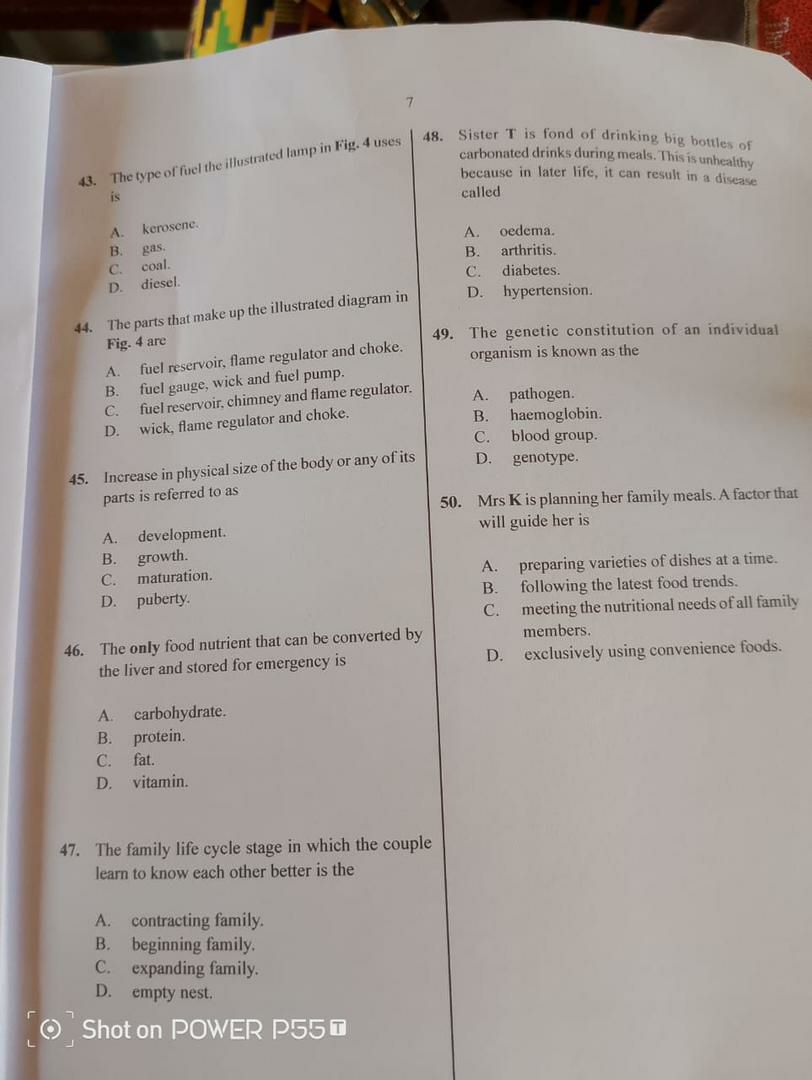
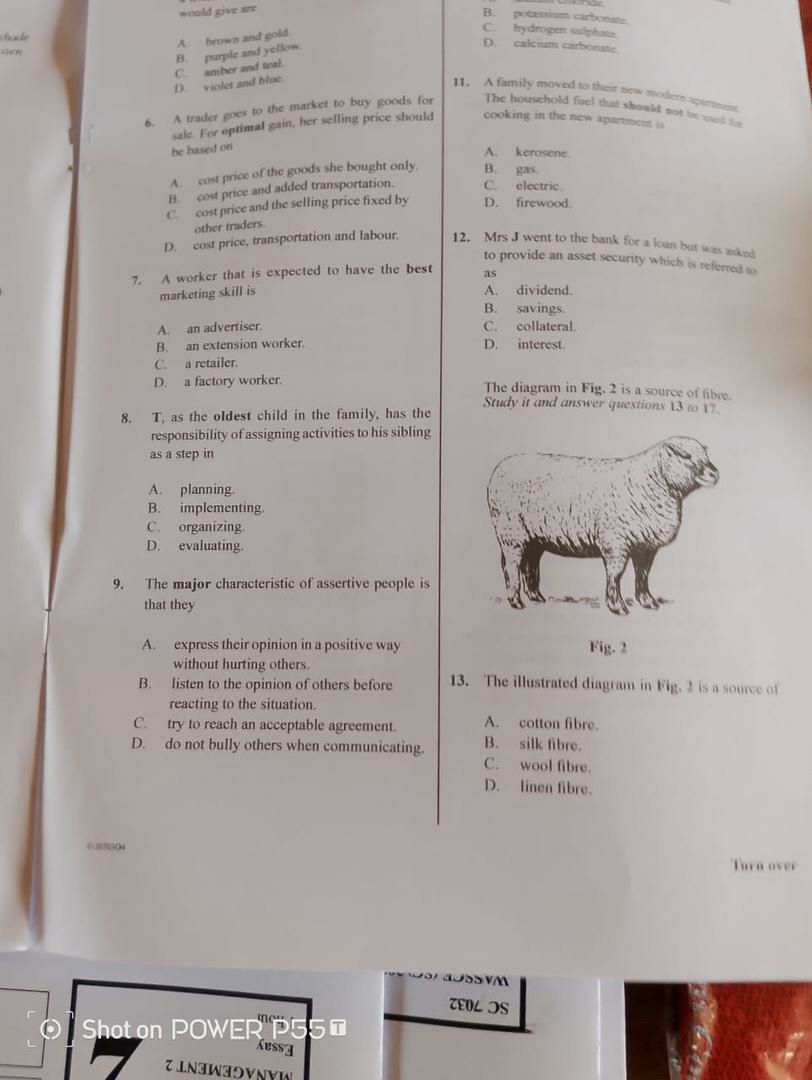
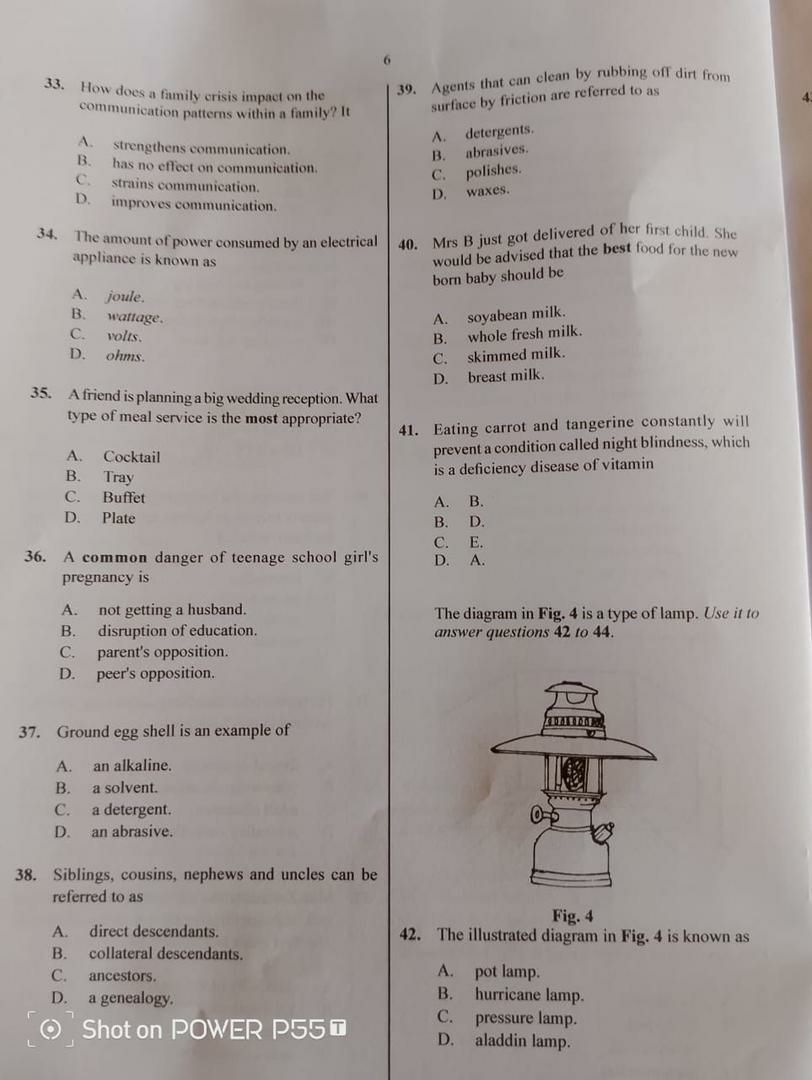
WAEC 2026 Home Management OBJ Answers:
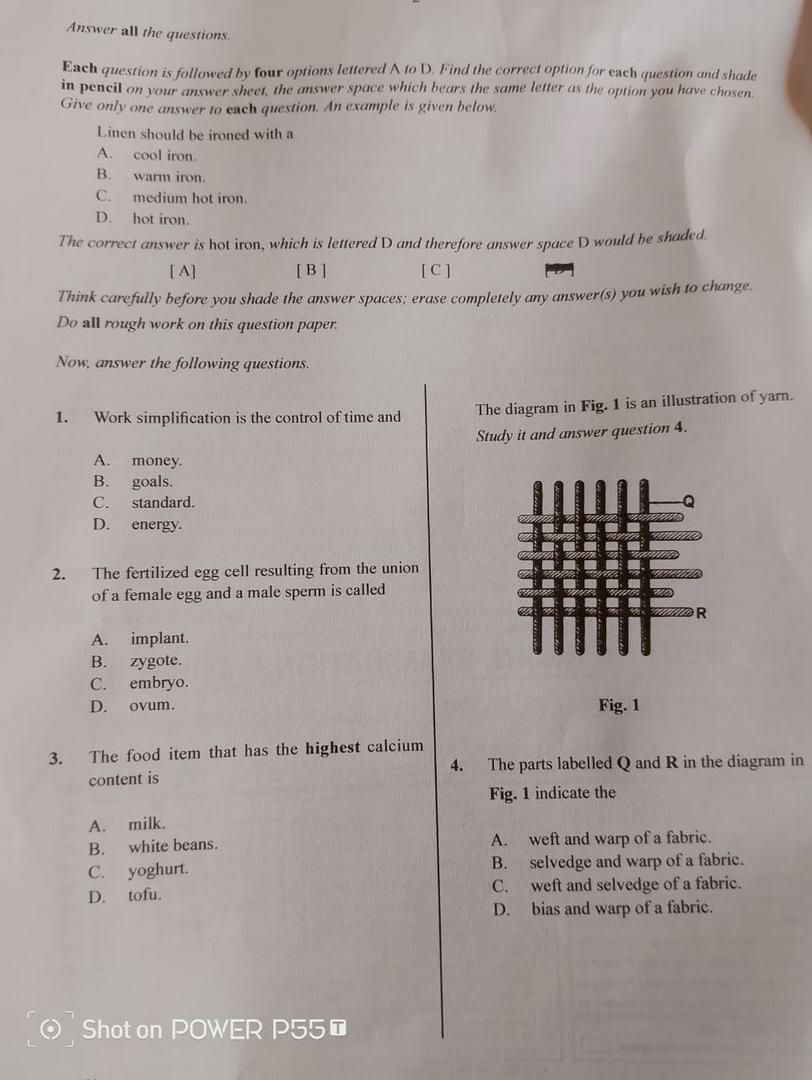
01-10: D B A A D D C C A B
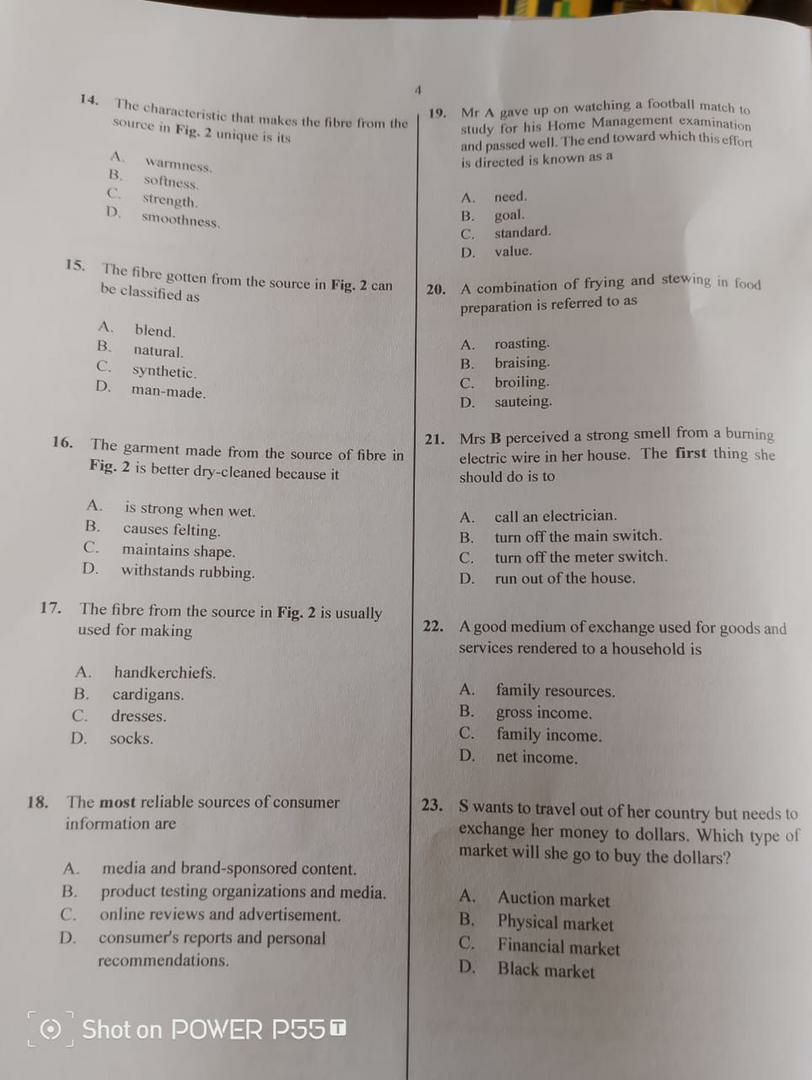
11-20: D C C A B B B B B B
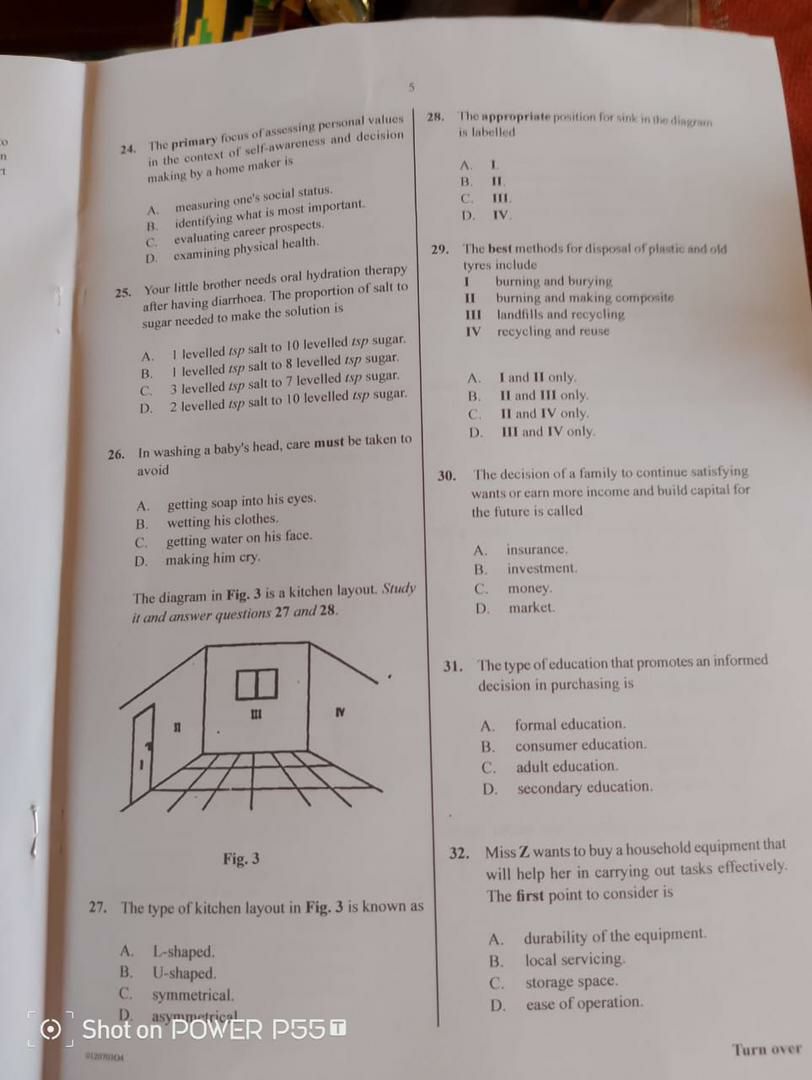
21-30: B C C B B A A C D B
31-40: B D C B C B D B B D
41-50: D B A C B A B C D C
QUESTION 1
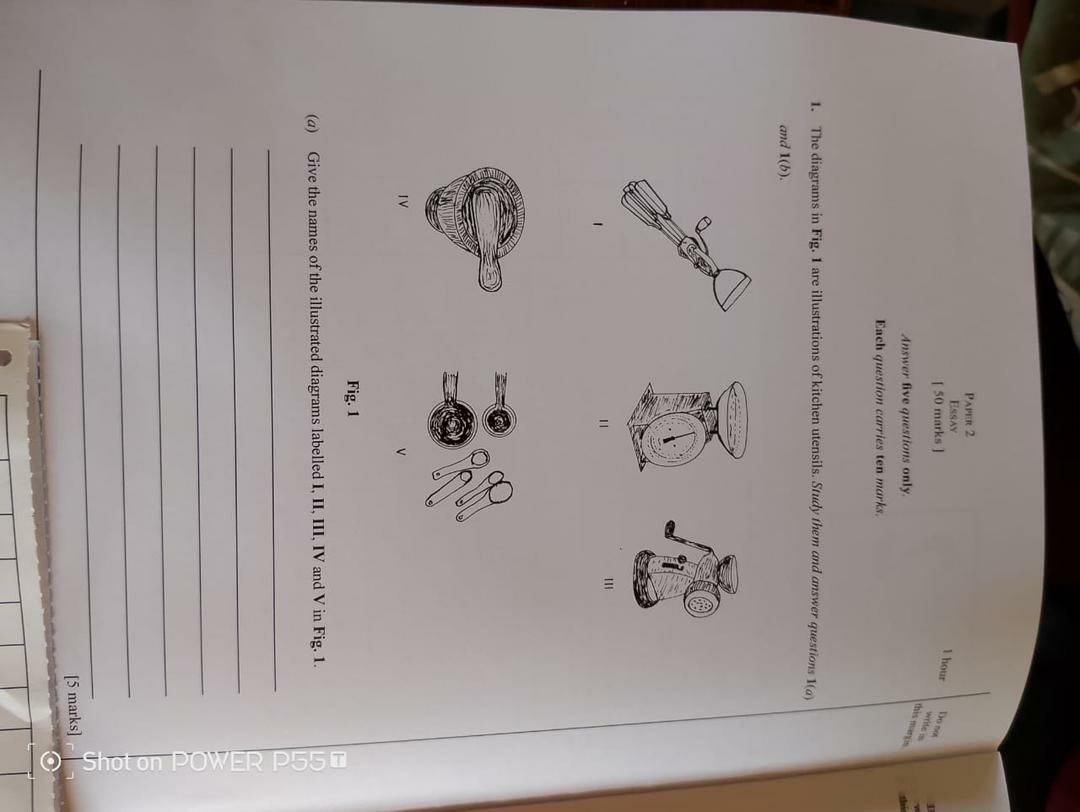
(1a) Names of Kitchen Utensils (Fig. 1):
I: Egg beater / Hand mixer
II: Weighing scale
III: Meat grinder / Mincer
IV: Mortar and pestle
V: Measuring spoons and cups
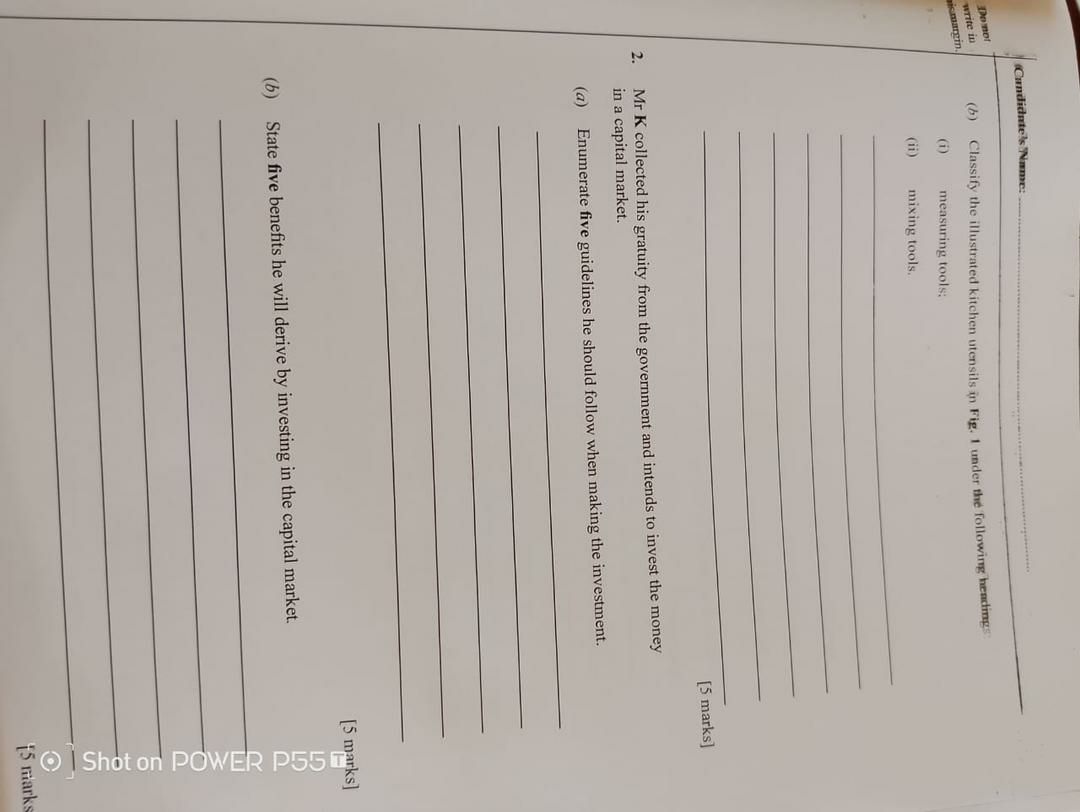
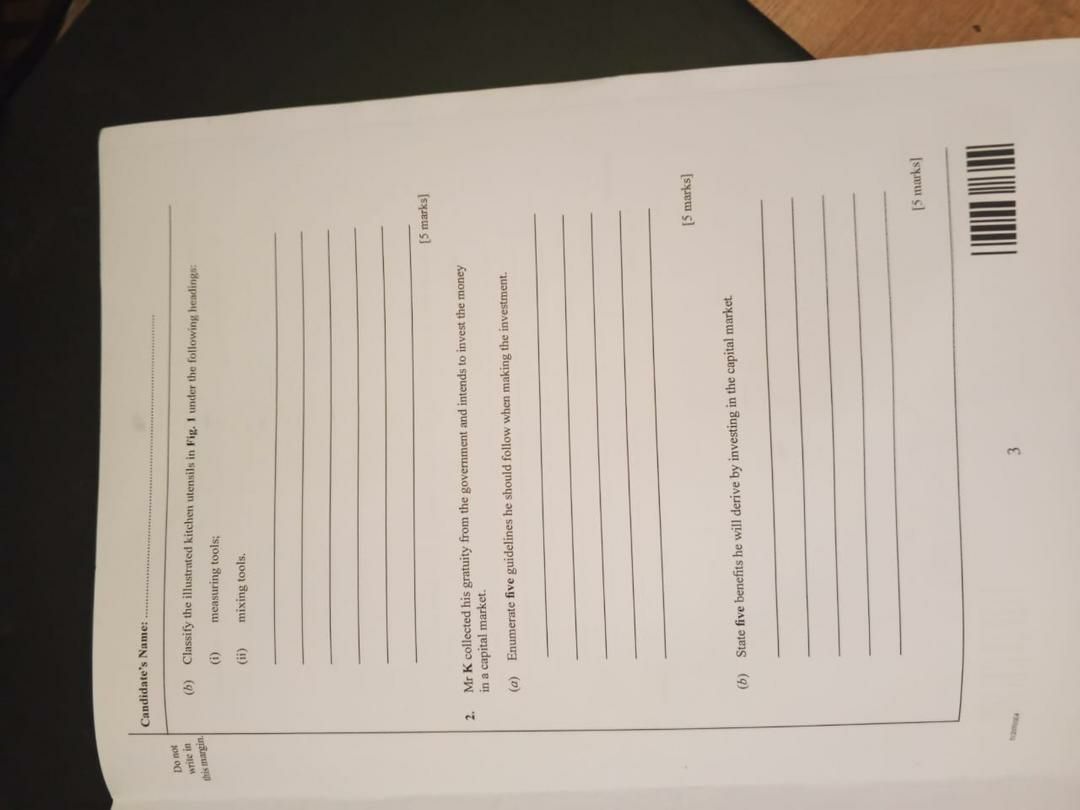
(1b)(i) Utensils Used for Measuring:
II: Kitchen scale
V: Measuring spoons and cups
(1b)(ii) Utensils Used for Mixing:
I: Egg beater / Hand mixer
IV: Mortar and pestle
QUESTION 2
(2a) Guidelines for Mr K to Invest in the Capital Market:
(i) Study and understand the market before investing.
(ii) Invest through licensed stockbrokers or financial advisers.
(iii) Diversify investments to reduce risk.
(iv) Invest according to his financial ability and objectives.
(v) Consider the safety, profitability and liquidity of the investment.
(2b) Benefits of Investing in the Capital Market (Pick Any Five):
(i) It provides regular income through dividends or interest.
(ii) It increases wealth through capital appreciation.
(iii) It encourages savings and investment habits.
(iv) Shares and securities can easily be bought or sold for cash.
(v) It provides financial security for the future.
(vi) It helps to protect money against inflation.
(vii) It gives investors ownership rights in companies.
(viii) It promotes economic growth and development.
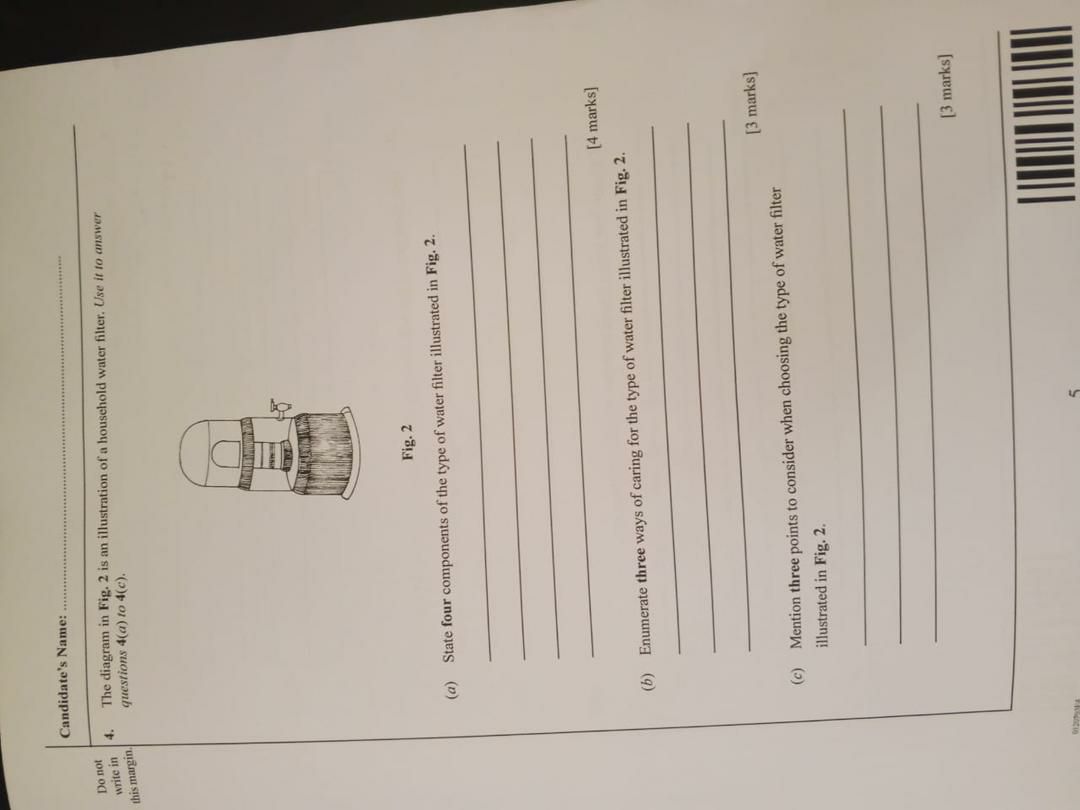
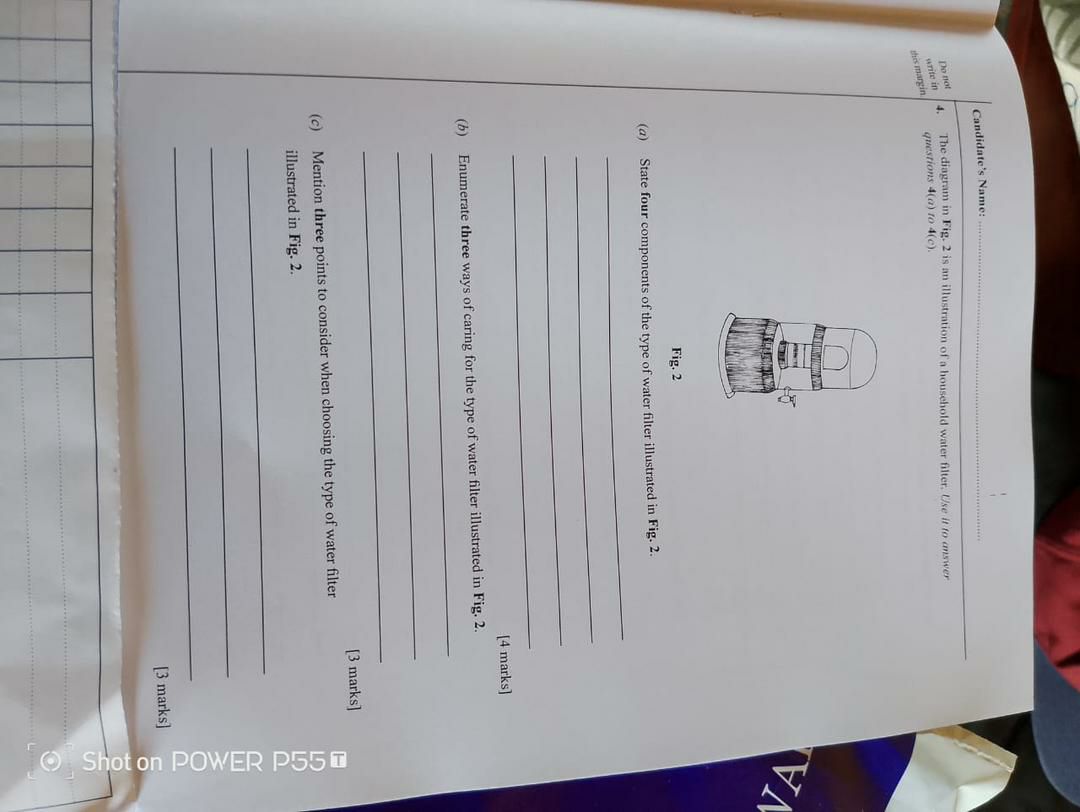
QUESTION 4
(4a) Components of a Household Water Filter (Fig. 2):
(i) Upper Container: Holds the untreated (raw) water.
(ii) Ceramic Filter Candle: The porous element that strains out impurities and bacteria.
(iii) Lower Container: Collects the filtered, clean water.
(iv) Tap: Used to dispense the clean water safely.
(4b) Ways of Caring for a Household Water Filter:
(i) Regular Cleaning: Scrub the ceramic candle gently with a soft brush and clean water (no soap) when the flow rate slows down.
(ii) Sterilization: Periodically wash the upper and lower containers with mild soap and rinse thoroughly to prevent algae or bacterial buildup.
(iii) Handle with Care: Ensure the ceramic candle is handled gently to avoid cracks, as even a hairline fracture will allow bacteria to pass through.
(4c) Factors to Consider When Choosing a Household Water Filter:
(i) Filtration Efficiency: Check if it effectively removes specific local contaminants (e.g., bacteria, protozoa, or heavy metals).
(ii) Flow Rate: Ensure the filter produces enough clean water per hour to meet the daily needs of the household.
(iii) Maintenance & Cost: Consider the availability and price of replacement candles and how easy it is to clean.
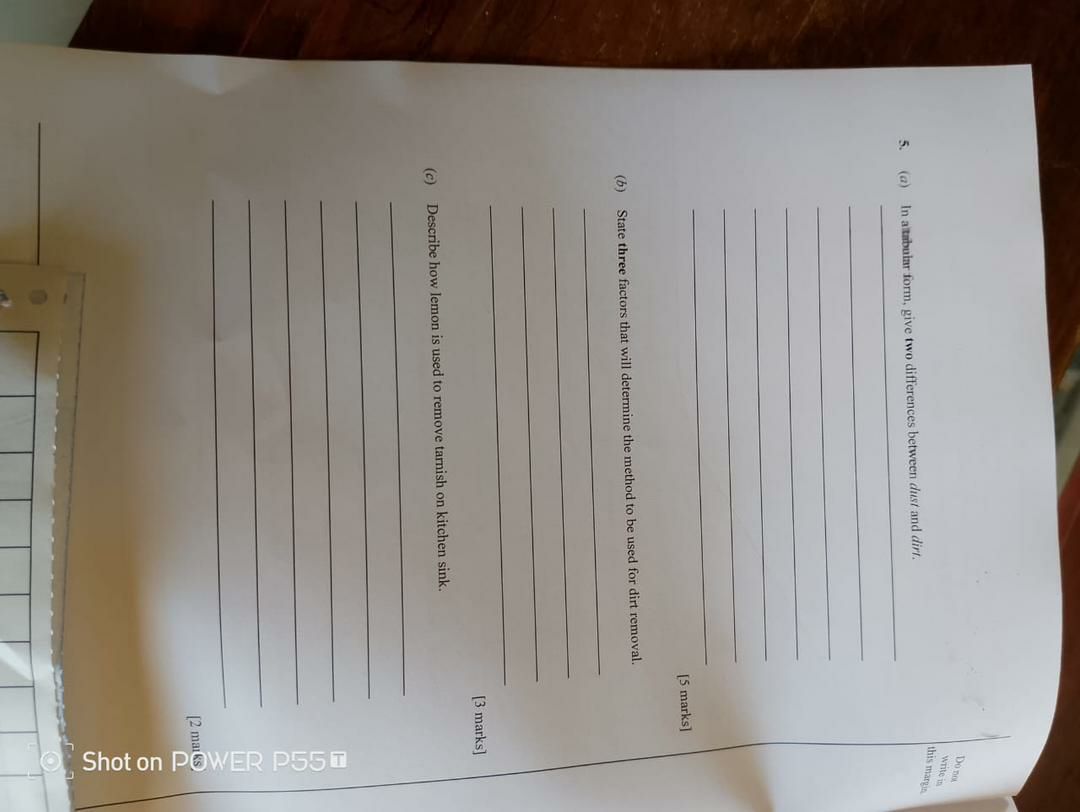
QUESTION 5
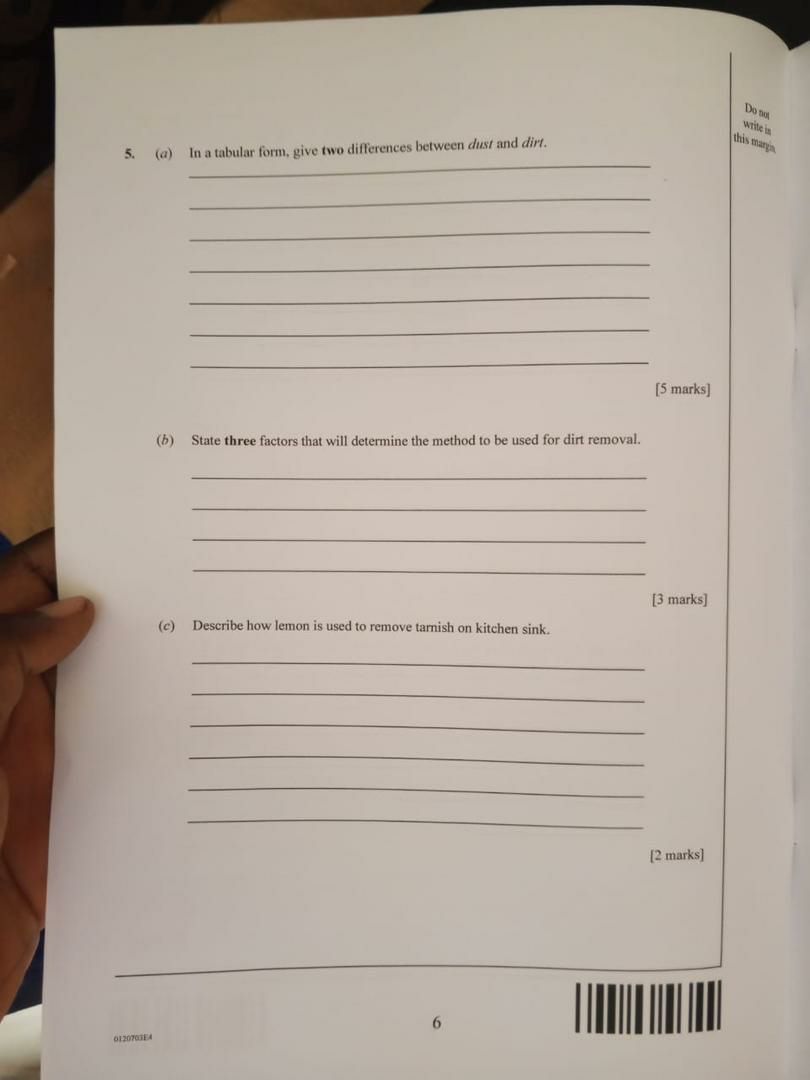
(5a) Differences Between Dust and Dirt (Choose Any Two):
| Dust | Dirt | |
|---|---|---|
| (i) | Very light and fine; can remain suspended in the air. | Heavier and more substantial than dust. |
| (ii) | Composed of skin cells, fabric fibers, and pollen. | Composed of soil, mud, sand, or organic waste. |
| (iii) | Usually rests on top of surfaces without sticking. | Sticky or oily. |
| (iv) | Can be removed by light dusting or a gentle breeze. | Requires washing, scrubbing, or chemical cleaning. |
(5b) Factors That Determine the Method of Removing Dirt from Surfaces (Choose Any Three):
(i) The Nature of the Surface: Determine if the material is fragile (glass), durable (concrete), or porous (wood), as this prevents damage during cleaning.
(ii) The Type of Dirt: Whether the dirt is water-soluble (sugar), oily (grease), or loose (sand) determines if you need a solvent or just a broom.
(iii) The Cleaning Equipment Available: The method is limited by the tools on hand, such as whether you have access to a vacuum cleaner, a pressure washer, or basic cloths.
(iv) Time and Frequency: A surface cleaned daily requires a different approach (maintenance cleaning) than a surface with deep-seated grime built up over months.
(v) Safety and Environment: The choice of method may be influenced by whether the area is a kitchen (requiring food-safe chemicals) or if the ventilation is poor (limiting the use of strong fumes).
(5c) How to Use Lemon to Remove Tarnish from a Sink:
– Cut a lemon in half and rub the cut side directly over the tarnished areas of the sink. For tougher stains, sprinkle salt onto the lemon half to act as a mild abrasive.
– Allow the lemon juice to sit on the surface for several minutes so the acid can break down the oxidation or tarnish.
– Rinse the sink thoroughly with warm water and buff it dry with a clean cloth to restore the shine.
QUESTION 6
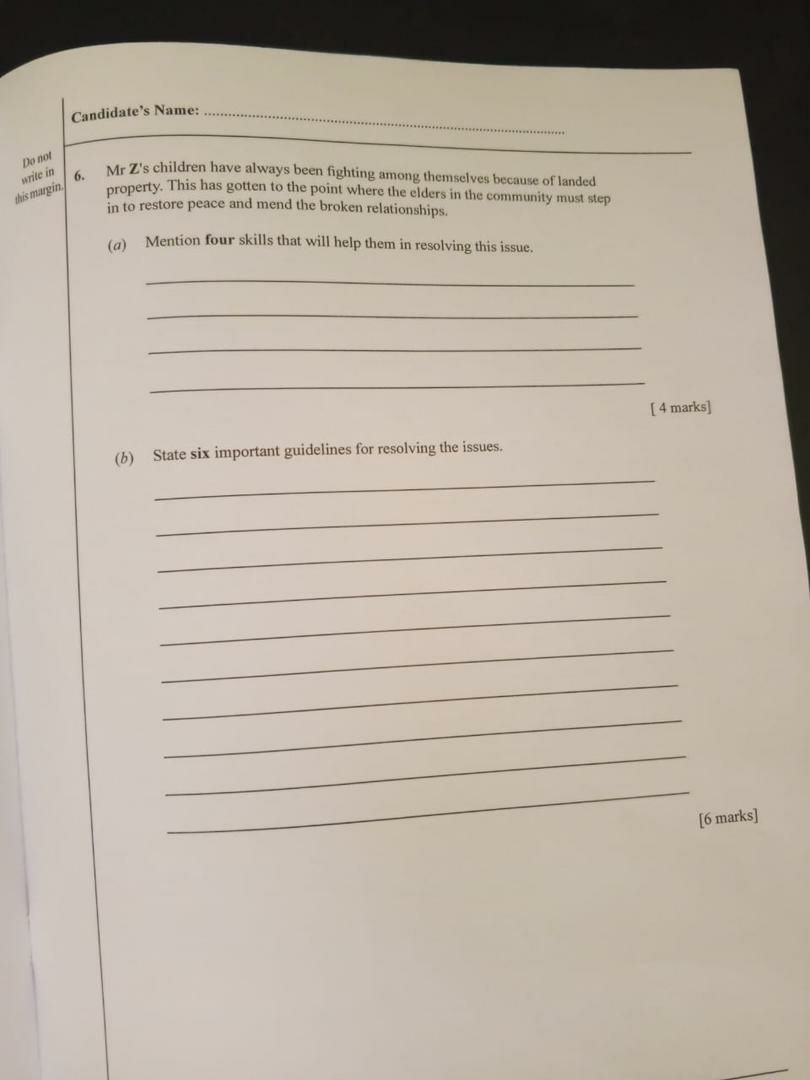
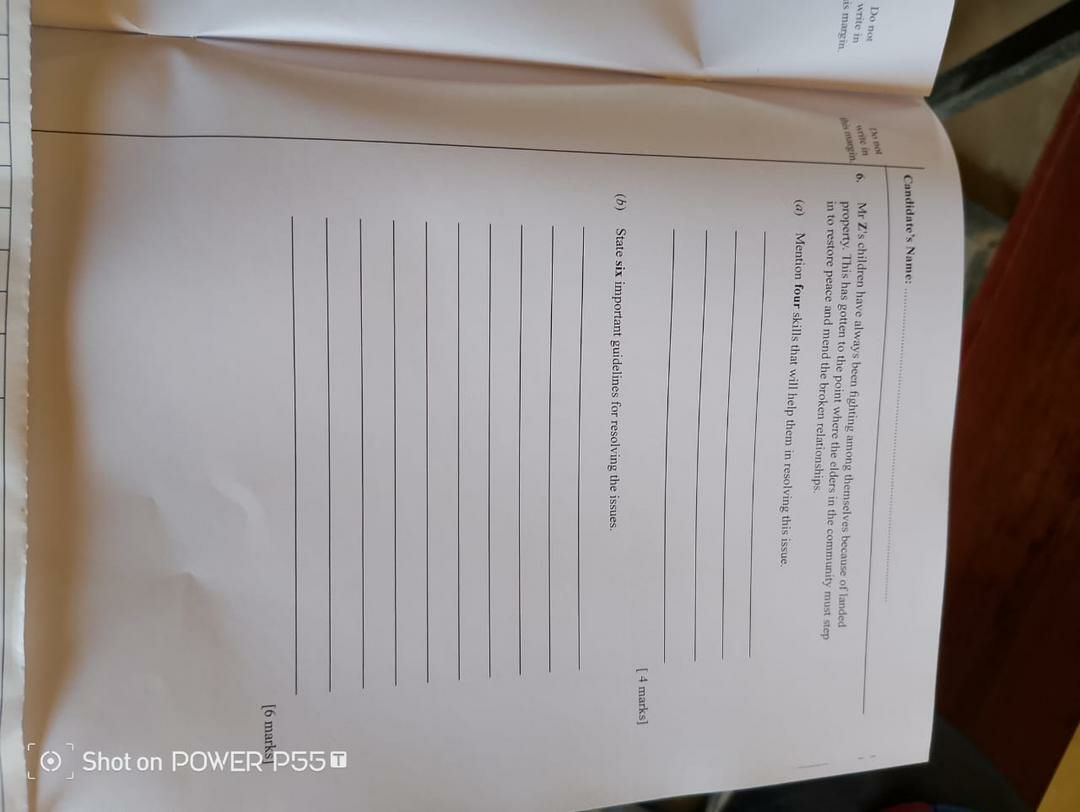
(6a) Skills Needed to Resolve Conflict Among Mr Z's Children:
(i) Communication skill.
(ii) Listening skill.
(iii) Negotiation skill.
(iv) Problem-solving skill.
(6b) Guidelines for Resolving the Conflict (Pick Any Six):
(i) Identify the real cause of the conflict.
(ii) Allow each person to express his or her opinion freely.
(iii) Listen carefully without interrupting others.
(iv) Avoid insults, blame and fighting during discussions.
(v) Be fair and unbiased when making decisions.
(vi) Encourage forgiveness and reconciliation among the family members.
(vii) Maintain peace and respect during meetings.
(viii) Seek advice from elders or community leaders when necessary.
(ix) Agree on a solution acceptable to everyone involved.
 Examsmooth
Leave a comment