
WAEC 2026 Fashion Design & Home Management Answers – Live From Examsmooth
WAEC 2026 Fashion Design answers and WAEC Home Management runz 2026 are already loading for you on Examsmooth. No shaking – we dey handle the exam, you just need to stay on this page, follow instructions, and collect your sure A/B. As the paper starts, we drop correct, well-solved answers live and direct.
Wednesday 13th May 2026 – WAEC Fashion Design & Home Management paper, Examsmooth don ready for you. Just relax and keep refreshing, your answers no fit miss you.
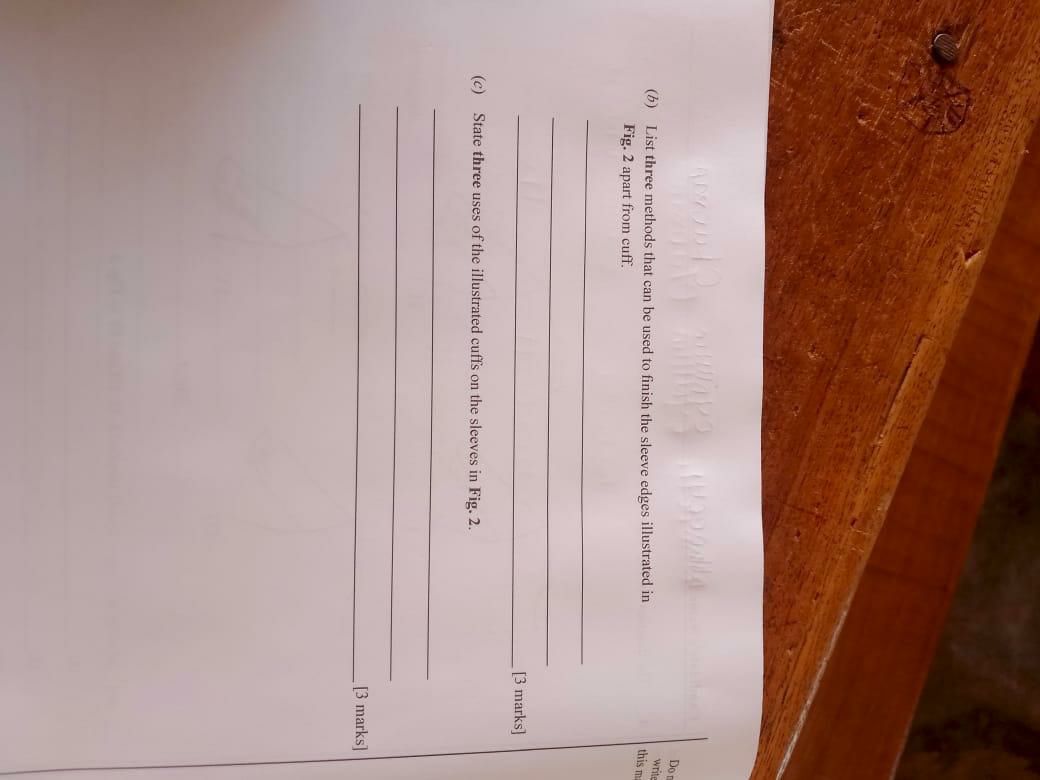
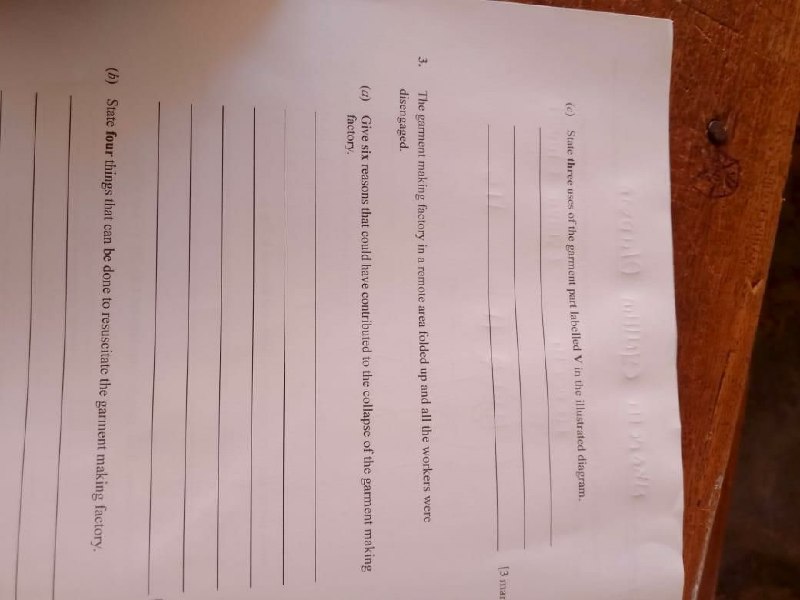
WAEC 2026 Fashion Design & Garment Making — Question Paper
See the actual WAEC 2026 Fashion Design & Garment Making question paper below 👇
WAEC 2026 Fashion Design & Home Management OBJ Answers
OBJECTIVE ANSWERS
01-10: C A D A D A D B B B
11-20: B B B C C A C A C B
21-30: B C D B D A C A B A
31-40: B A C C A C C A C D
WAEC 2026 Fashion Design & Home Management Theory/Essay Answers
WAEC 2026 Fashion Design & Garment Making Theory/Essay Answers
NUMBER ONE
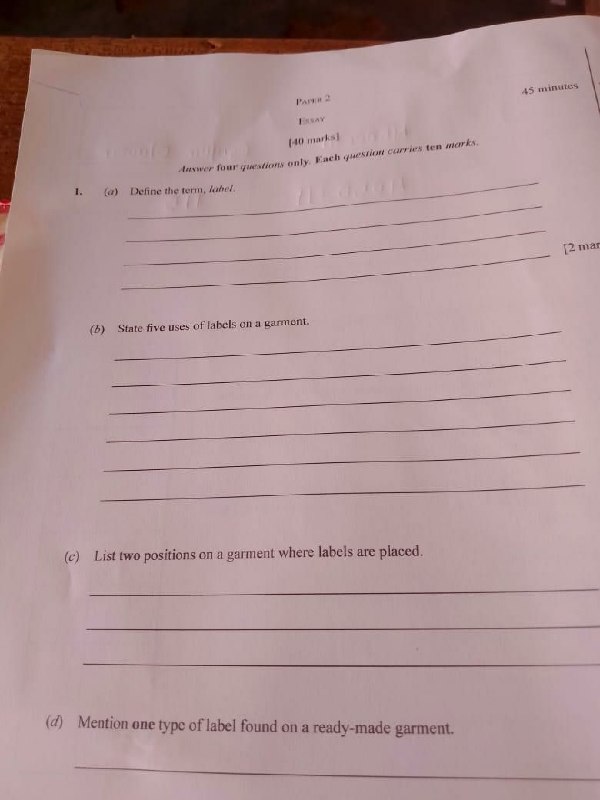
(1a) A label is a small piece of cloth, leather, paper or other material attached to a garment to provide important information about the garment such as the manufacturer’s name, size, fabric type, washing instructions and price.
(1b) (PICK ANY FIVE)
(i) To show the brand or manufacturer’s name.
(ii) To indicate the size of the garment.
(iii) To give washing and care instructions.
(iv) To identify the type of fabric/material used.
(v) To provide price information.
(vi) To help buyers identify the garment easily.
(vii) To show the country or place where the garment was made.
(viii) To give information about the quality or standard of the garment.
(1c)
(i) At the back neckline/collar.
(ii) Inside the side seam or waistband.
(1d) A care label.
NUMBER TWO
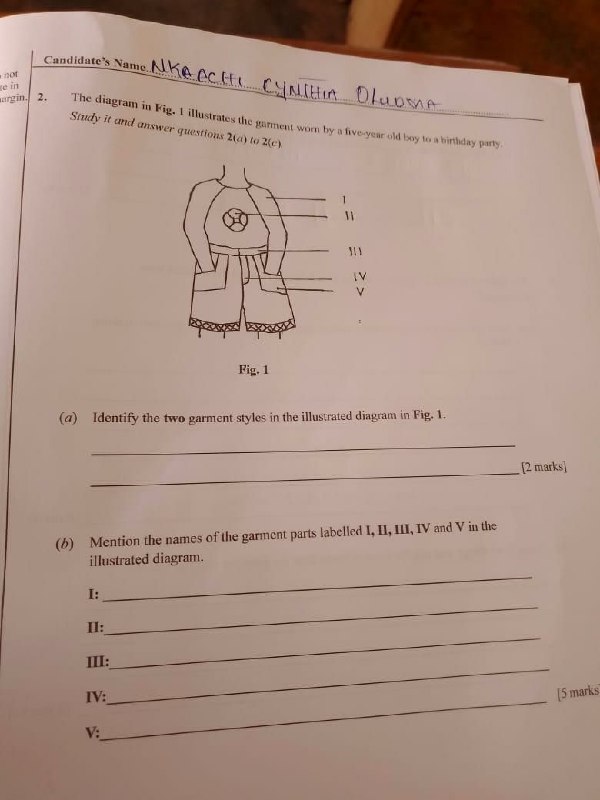
(2a)
1. A long-sleeved top (or T-shirt).
2. Shorts (or Bermuda shorts).
(2b) Illustrated diagram labels:
I: Sleeve (specifically a long sleeve).
II: Motif / graphic print (or emblem/design on the chest).
III: Waistline / waistband (where the top meets the shorts).
IV: Fly front / crotch area (the opening/seam at the front of the shorts).
V: Patch pocket (the large external pocket on the side of the shorts).
(2c) Casual wear for a birthday celebration.
NUMBER THREE
(3a) (PICK ANY SIX)
(i) Poor management of the factory.
(ii) Lack of adequate capital.
(iii) Poor electricity supply.
(iv) Lack of modern sewing machines and equipment.
(v) Low patronage from customers.
(vi) High cost of materials and production.
(vii) Poor location of the factory.
(viii) Lack of skilled workers.
(ix) Poor marketing and advertisement of products.
(3b) (PICK ANY FOUR)
(i) Provide adequate funds or loans for the factory.
(ii) Supply modern machines and equipment.
(iii) Ensure steady electricity supply.
(iv) Employ skilled and qualified workers.
(v) Improve management of the factory.
(vi) Advertise the factory products properly.
(vii) Reduce the cost of production and improve quality of garments.
NUMBER FOUR
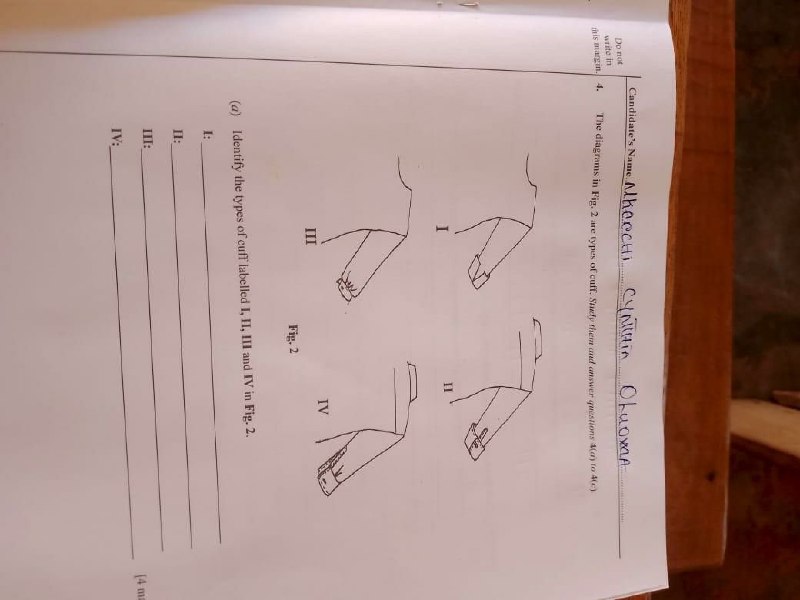
(4a) Types of cuffs:
I: Turned-back Cuff (or French Cuff) – This style is folded back on itself and usually requires cufflinks or a specific buttoning style.
II: Two-Button Cuff – A standard barrel cuff that features two buttons arranged vertically or horizontally for adjustability and style.
III: Band Cuff (or Single-Button Barrel Cuff) – A simple, functional cuff that is gathered at the wrist and fastened with a single button.
IV: Shirt Cuff with Placket – This illustrates a standard shirt cuff showing the sleeve slit (placket) and the buttoning mechanism used to close the sleeve.
(4b) Methods of neatening a cuff:
(i) Hemming.
(ii) Facing.
(iii) Binding.
(4c) Reasons for attaching a cuff to a sleeve:
(i) To neaten the raw edges of the sleeve.
(ii) To decorate/beautify the garment.
(iii) To control the width of the sleeve opening at the wrist.
NUMBER FIVE
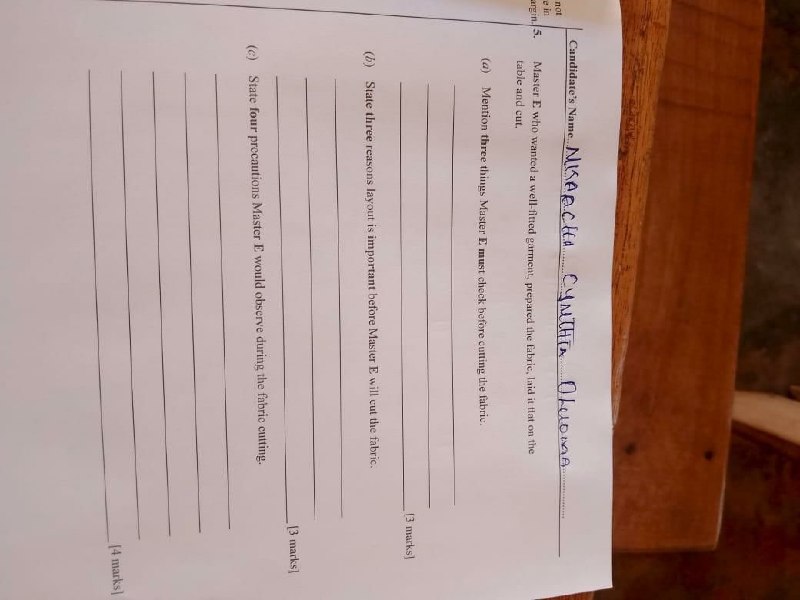
(5a) (PICK ANY THREE)
(i) Grain line.
(ii) Fabric defects.
(iii) Fabric width.
(iv) Pattern alignment.
(v) Nap or pile direction.
(5b) (PICK ANY THREE)
(i) To ensure economical use of fabric (minimise fabric waste).
(ii) To ensure pattern pieces are placed on the correct grain for proper fit and drape.
(iii) To prevent distortion or twisting of the finished garment.
(iv) To match pattern designs at seams.
(v) To ensure all pattern pieces fit properly on the fabric before cutting.
(5c) (PICK ANY FOUR)
(i) Use sharp scissors or rotary cutter to avoid jagged edges.
(ii) Avoid lifting or moving the fabric unnecessarily while cutting.
(iii) Avoid cutting through notches or important markings on the pattern.
(iv) Ensure that the fabric is laid flat and smooth on the cutting table to prevent distortion.
(v) Ensure that all pattern pieces are cut exactly on the cutting lines.
Stay Tuned – Answers Dropping Live
Once the WAEC 2026 Fashion Design & Home Management exam kicks off on Wednesday 13th May 2026, this page will start updating with verified OBJ and Theory answers. Keep refreshing this page during the exam, bookmark it now so you don’t forget, and make sure you join the official Examsmooth WhatsApp group for faster updates and special runs.
Tap the button below to enter the group now and secure your slot before the rush starts:
 Examsmooth
Leave a comment