
NOTE: The theory questions are the same across all states. OBJ answers differ by state. Always verify the question matches before using any answer.
NECO 2026 LITERATURE IN ENGLISH OBJ ANSWERS
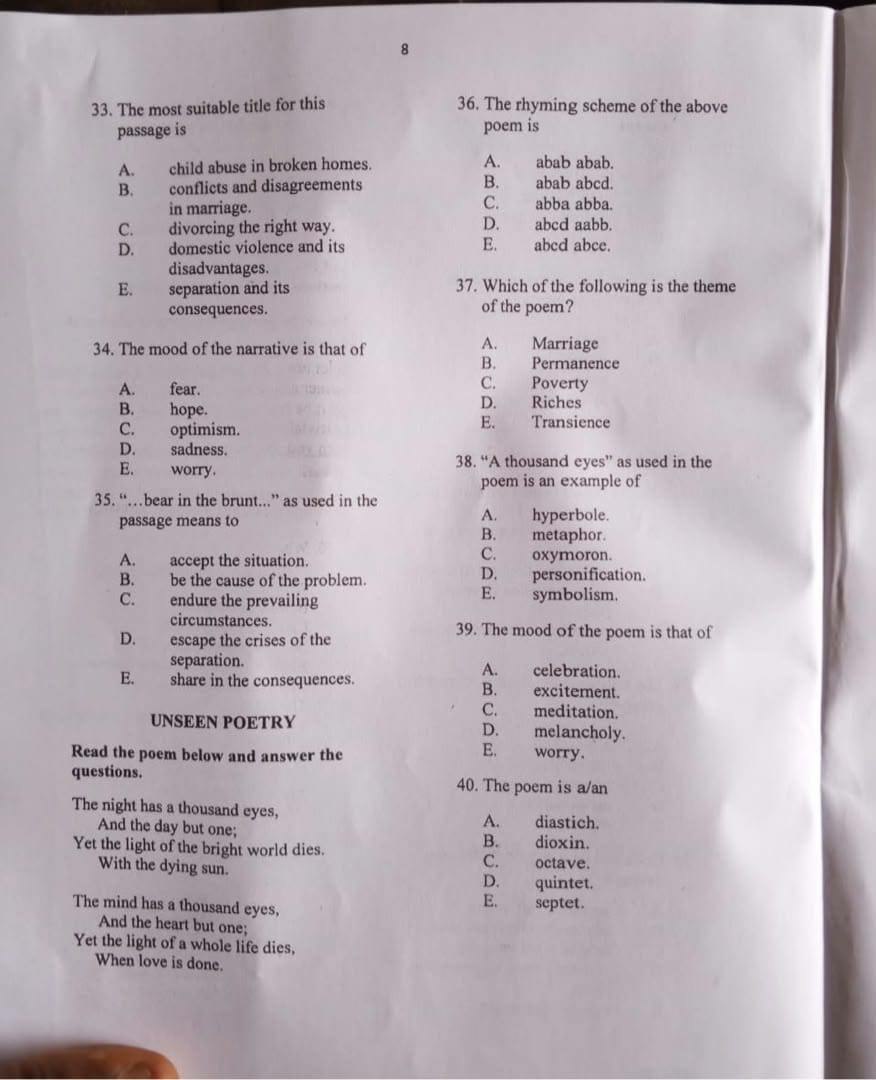
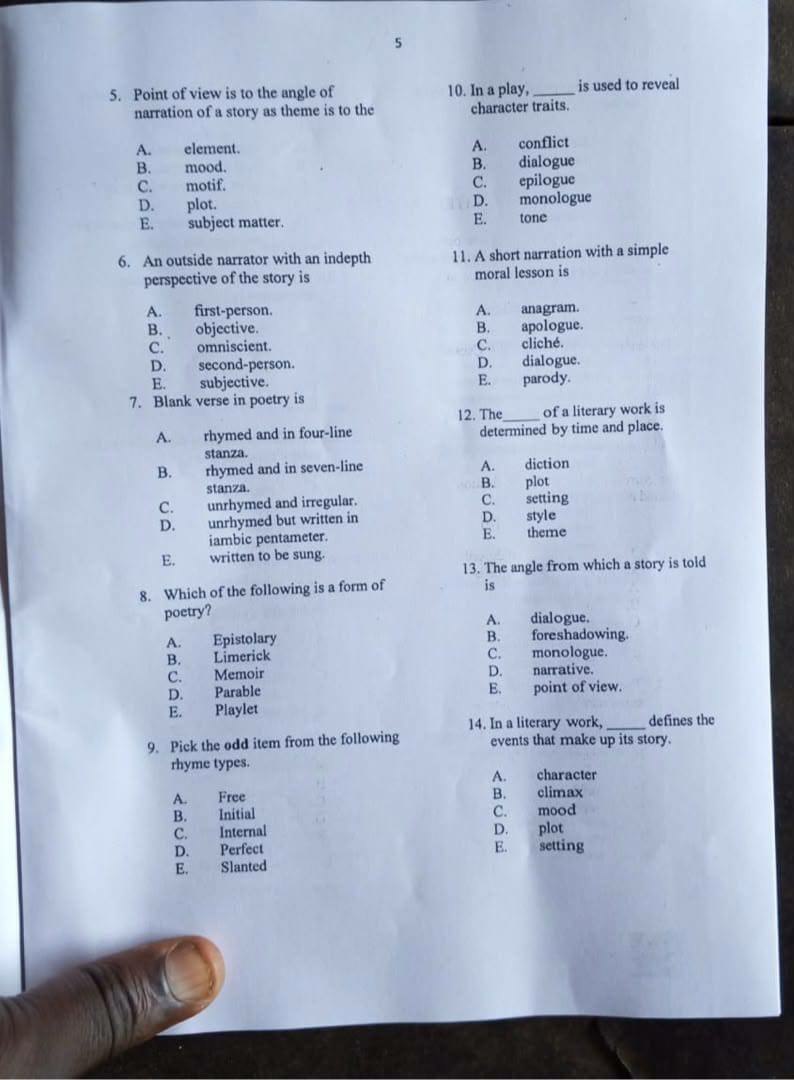
01-10: AAACECDBAB
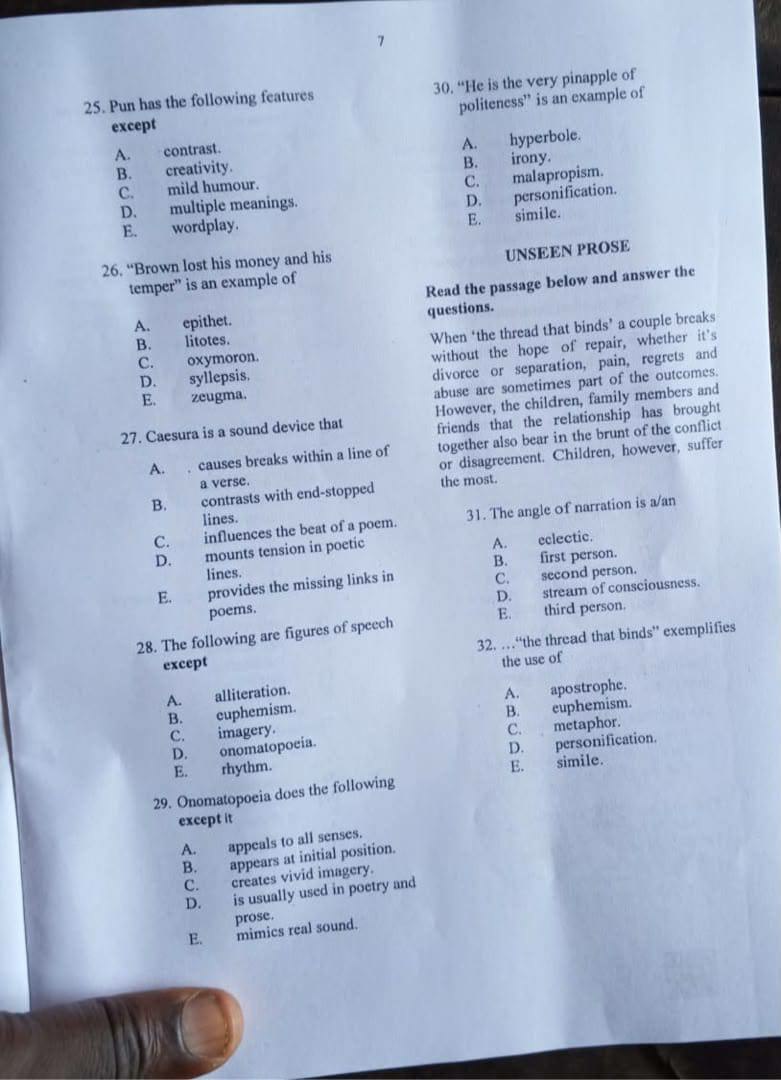
11-20: BCEDCBBACD
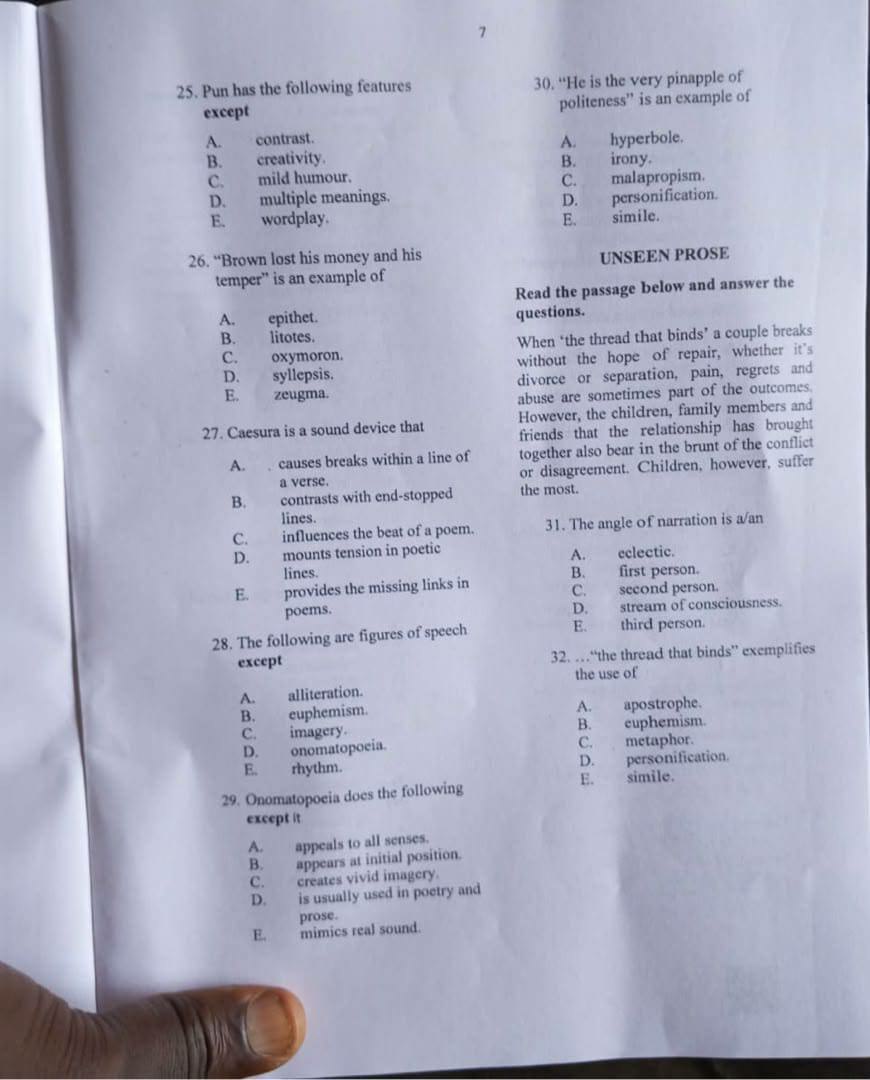
21-30: BEAAAEAEAC
31-40: ECEDCAEADC
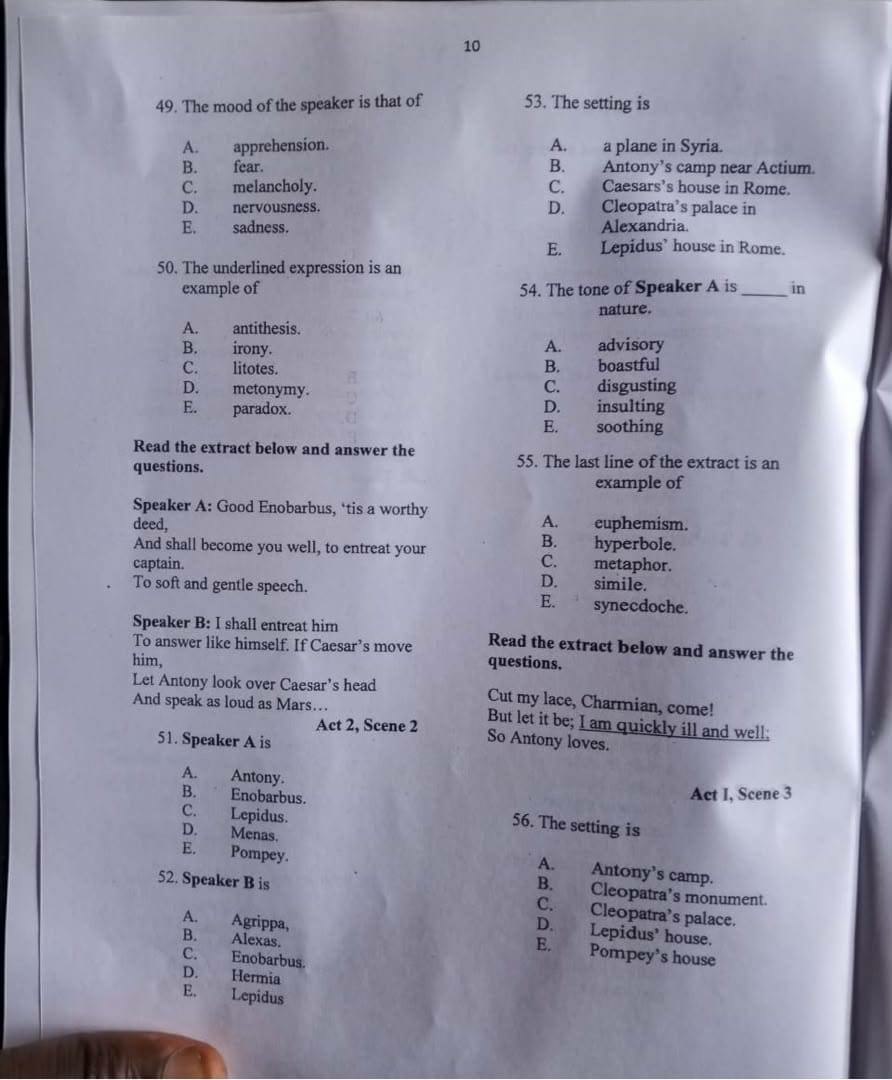
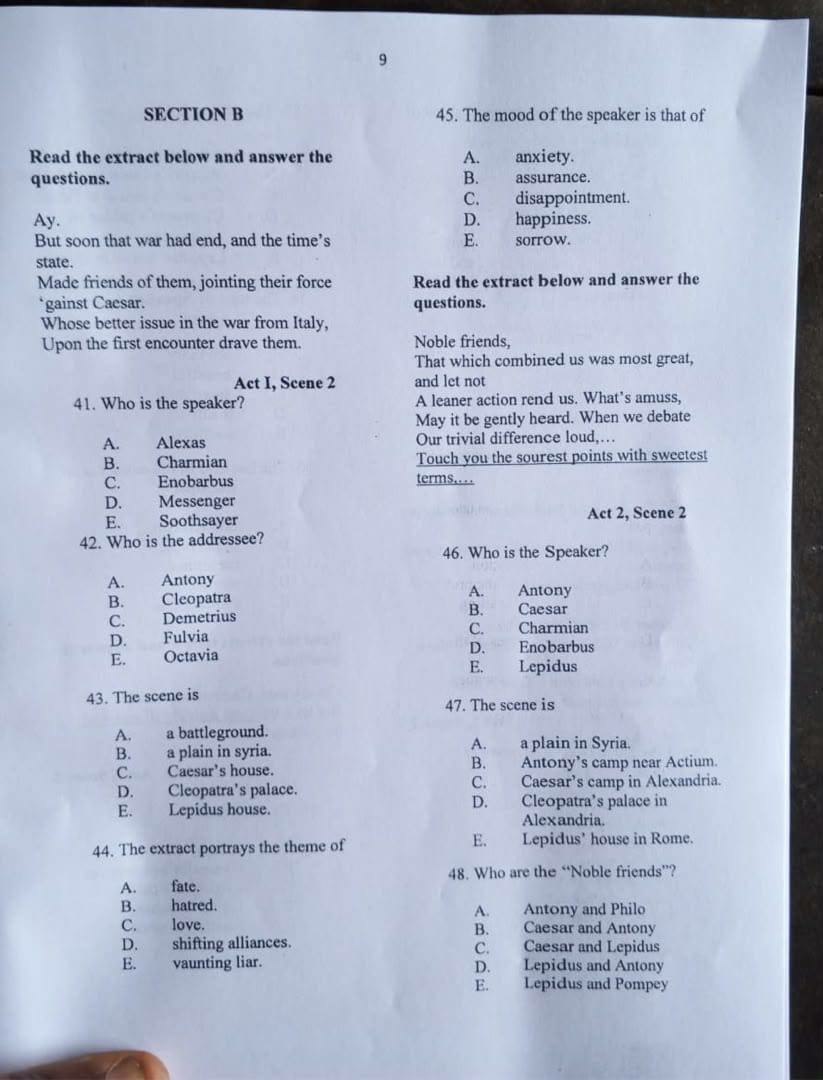
41-50: DADDBEEBAA
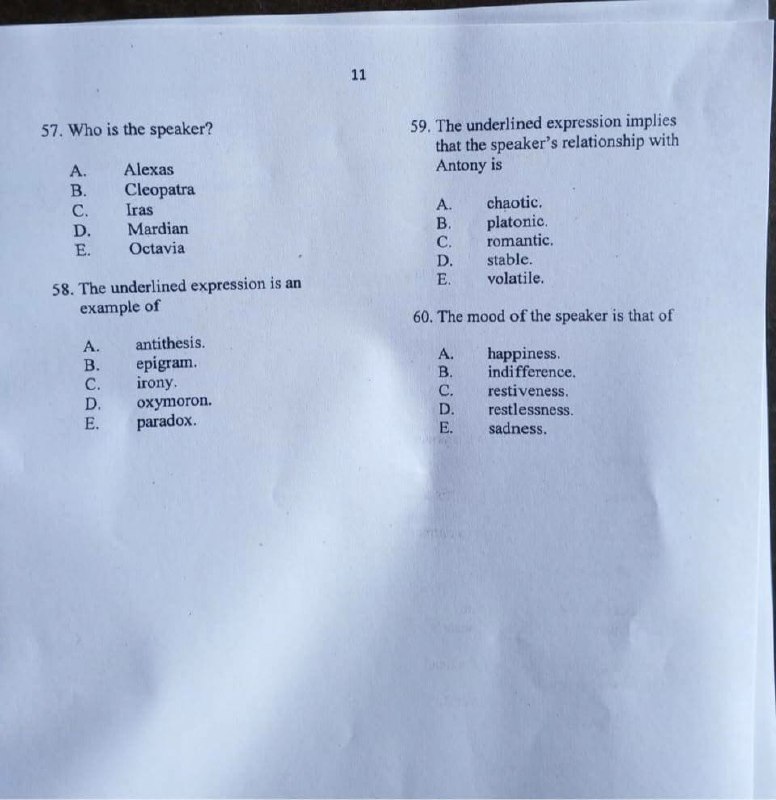
51-60: CCEADCBEED
NECO 2026 LITERATURE IN ENGLISH THEORY ANSWERS
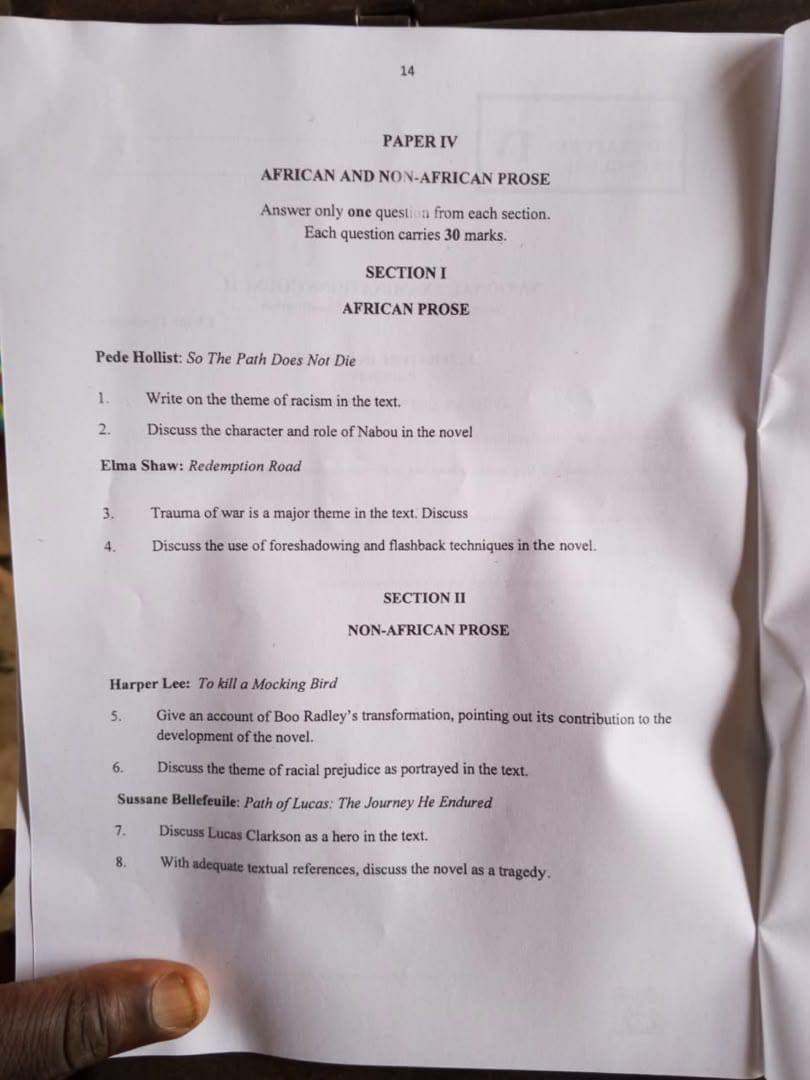
QUESTION 1: THE THEME OF RACISM IN SO THE PATH DOES NOT DIE
Pede Hollist's So the Path Does Not Die is primarily known for its treatment of female circumcision and the conflict between tradition and modernity, but running alongside these is a strong and carefully developed theme of racism and discrimination. Hollist presents this theme on two distinct fronts: the ethnic/tribal discrimination Fina experiences in Sierra Leone, and the racial and inter-black tensions she encounters in America. Through Fina's journey across both continents, the author demonstrates that prejudice is not confined to a single form or a single place, and that it plays a major role in shaping her sense of alienation and her lifelong search for belonging.
Ethnic Discrimination in Sierra Leone
The first layer of discrimination Fina faces occurs at home, in Freetown. She belongs to the Fulani ethnic group, which is a minority in Sierra Leone and is often looked down upon by other tribes. During her school years and later at university, Fina experiences hardship and prejudice tied directly to her Fulani identity. This is significant because it shows the reader, early in the novel, that discrimination is not something Fina will simply escape by staying in Africa; it exists within her own homeland, among her own people, long before she ever encounters racial prejudice abroad. Hollist uses this to establish that tribalism and ethnic bias are as damaging as any other form of racism, and that Fina's outsider status begins well before she leaves Sierra Leone.
Racial and Inter-Black Tension in America
When Fina relocates to the United States in search of opportunity, she expects to escape the discrimination of home, but instead she meets a different, more layered form of prejudice. She finds herself caught in the friction between Africans, African-Americans, and Caribbean immigrants, three groups that share a common ancestry but are divided by culture, class, and competing notions of what it means to be Black. Hollist dramatizes this through Fina's friendships and relationships, particularly with her African-American best friend Aman and her Trinidadian love interest, Cammy. Conversations among these characters openly question whether an African diaspora complex, a natural unity among all Black people, truly exists, or whether it is merely wishful thinking. This debate exposes real tension: African immigrants are sometimes viewed with suspicion or condescension by African-Americans, while Africans themselves may hold stereotyped assumptions about African-Americans and Caribbean people. Through this, Hollist illustrates that racism and prejudice can exist even within a shared racial identity.
Stereotypes About Africa
A further dimension of the racism theme is the way other characters misunderstand and stereotype Africa itself. Fina frequently has to correct people, such as Cammy, who hold narrow or inaccurate views of the African continent, seeing it only through the lens of poverty, war, or barbaric customs. Fina's confident correction of these misconceptions is important because it shows her resisting the discrimination directed not just at her personally, but at her entire heritage. Hollist uses Fina's voice here to challenge the Western tendency to flatten Africa into a single, negative story.
Effect on Fina's Search for Identity
All these layers of discrimination, tribal, racial, and cultural, combine to deepen Fina's sense of otherness. She never fully belongs in Sierra Leone because of her ethnicity, and she never fully belongs in America because of the complicated racial hierarchies among Black communities there. This constant experience of exclusion is directly tied to the novel's larger theme: Fina's lifelong quest for identity and home. Her eventual return to Sierra Leone at the end of the novel can be read as her final attempt to find a place where she is not defined or diminished by other people's prejudice.
Conclusion
Through Fina's experiences of tribal discrimination in Freetown and racial/inter-ethnic tension in America, Hollist demonstrates that prejudice takes many forms and is not limited to relations between Black and White people. Discrimination can exist between tribes, between diasporic communities, and even within families and friendships. This theme reinforces the novel's central message that true belonging must come from within, since no single location, Africa or America, offers Fina an escape from bias and exclusion.
QUESTION 2: NABOU IN SO THE PATH DOES NOT DIE
Nabou is Finaba Fina's mother and one of the most significant minor characters in So the Path Does Not Die. She represents modernity, education, and maternal protection, standing in direct and dramatic opposition to her mother-in-law, Baramusu, who embodies tradition and ancestral custom. Nabou's decisions in the opening chapters set the entire novel in motion, making her far more than a background figure. She is the catalyst for Fina's whole journey.
Her Background and Character Traits
Nabou comes from a city background, unlike the rural, tradition-bound Baramusu. Significantly, she is not herself a musu ba, an initiated woman, a fact that irritates Baramusu deeply and marks Nabou as an outsider to the strict customs of Koinadugu from the very beginning of her marriage to Amadu. Physically described as tall and stately, with high cheekbones and fluent Fulani, Nabou is nonetheless a woman caught between two worlds. She performs her wifely duties efficiently, yet she refuses to surrender her convictions to her husband's family. This tension establishes her as a complex figure, respectful of her position within the family, but unwilling to be dominated by tradition when she believes it is harmful.
Nabou is portrayed as firm and strong-willed. Although Baramusu is a well-known and respected digba, traditional circumciser, with significant authority in the community, Nabou has learned over time to stand her ground against her mother-in-law's pressure and resentment. This firmness is not born out of stubbornness alone but out of personal tragedy. Nabou's first daughter, Dimusu, died from complications after undergoing the same circumcision ritual that Baramusu now wishes to perform on Fina. This devastating loss is the emotional root of Nabou's resistance, and it makes her determination to protect Fina deeply understandable and sympathetic to the reader.
Nabou also believes strongly in Western-style education. She insists that she wants Fina to learn new ways, just as boys in the village are permitted to do, rather than being limited to domestic training in cooking and childcare. This shows that her resistance to tradition is not simply rejection for its own sake, but part of a broader vision for her daughter's future, one that includes literacy, opportunity, and choice.
Finally, Nabou demonstrates remarkable resilience and sacrifice. After the family is forced to leave the village and later after Amadu's sudden death from tetanus poisoning, Nabou is left to fend for her family alone. She starts a small trading business in Freetown to support herself and ensure that Fina remains in school, illustrating her resourcefulness and her unwavering commitment to her daughter's welfare even in the face of widowhood and poverty.
Her Role in the Novel
Nabou's role in the plot is pivotal. Her refusal to allow Fina's circumcision is the central conflict that opens the novel, setting her directly against Baramusu in a battle of wills that the young Fina witnesses and internalizes. When Baramusu secretly attempts to have Fina initiated while Nabou is away, and Amadu intervenes to stop it, the resulting scandal, considered a desecration of custom, forces the family to abandon Talaba Village altogether and relocate to Freetown. This single event, rooted in Nabou's convictions, triggers the entire chain of migration that eventually carries Fina from Sierra Leone to America.
Symbolically, Nabou represents the forces of change, protection, and modern thinking, while Baramusu represents ancestral duty and communal tradition. Their clash dramatizes the novel's overarching theme of tradition versus modernity, allowing Hollist to explore, through two strong female voices, whether cultural preservation or individual protection should take precedence when a custom causes harm.
Conclusion
Nabou is the moral and dramatic engine behind the opening conflict of So the Path Does Not Die. Her courage in defying a harmful tradition, her sacrifices as a widowed single mother, and her insistence on education for her daughter shape the entire direction of the novel. Without Nabou's stand, Fina's flight from Sierra Leone, her education, and her eventual journey to America, and everything that follows from it, would never have taken place, making Nabou's role foundational to the story as a whole.
QUESTION 6: RACIAL PREJUDICE IN TO KILL A MOCKINGBIRD
Racial prejudice is the most dominant and defining theme of Harper Lee's To Kill a Mockingbird. Set in the fictional town of Maycomb, Alabama, during the Great Depression of the 1930s, the novel exposes the deep-seated racism of the American South through the trial of Tom Robinson, a Black man falsely accused of raping a white woman, Mayella Ewell. Through this central plot and its surrounding events, Harper Lee examines how racial prejudice corrupts justice, shapes an entire community, and is passed down through generations.
The heart of the novel's exploration of racism is the trial in which Atticus Finch defends Tom Robinson, a Black man wrongly accused by Bob and Mayella Ewell. Despite Atticus presenting clear evidence of Tom's innocence, including proof that Tom's left arm is crippled and could not have inflicted Mayella's injuries, while Bob Ewell is left-handed, the all-white jury convicts Tom regardless. This verdict demonstrates how deeply racial bias overrides fact and reason in the justice system of Maycomb.
After his conviction, Tom is shot and killed while attempting to escape from prison. His death is a tragic culmination of the novel's racial theme, symbolising how prejudice does not merely deny Black citizens fair treatment but can cost them their lives, regardless of innocence.
Tom Robinson is explicitly linked to the mockingbird symbol introduced early in the novel, a creature that does nothing but good and is innocent of any harm, yet is destroyed. His fate embodies the moral centre of the novel, that it is a sin to harm the innocent, and society's racial prejudice does exactly this.
Atticus Finch stands apart from most of Maycomb's white community by treating Black citizens with respect and dignity, and by taking on Tom's defence despite knowing he is likely to lose and that his family will face social hostility as a result. His courage and integrity present a model of moral resistance to prejudice, even when it is unpopular or dangerous.
Through the Finch family's housekeeper, Calpurnia, and the children's visit to the First Purchase African M.E. Church, Lee humanises the Black community of Maycomb, showing their dignity, warmth, and strong sense of community despite the discrimination they endure daily.
The novel shows how racism is taught and inherited rather than natural, illustrated through children like Cecil Jacobs and Francis, who repeat racist attitudes learned from adults, taunting Scout and Jem for Atticus's decision to defend a Black man.
Jem and Scout themselves become targets of the town's prejudice because of their father's role in the case, most dangerously when Bob Ewell attacks them in revenge, showing how racial hatred can spill over into violence against anyone associated with challenging it.
The novel also shows prejudice operating along class lines, particularly through the Ewell family, whose own poverty and social disgrace seem to fuel Bob Ewell's need to assert superiority over Tom Robinson and other Black citizens.
Conclusion
Through the trial and death of Tom Robinson, the moral stance of Atticus Finch, and the experiences of the wider Black community in Maycomb, Harper Lee delivers a powerful indictment of racial prejudice in the American South. The novel demonstrates that such prejudice is not innate but learned, that it can override truth and justice, and that real courage lies in standing against it, even when doing so comes at a great personal cost.
QUESTION 7: LUCAS AS A HERO IN PATH OF LUCAS: THE JOURNEY HE ENDURED
Susanne Bellefeuille's Path of Lucas: The Journey He Endured presents Lucas Clarkson as a hero, but not in the traditional sense of physical strength, warfare, or extraordinary feats. Instead, Lucas embodies a quiet, domestic form of heroism, one defined by sacrifice, resilience, devotion, and unconditional love in the face of relentless personal tragedy. Framed as an autobiographical, true-life narrative, the novel presents Lucas's heroism as achievable, human, and deeply moving precisely because it is rooted in ordinary life rather than grand adventure.
As a young man, Lucas dreams of becoming a certified mechanic and pursues training at his friend Jim's garage in Uxbridge. However, throughout the novel, Lucas repeatedly sets aside his personal ambitions, including a lucrative supervisory job in Kemptville that would have taken him away from his family, in order to remain present for his wife and children. This willingness to place family above personal advancement marks the first dimension of his heroism.
Lucas's love for his wife, Isabelle, is tested severely by her deteriorating physical and mental health, including a psychotic depression rooted in her abusive childhood. Rather than abandoning her, Lucas remains steadfast, caring for her through her collapse, diagnosis, and recovery. His determination is captured when he insists that no effort is too small if it means restoring his wife's health and happiness, treating the search for her healing as his life's central mission.
Across the course of the novel, Lucas loses his son Richard to cancer, both of his parents, his father John, and his mother Elizabeth to Alzheimer's disease, and eventually his beloved wife Isabelle to a heart attack. Despite this accumulation of grief, Lucas does not collapse into despair. He continues to show up for the family members who remain, illustrating heroic resilience, the capacity to keep loving and caring for others even while carrying immense personal sorrow.
The novel's frame narrative shows an elderly Lucas keeping vigil at the hospital bedside of his comatose daughter, Lucy, after a car accident. Believing that his voice and memories might anchor her back to life, Lucas tells her his entire life story, despite his own failing heart. He insists to his father-figures and to himself that he must push through his own physical jolts and pain in order to fight for his daughter's survival, even undertaking the exhausting task of contacting her brothers to inform them of her condition. This final act, risking, and ultimately sacrificing, his own life to save his daughter's, is the clearest embodiment of heroic self-sacrifice in the novel.
Lucas dies of a heart attack shortly after completing his story and shortly after Lucy awakens from her coma, suggesting that his storytelling, his last heroic act, succeeds in saving her life at the cost of his own. This positions Lucas as a redemptive, almost sacrificial hero whose death gives life to his daughter.
Conclusion
Lucas Clarkson's heroism in Path of Lucas is not built on physical conquest but on enduring love, repeated sacrifice, and quiet determination through decades of hardship. His willingness to surrender personal dreams, care for a suffering wife, absorb wave after wave of family loss, and ultimately give his own life to save his daughter, presents him as a profoundly human hero, one whose courage lies in his capacity to keep loving and enduring no matter the cost.
NECO 2026 LITERATURE IN ENGLISH — QUESTION PAPER
 Examsmooth
Leave a comment