
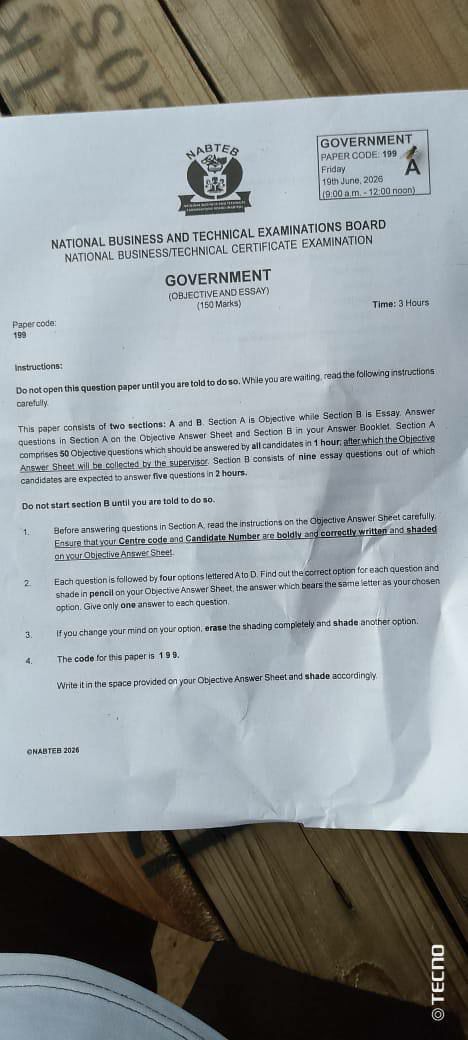
NABTEB 2026 Government Question Paper (Type A)
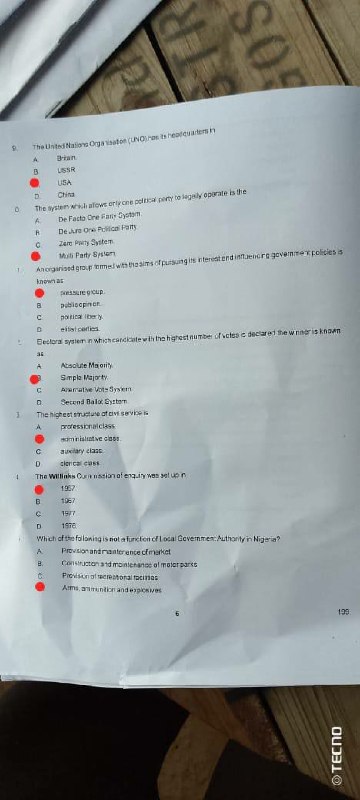
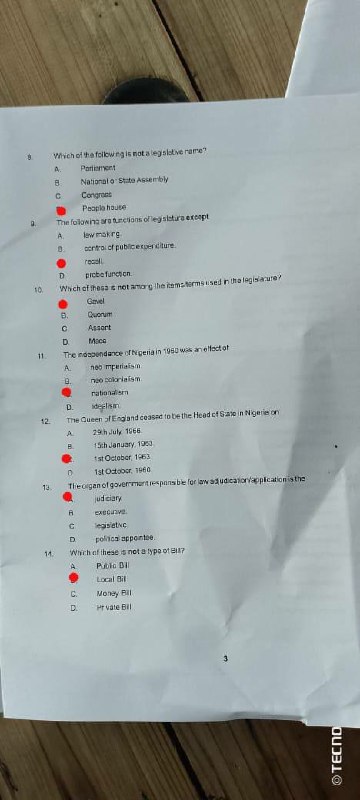
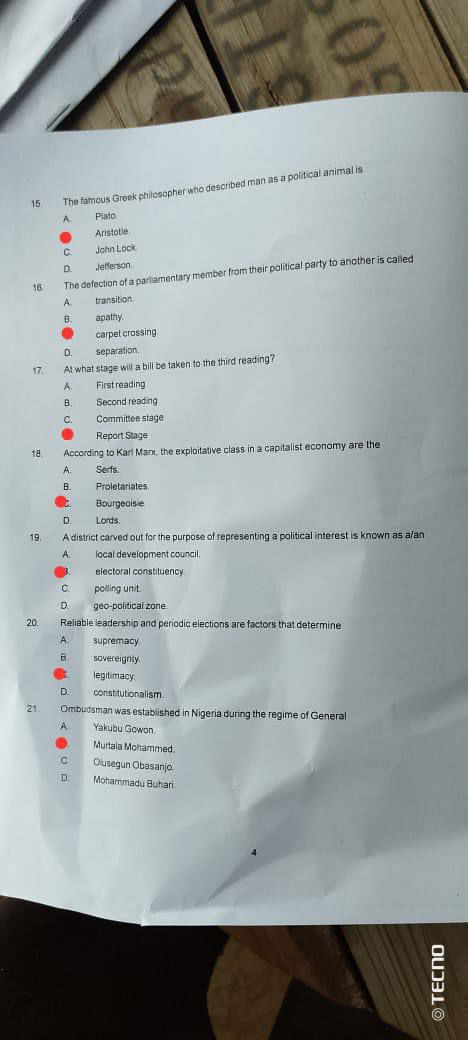
NABTEB 2026 Government Answers — Type A
NOTE: Options A, B, C & D are the same but reshuffled. Use the answers provided to trace the correct questions in your booklet before answering. WE USED TYPE-A IN SOLVING, SO TRACE FROM YOUR QUESTIONS BEFORE COPYING THE ANSWERS.
OBJ ANSWERS (01–50)
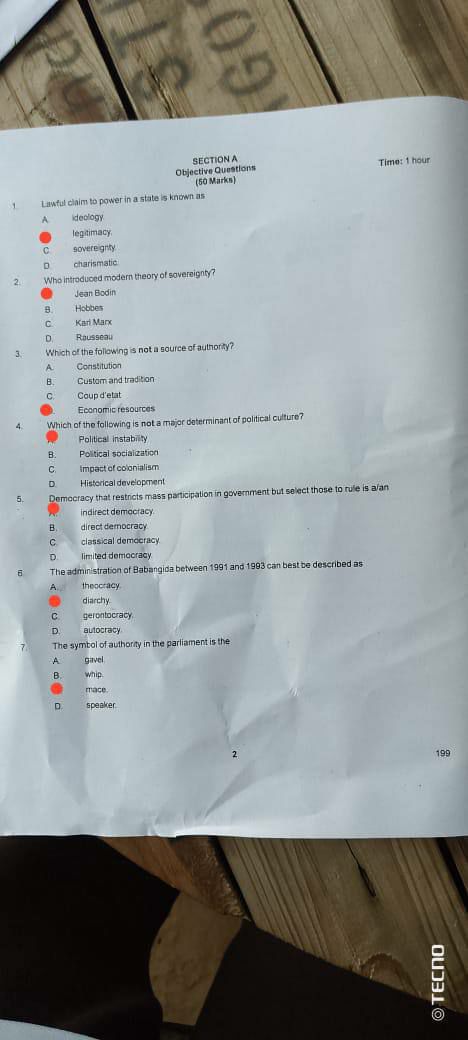
01. B (Legitimacy)
02. A (Jean Bodin)
03. D (Economic resources)
04. A (Political instability)
05. A (Indirect democracy)
06. B (Diarchy)
07. C (Mace)
08. D (People house)
09. C (Recall)
10. A (Gavel)
11. C (Nationalism)
12. C (1st October, 1963)
13. A (Judiciary)
14. B (Local Bill)
15. B (Aristotle)
16. C (Carpet crossing)
17. D (Report Stage)
18. C (Bourgeoisie)
19. B (Electoral constituency)
20. C (Legitimacy)
21. B (Murtala Mohammed)
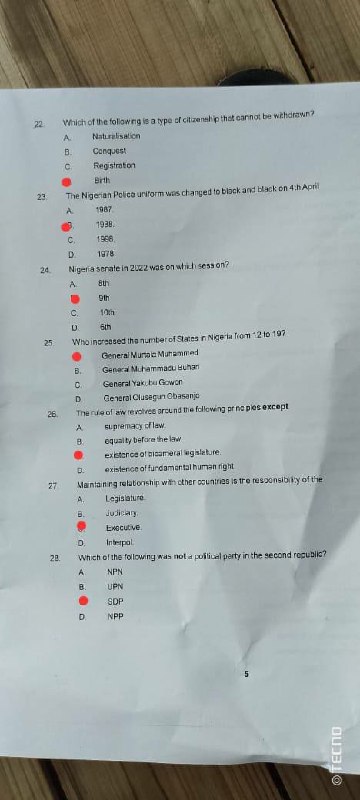
22. D (Birth)
23. B (1988)
24. B (9th)
25. A (General Murtala Muhammed)
26. C (Existence of bicameral legislature)
27. C (Executive)
28. C (SDP)
29. C (USA)
30. B (De Jure One Political Party)
31. A (Pressure group)
32. B (Simple Majority)
33. B (Administrative class)
34. A (1957)
35. D (Arms, ammunition and explosives)
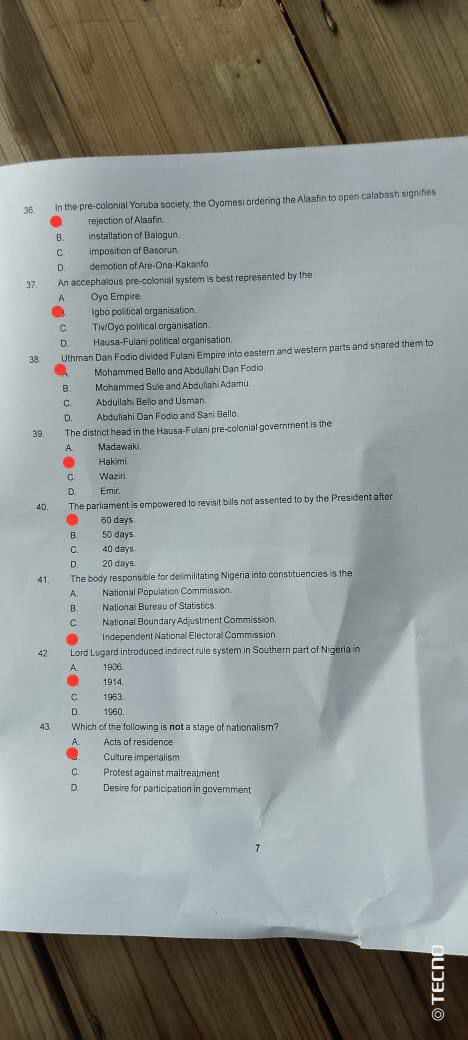
36. A (Rejection of Alaafin)
37. B (Igbo political organisation)
38. A (Mohammed Bello and Abdullahi Dan Fodio)
39. B (Hakimi)
40. A (60 days)
41. D (Independent National Electoral Commission)
42. B (1914)
43. B (Culture imperialism)
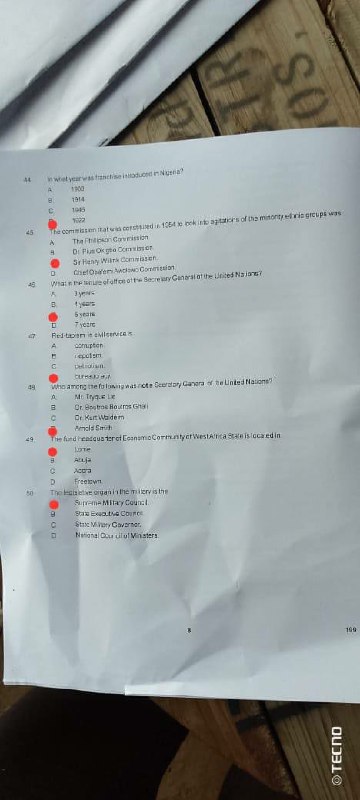
44. D (1922)
45. C (Sir Henry Willink Commission)
46. C (5 years)
47. D (Bureaucracy)
48. D (Arnold Smith)
49. A (Lome)
50. A (Supreme Military Council)
ESSAY ANSWERS
Question 1
(1a) Components of Political Culture
- Cognitive component
- Affective component
- Evaluative component
(1b) Explanation of Components
- Cognitive component: This refers to the knowledge, awareness, and understanding that citizens have about the political system, government institutions, and political processes.
- Affective component: This refers to the feelings, emotions, and attachments that people have towards their political system, leaders, and political institutions.
- Evaluative component: This refers to the judgments, opinions, and assessments people make about the performance of the government and political institutions based on their values and beliefs.
(1c) Elements/Characteristics of a State
- Population: A state must have people who permanently reside within it.
- Territory: A state must possess a defined geographical area with recognized boundaries.
- Government: A state must have an organized authority responsible for making and enforcing laws.
- Sovereignty: A state must have supreme authority over its internal and external affairs without external control.
- Permanence: A state continues to exist even when governments or leaders change.
- Recognition: A state should be recognized by other states and international organizations.
- Legal system: A state must have laws and institutions for maintaining order and justice.
- Ability to enter international relations: A state must be capable of establishing diplomatic and economic relations with other states.
- Independence: A state must be free from the control of another state in conducting its affairs.
- Organized administration: A state must have institutions and agencies for effective governance and service delivery.
Question 2
(2a) Definition of Legitimacy
Legitimacy is the acceptance and recognition of a government or political authority by the people as having the legal and moral right to rule. It means that citizens regard the government as lawful and are willing to obey its laws and directives without the use of force.
(2b) Ways of Achieving Legitimacy
- Free and fair elections
- Good governance
- Constitutional rule
- Popular support of the people
- Protection of fundamental human rights
(2c) Explanation
- Free and fair elections: A government gains legitimacy when leaders are elected through credible, transparent, and democratic elections.
- Good governance: When a government provides security, welfare, and development for its citizens, it earns public acceptance and legitimacy.
- Constitutional rule: A government that operates according to the constitution and the rule of law is more likely to be regarded as legitimate.
- Popular support of the people: Legitimacy is strengthened when the majority of citizens approve of and support the government.
- Protection of fundamental human rights: A government that respects and protects the rights and freedoms of citizens is more likely to gain their trust and acceptance.
Question 3
(3a) Functions of the Legislature
- Law-making: The legislature is responsible for making laws that guide the conduct of citizens and regulate government activities. It debates, amends, and passes bills into law.
- Representation: Members of the legislature act on behalf of their constituents by presenting their needs, complaints, and interests in government decisions.
- Oversight function: The legislature checks and monitors the executive to ensure that laws are properly implemented and public resources are not misused.
- Approval of budget: It examines, debates, and approves the national budget to ensure that government spending is properly planned and accountable.
- Amendment of the constitution: The legislature has the power to modify or update the constitution when necessary, following established legal procedures.
(3b) Types of Legislature
- Unicameral Legislature: A unicameral legislature is a law-making body that consists of only one chamber where all legislative functions are carried out. It allows faster decision-making and reduces the cost of governance since there is no second house for review of bills.
Examples: Ghana (Parliament of Ghana), Kenya (The Knesset — 120 members), China (National People’s Congress) - Bicameral Legislature: A bicameral legislature is a law-making system that consists of two separate chambers, usually an upper and a lower house. Bills must pass through both houses before becoming law, ensuring wider scrutiny and more balanced decision-making.
Examples: Nigeria (Senate and House of Representatives), United States (Senate and House of Representatives), United Kingdom (House of Lords and House of Commons)
Question 4
(4a) Definition of Public Opinion
Public opinion refers to the collective views, attitudes, beliefs, and feelings of members of the public about government policies, political issues, leaders, and public affairs. It represents what the majority of citizens think or feel about matters affecting society and plays an important role in influencing government decisions and policies.
(4b) Ways of Measuring Public Opinion
- Opinion polls
- Elections/voting results
- Mass media feedback
- Referendum
- Public demonstrations/protests
(4c) Explanation
- Opinion polls: These are surveys conducted to collect the views of a sample of people in order to estimate the opinion of the larger population on political or social issues.
- Elections/voting results: The outcome of elections shows the preference of the people and indicates their support or rejection of candidates, parties, or policies.
- Mass media feedback: Public opinions are measured through letters, phone-in programmes, social media comments, and discussions expressed through newspapers, radio, and television.
- Referendum: This is a direct vote by the electorate on a specific issue or policy, and the result reflects the general opinion of the people on that matter.
- Public demonstrations/protests: Rallies, strikes, and protests show the strength of public feelings and are used to express support or opposition to government policies.
Question 5
(5a) Differences Between Political Parties and Pressure Groups
- Aim: Political parties aim to win political power and form government, while pressure groups aim to influence government decisions without contesting elections.
- Membership: Political party membership is broad and open to citizens with similar political ideas, while pressure groups have limited membership based on a specific interest or cause.
- Scope of interest: Political parties deal with wide national issues affecting all areas of governance, while pressure groups focus on specific issues such as labour rights, education, or environment.
- Election participation: Political parties participate in elections and present candidates, while pressure groups do not contest elections but may support or oppose candidates.
- Responsibility: Political parties are responsible for forming and running government when elected, while pressure groups only act as advocates and critics of government policies.
(5b) Methods Used by Pressure Groups
- Lobbying: Pressure groups contact lawmakers and government officials directly to influence policies and decisions in their favour.
- Publicity and media campaigns: They use newspapers, radio, television, and social media to create awareness and gain public support for their cause.
- Strikes and industrial action: Some pressure groups, especially labour unions, use strikes and work stoppages to pressure government or employers to meet their demands.
- Demonstrations and protests: They organize rallies, marches, and peaceful protests to show public support and draw attention to their demands.
- Petitions and legal action: They submit petitions or take legal cases to court to challenge government decisions or seek enforcement of rights.

 Examsmooth
Leave a comment