
NABTEB 2026 Animal Science Answers — Paper 452-1
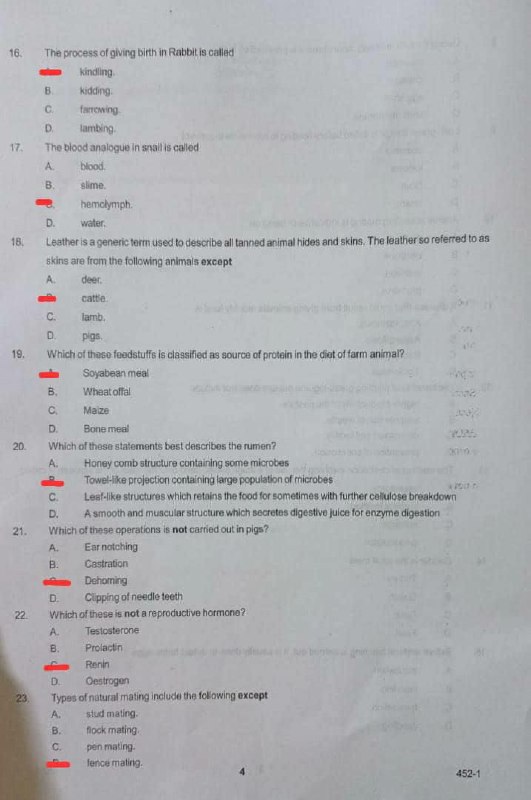
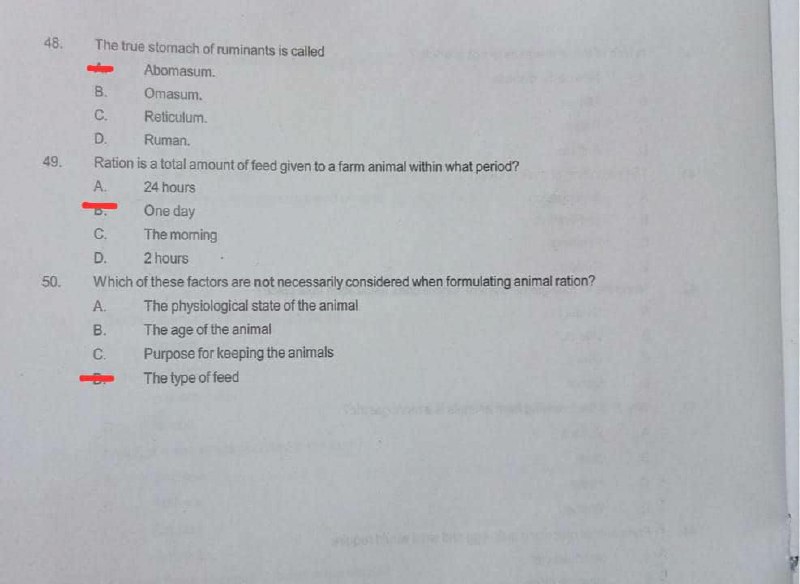
NOTE: Options A, B, C & D are the same but reshuffled. Use the answers provided to trace the correct questions in your booklet before answering.
OBJ ANSWERS (01–50)
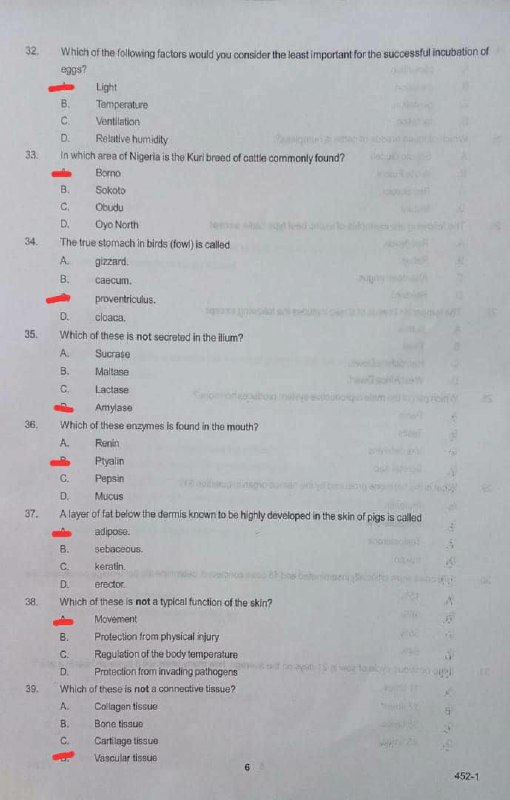
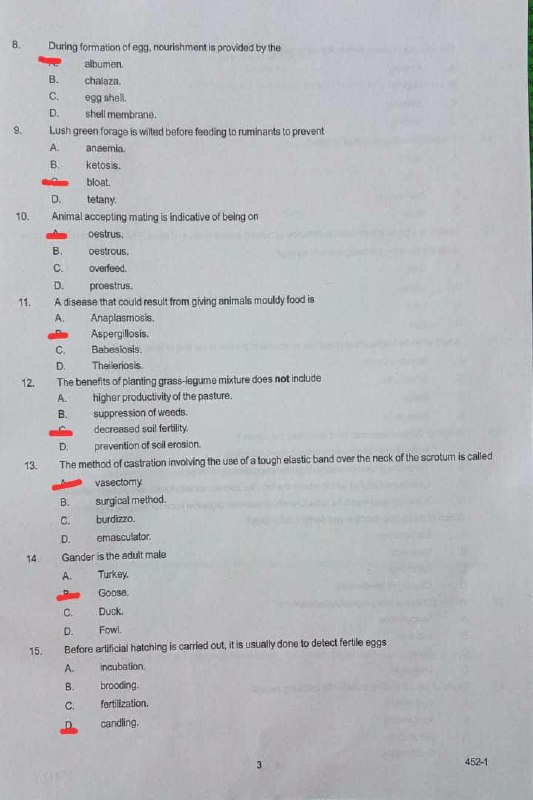
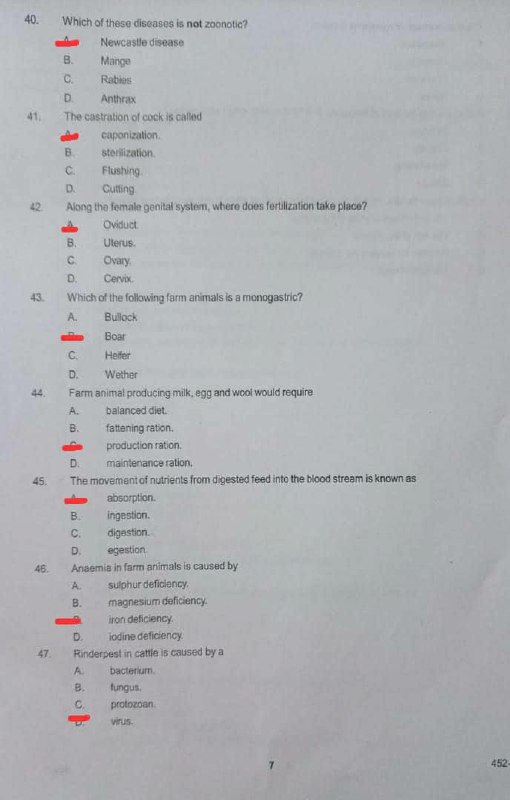
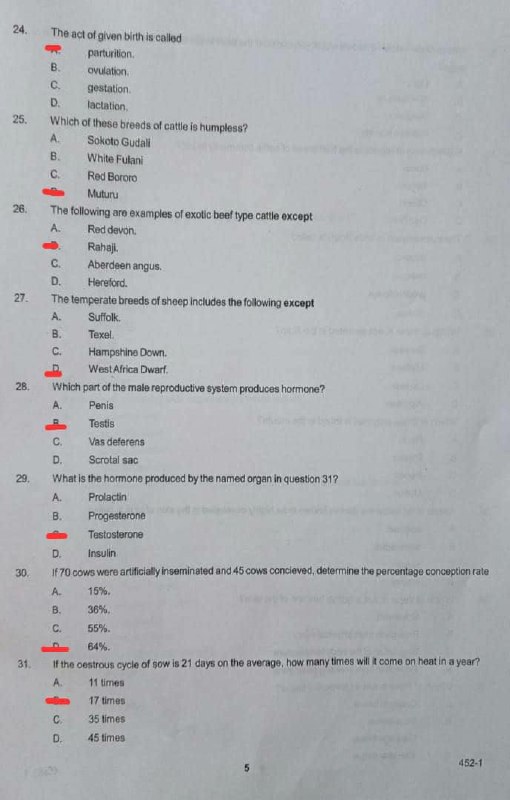
These are the question paper images for Paper 452-1:

ESSAY ANSWERS
Question 6
(6a) Breeds and Characteristics
(i) Cattle
- White Fulani: White coat color, black ears, long lyre-shaped horns, and a distinct hump.
- N’Dama: Compact build, light fawn to dark brown coat, lyre-shaped horns, and highly resistant to trypanosomiasis (sleeping sickness).
(ii) Goat
- West African Dwarf: Short legs, compact muscular body, highly prolific, and resistant to trypanosomiasis.
- Red Sokoto (Maradi): Uniform dark red coat, excellent leather quality, good milkers, and medium-sized.
(iii) Sheep
- Yankasa: White coat with black patches around eyes and muzzle, rams have horns, and long legs.
- West African Dwarf Sheep: Small body size, short legs, mostly white or spotted coat, and high tolerance to disease.
(iv) Pig
- Large White: All-white skin, erect ears, long body, excellent maternal instincts, and high growth rate.
- Landrace: White skin, large drooping ears forward over the eyes, long lean body, and high carcass quality.
(v) Snail
- Archachatina marginata (Giant African Snail): Large size, rounded apex on the shell, dark brown shell stripes, and dark skin.
- Achatina achatina (Tiger Snail): Pointed shell apex, prominent dark zig-zag stripes resembling a tiger, and greenish-black body.
(6b) Systems of Goat Management
- Extensive System (Free Range): Goats roam freely to scavenge for food and water with little to no housing or medical care provided.
- Intensive System (Zero Grazing / Confinement): Goats are completely confined in a housing structure where feed, water, and medication are brought directly to them.
- Semi-Intensive System: A compromise where goats graze on managed pastures during the day and are sheltered in houses at night.
- Tethering System: Goats are secured to a peg or tree with a rope, limiting their grazing radius, and moved periodically to new grass.
Question 7
(7a) Definition of Animal Nutrition
Animal nutrition is the science that deals with the study of nutrients, their intake, digestion, absorption, assimilation, and utilization within the animal body for growth, maintenance, reproduction, and production.
(7b) Classes of Animal Feed
- Concentrates
- Roughages
- Succulents
- Supplements and Additives
(7c) Classes of Feed with Examples
(i) Concentrates
- Groundnut cake
- Maize grain
(ii) Roughages
- Silage
- Hay
(iii) Succulents
- Watermelon rinds
- Fresh elephant grass
(iv) Supplements and Additives
- Vitamin premix
- Bone meal
 Examsmooth
Leave a comment