
WAEC 2026 Physics Practical (Paper 3) Questions and Answers – Alternatives A & B
This page contains the complete WAEC 2026 Physics Practical (Paper 3) questions and fully worked answers for both Alternative A and Alternative B. You will see the official question paper images first, followed by clear, step-by-step solutions you can use to prepare for your exam.
WAEC 2026 Physics Practical – Official Question Paper (Images)
Scroll through these pages to view the exact WAEC 2026 Physics Practical (Paper 3) question paper before reading the detailed solutions below.
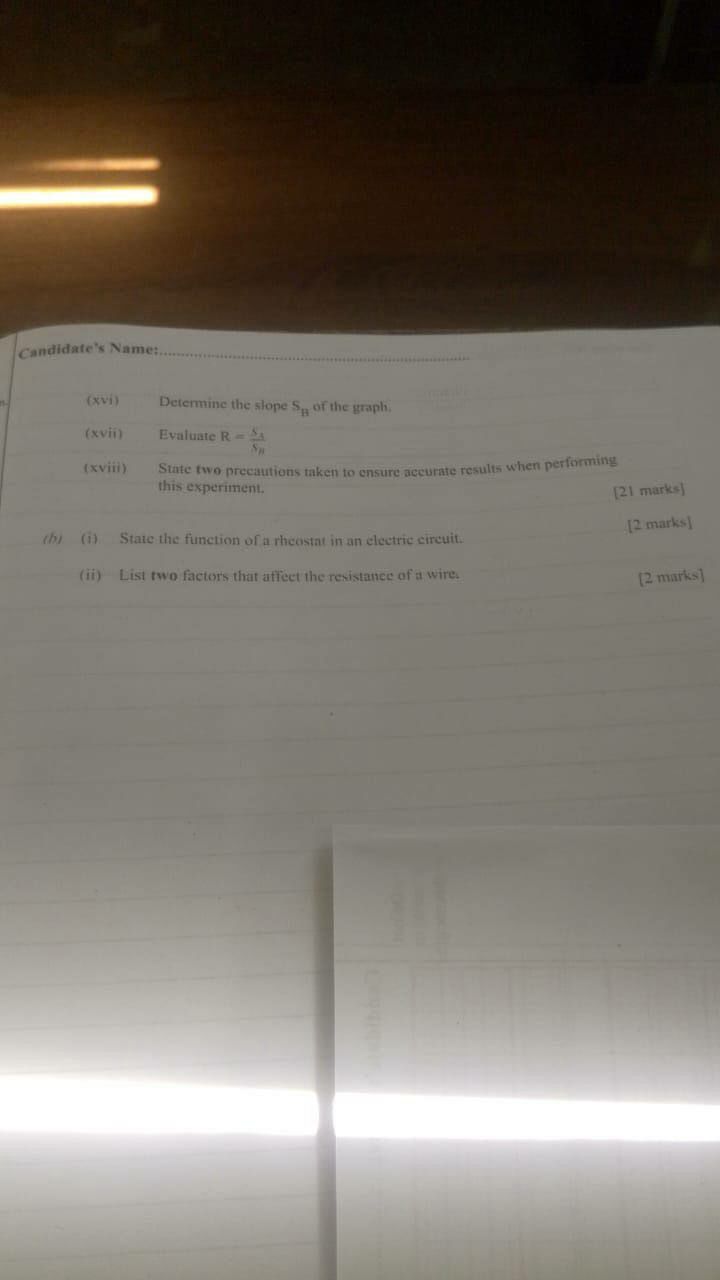
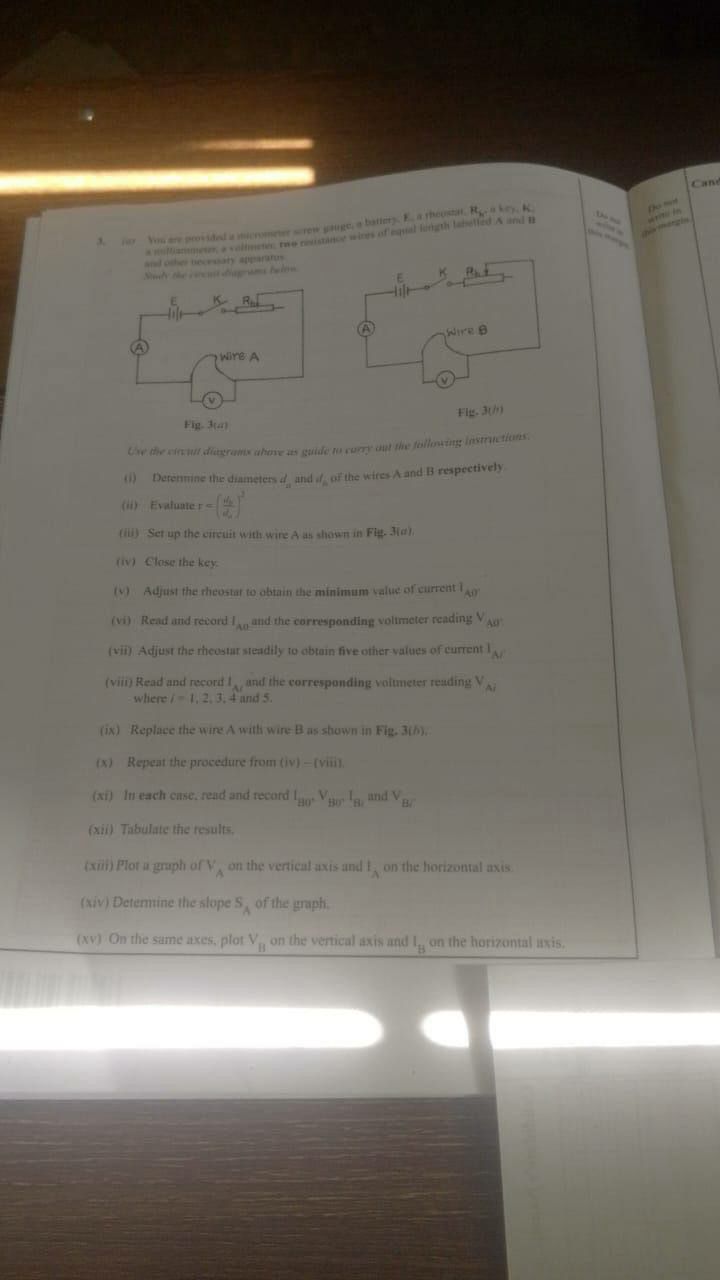
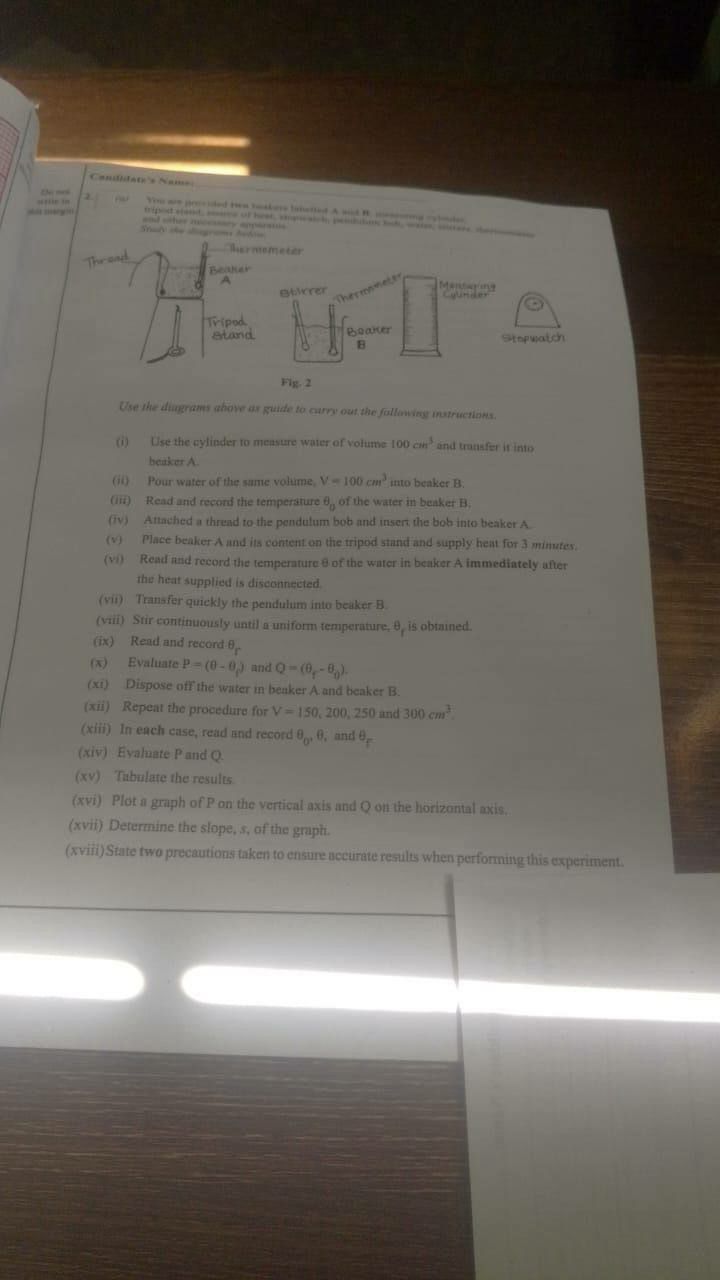
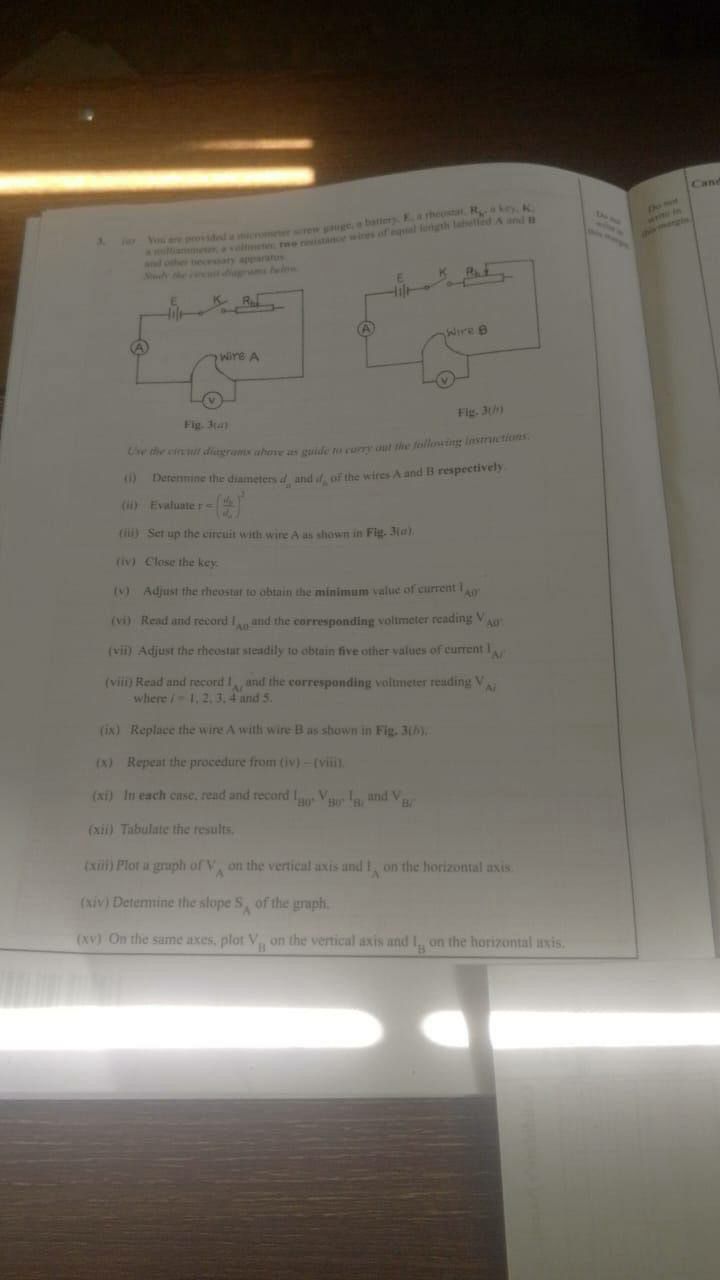
Alternative A – Question 1: Springs & Oscillation
Experimental Procedure and Sample Results
Apparatus: helical spring, set of masses, retort stand, clamp and boss, metre rule, stopwatch.
Procedure
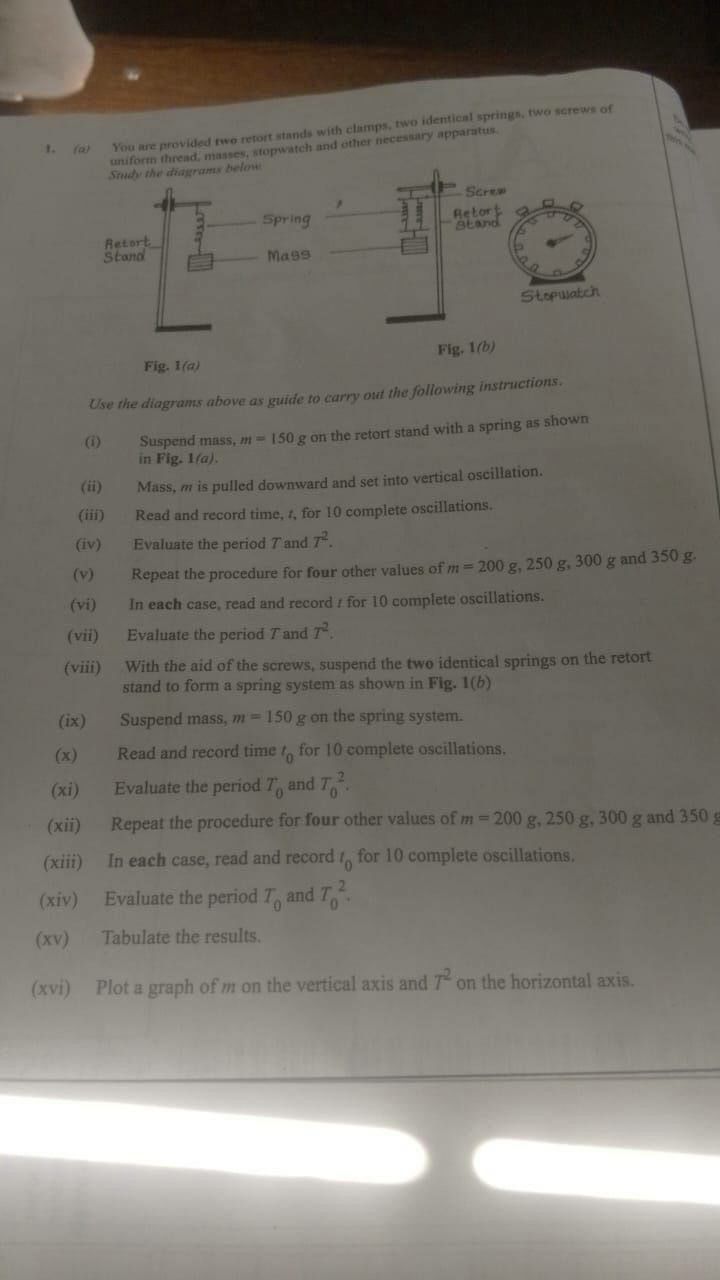
- Fix the spring securely to the clamp on the retort stand so that it hangs vertically. Suspend the mass hanger and add masses as required.
- Set the mass m to 150 g (0.150 kg). Displace the mass slightly downward and release it to oscillate vertically.
- Using the stopwatch, measure the time for 20 complete oscillations (to reduce timing error). Record the time t.
- Calculate the period T of oscillation:
T = t / 20. - Repeat the procedure for masses 200 g, 250 g, 300 g and 350 g.
Sample Table of Results
| m (g) | Time for 20 oscillations, t (s) | Period, T = t/20 (s) | T2 (s2) |
|---|---|---|---|
| 150 | 15.6 | 0.78 | 0.61 |
| 200 | 17.9 | 0.90 | 0.81 |
| 250 | 20.0 | 1.00 | 1.00 |
| 300 | 21.9 | 1.10 | 1.21 |
| 350 | 23.6 | 1.18 | 1.39 |
Graph of m against T2 and Slope
On a suitable graph sheet:
- Choose a convenient scale so that the points spread well on the graph paper.
- Plot T2 (s2) on the horizontal (x-) axis.
- Plot m (g) on the vertical (y-) axis.
- Mark each pair of values (T2, m) as a point and draw the best-fit straight line through the points.
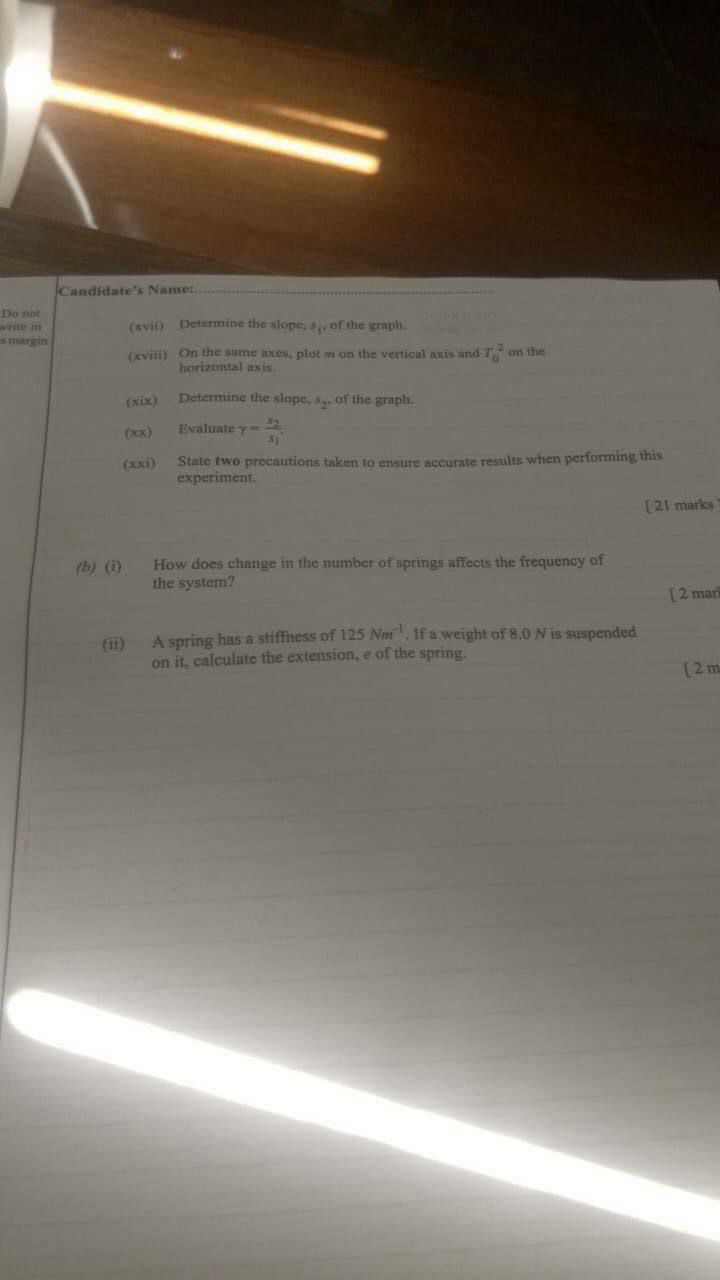
1(a)(xvii) – Slope s₁
1(a)(xvii) — Slope s₁:
s₁ = Change in m / Change in T²
s₁ = (m₂ − m₁) / (T₂² − T₁²)
1(a)(xix) – Slope s₂
1(a)(xix) — Slope s₂:
s₂ = Change in m / Change in T₀²
s₂ = (m₂ − m₁) / (T₀₂² − T₀₁²)
1(a)(xx) – y
1(a)(xx) — y:
y = s₂/s₁
Substitute calculated values of s₁ and s₂ from the graph and evaluate.
Using two approximate points from the sample table for illustration, say (T2 = 0.61, m = 150 g) and (T2 = 1.39, m = 350 g):
- Slope
S = (350 - 150) / (1.39 - 0.61) = 200 / 0.78 ≈ 256 g s-2.
Precautions – 1(a)(xxi) (Pick Any Two)
- Ensure the oscillations are small and strictly vertical.
- Start and stop the stopwatch accurately as the mass passes the same reference point.
- Avoid parallax error when taking readings.
- Take readings in a draught-free environment.
- Repeat readings and obtain the average value.
Question 1(b): Answers
1(b)(i): As the number of springs increases, the frequency of oscillation increases.
1(b)(ii):
Given:
- k = 125 Nm⁻¹
- F = 8.0 N
Using Hooke's Law:
F = ke
e = F/k
e = 8.0/125
e = 0.064 m
Answer: e = 0.064 m
Alternative A – Question 2: Specific Heat Capacity
Experimental Procedure and Sample Results
Apparatus: two beakers A and B, thermometers, measuring cylinder, pendulum bob (copper), heater or Bunsen burner, string, stirrer.
Procedure
- Measure 100 cm³ of water into beaker A and 300 cm³ of water into beaker B (1 cm³ of water ≈ 1 g).
- Heat beaker A strongly and record the steady temperature of the hot water as θ₁.
- Record the initial temperature of water in beaker B as θ₂.
- Quickly pour the hot water from A into B, stir well and record the final steady temperature θ₃.
- Repeat the procedure for other combinations of hot/cold water volumes: 150/300, 200/300, 250/300 and 300/300 cm³.
Sample Table of Results
| Volume in A (cm³) | Volume in B (cm³) | θ₁ (°C) | θ₂ (°C) | θ₃ (°C) |
|---|---|---|---|---|
| 100 | 300 | 80 | 28 | 41 |
| 150 | 300 | 82 | 28 | 47 |
| 200 | 300 | 85 | 28 | 52 |
| 250 | 300 | 88 | 28 | 57 |
| 300 | 300 | 90 | 28 | 61 |
Question 2(a): Graph, Slope and Precautions
2(a)(xvii) — Slope s
2(a)(xvii) — Slope s:
s = Change in P / Change in Q
s = (P₂ − P₁) / (Q₂ − Q₁)
2(a)(xviii) — Precautions
2(a)(xviii) — Precautions (Pick Any Two):
- Stir the water continuously to ensure uniform temperature.
- Take thermometer readings at eye level to avoid parallax error.
- Transfer the heated pendulum quickly into beaker B to minimize heat loss.
- Ensure the thermometer does not touch the sides or bottom of the beaker.
- Read the temperature immediately after it becomes steady.
Question 2(b): Theory and Calculations
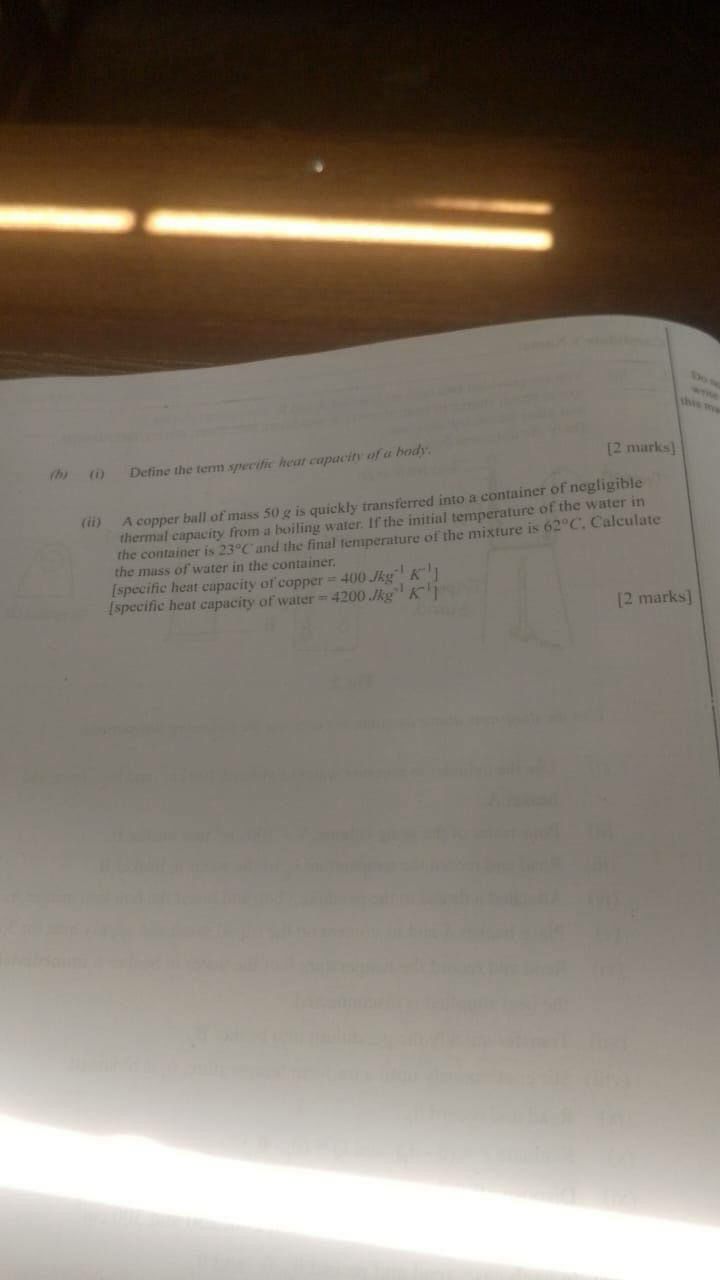
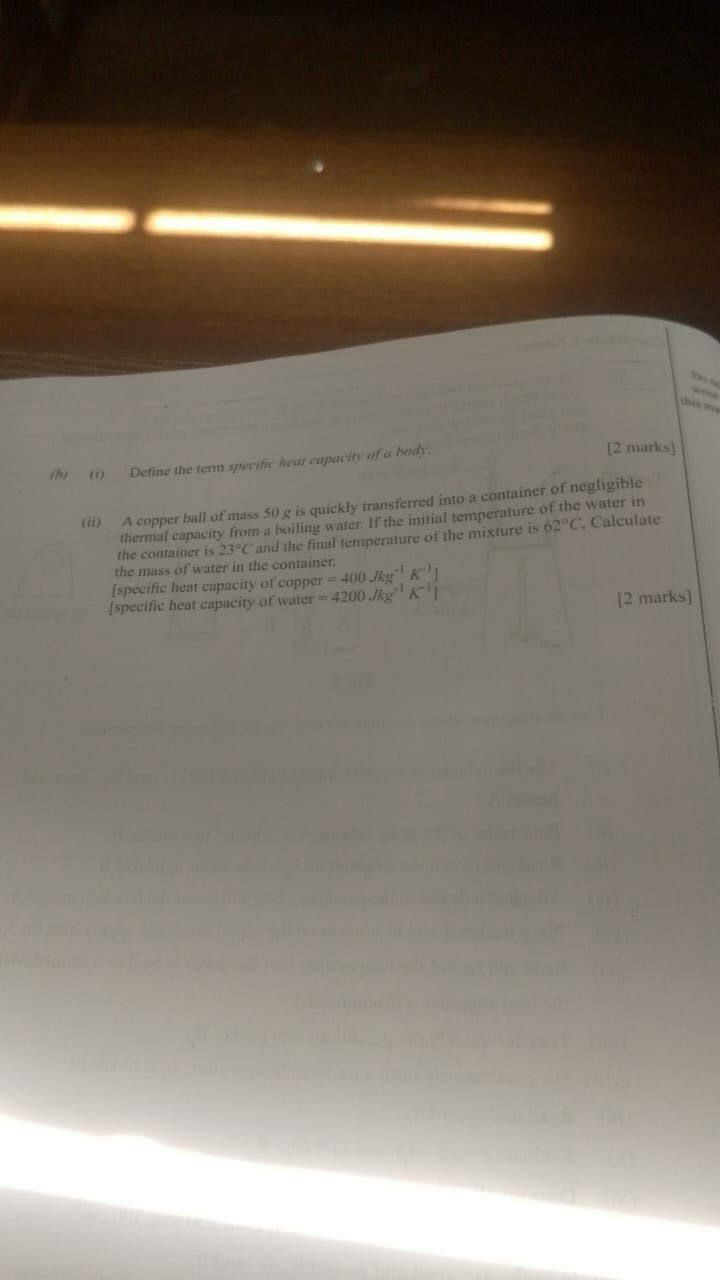
2(b)(i) — Specific Heat Capacity Definition:
Specific heat capacity is the amount of heat energy required to raise the temperature of unit mass (1 kg) of a substance by 1 K (or 1°C).
2(b)(ii) — Calculation:
Given:
- Mass of copper ball, m₁ = 50 g = 0.05 kg
- Specific heat capacity of copper, c₁ = 400 J kg⁻¹ K⁻¹
- Initial temperature of copper = 100°C
- Initial temperature of water = 23°C
- Final temperature of mixture = 62°C
- Specific heat capacity of water, c₂ = 4200 J kg⁻¹ K⁻¹
Heat lost by copper = Heat gained by water
m₁c₁(100 − 62) = m₂c₂(62 − 23)
0.05 × 400 × 38 = m₂ × 4200 × 39
760 = 163800m₂
m₂ = 760/163800
m₂ = 0.00464 kg
Mass of water = 0.00464 kg or 4.64 g
Alternative A – Question 3: Resistance of Wires
WAEC 2026 Physics Practical — Official Answer Sheet (Question 3)

QUESTION 3 — ANSWERS
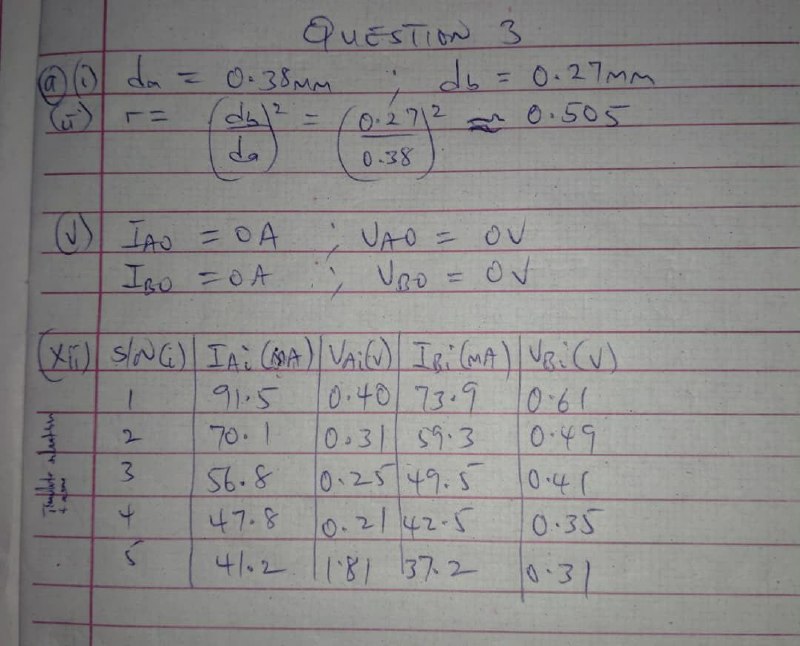
3(a)(i):
dₐ = 0.38 mm ; d_b = 0.27 mm
3(a)(ii):
r = (d_b/dₐ)² = (0.27/0.38)² ≈ 0.505
3(a)(v):
I_A0 = 0A ; V_A0 = 0V
I_B0 = 0A ; V_B0 = 0V
3(a)(xii) — Table of Results:
| S/N (G) | IAᵢ (mA) | VAᵢ (V) | IBᵢ (mA) | VBᵢ (V) |
|---|---|---|---|---|
| 1 | 91.5 | 0.40 | 73.9 | 0.61 |
| 2 | 70.1 | 0.31 | 59.3 | 0.49 |
| 3 | 56.8 | 0.25 | 49.5 | 0.41 |
| 4 | 47.8 | 0.21 | 42.5 | 0.35 |
| 5 | 41.2 | 0.18 | 37.2 | 0.31 |
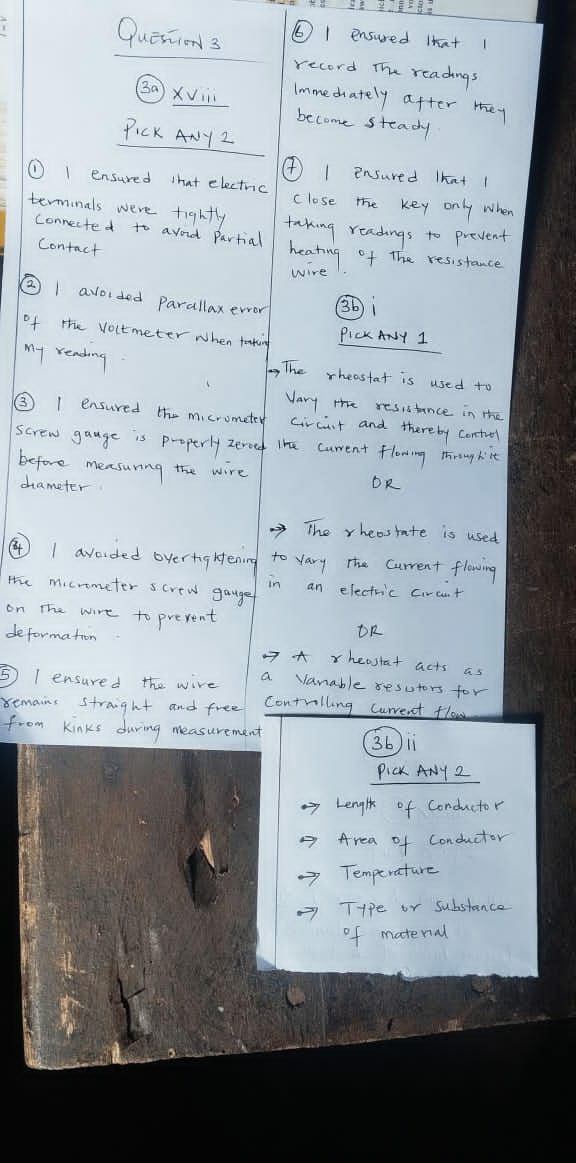
3(a)(xviii) — Precautions (Pick Any 2):
- I ensured that electric terminals were tightly connected to avoid partial contact.
- I avoided parallax error of the voltmeter when taking my reading.
- I ensured the micrometer screw gauge is properly zeroed before measuring the wire diameter.
- I avoided over-tightening the micrometer screw gauge on the wire to prevent deformation.
- I ensured the wire remains straight and free from kinks during measurement.
- I ensured that I record the readings immediately after they become steady.
- I ensured that I close the key only when taking readings to prevent heating of the resistance wire.
3(b)(i) — Function of Rheostat (Pick Any 1):
The rheostat is used to vary the resistance in the circuit and thereby control the current flowing through it.
OR
The rheostat is used to vary the current flowing in an electric circuit.
OR
A rheostat acts as a variable resistor for controlling current flow.
3(b)(ii) — Factors Affecting Resistance (Pick Any 2):
- Length of conductor
- Area of conductor (cross-sectional area)
- Temperature
- Type or substance of material (resistivity/nature of wire)
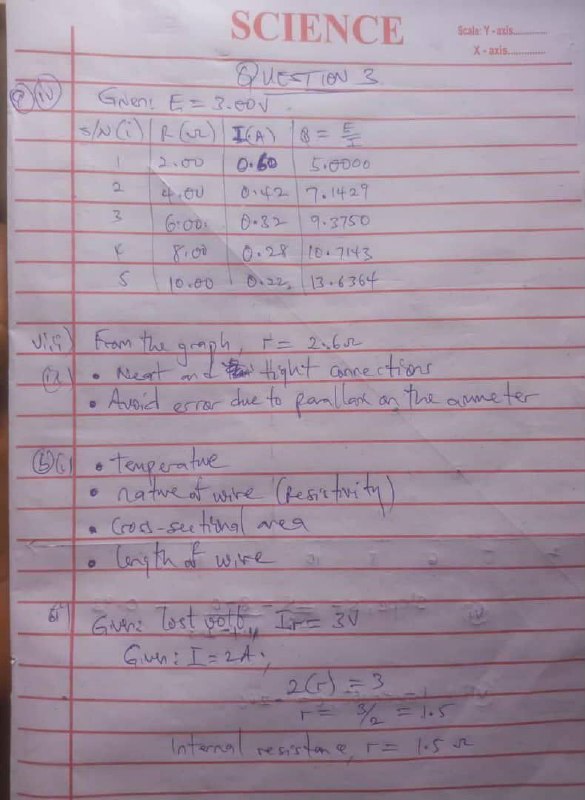
3(a)(iv) — Table (EMF experiment, E = 3.00V):
| S/N | R (Ω) | I (A) | θ = E/I |
|---|---|---|---|
| 1 | 2.00 | 0.60 | 5.0000 |
| 2 | 4.00 | 0.42 | 7.1429 |
| 3 | 6.00 | 0.32 | 9.3750 |
| 4 | 8.00 | 0.28 | 10.7143 |
| 5 | 10.00 | 0.22 | 13.6364 |
From the graph: r = 2.6 Ω
3(b)(ii) — Internal Resistance Calculation:
Given: Lost voltage Ir = 3V
Given: I = 2A
2(r) = 3
r = 3/2 = 1.5
Internal resistance r = 1.5 Ω
Alternative B – Question 1: Verification of Hooke's Law
(i) Experiment to Verify Hooke's Law
Apparatus: helical spring, set of known masses, metre rule, retort stand, clamp and boss, pointer attached to the spring.
- Fix the upper end of the spring securely to the clamp on the retort stand so that it hangs vertically with a pointer attached near its lower end.
- Place a metre rule vertically beside the pointer so that the pointer can slide along the scale without touching it.
- Read and record the initial position of the pointer on the metre rule with no load attached (this is the zero extension position).
- Hang a known mass (e.g. 50 g) on the spring. When it comes to rest, record the new position of the pointer and calculate the extension x as (new reading − initial reading).
- Increase the load in equal steps (e.g. add 50 g each time) and for each load measure the corresponding extension.
- Tabulate force F (where
F = mg) against extension x, and plot a graph of F (y-axis) against x (x-axis). - If the graph is a straight line passing through the origin, Hooke's Law is verified.
(ii) Statement of Hooke's Law
Hooke's Law states that the extension of an elastic material is directly proportional to the applied load (or force), provided the elastic limit is not exceeded.
(iii) Spring Constant and (iv) Elastic Potential Energy
Given: a spring extends by 4 cm when a force of 20 N is applied.
Convert extension to metres:
x = 4 cm = 0.04 m
(iii) Spring constant, k
From Hooke's Law: F = kx
k = F / x = 20 / 0.04 = 500 N m⁻¹
Spring constant, k = 500 N m⁻¹.
(iv) Elastic potential energy stored
Elastic potential energy E = (1/2) k x²
Substitute:
E = (1/2) × 500 × (0.04)²
(0.04)² = 0.0016
E = 0.5 × 500 × 0.0016 = 250 × 0.0016 = 0.4 J
Elastic potential energy stored = 0.40 J.
Alternative B – Question 2: Heat Capacity and Heating of Water
(i) Definitions
Heat capacity of a body is the quantity of heat required to raise the temperature of the whole body by 1 K (or 1°C).
Specific heat capacity of a substance is the quantity of heat required to raise the temperature of 1 kg of the substance by 1 K (or 1°C).
(ii) Difference Between Boiling and Evaporation
- Boiling occurs at a fixed temperature (boiling point) for a given pressure and takes place throughout the liquid. Bubbles form in the liquid and rise to the surface.
- Evaporation occurs at all temperatures below the boiling point and takes place only at the surface of the liquid. It is usually a slower process and does not involve bubble formation in the liquid.
(iii) Energy Required to Heat Water
Given:
- Mass of water,
m = 2 kg - Initial temperature,
θ₁ = 20°C - Final temperature,
θ₂ = 100°C - Specific heat capacity of water,
c = 4200 J kg⁻¹ K⁻¹
Temperature change:
Δθ = θ₂ − θ₁ = 100 − 20 = 80 K
Heat energy required:
Q = m c Δθ
Q = 2 × 4200 × 80
Q = 2 × 336,000 = 672,000 J
Energy required = 6.72 × 10⁵ J.
Alternative B – Question 3: Ohm's Law and Resistances
(i) Statement of Ohm's Law
Ohm's Law states that the current flowing through a metallic conductor is directly proportional to the potential difference across its ends, provided the temperature and other physical conditions remain constant.
(ii) Resistance of a Wire
Given:
- Length of wire,
L = 2 m - Diameter,
d = 0.5 mm = 0.5 × 10⁻³ m - Resistivity,
ρ = 1.7 × 10⁻⁸ Ω m
First, find the cross-sectional area A of the wire:
A = (π d²) / 4
d² = (0.5 × 10⁻³)² = 0.25 × 10⁻⁶ m²
A = π × 0.25 × 10⁻⁶ / 4 = π × 0.0625 × 10⁻⁶ ≈ 3.1416 × 6.25 × 10⁻⁸ ≈ 1.96 × 10⁻⁷ m²
Resistance is given by:
R = ρ L / A
Substitute:
R = (1.7 × 10⁻⁸ × 2) / (1.96 × 10⁻⁷)
R = 3.4 × 10⁻⁸ / 1.96 × 10⁻⁷
Divide the numbers and powers of ten:
R ≈ (3.4 / 1.96) × 10⁻¹ ≈ 1.73 × 0.1 ≈ 0.173 Ω
Resistance of the wire ≈ 0.17 Ω.
(iii) Combined Resistance of Two Parallel Resistors
Given two resistors of 6 Ω and 3 Ω connected in parallel.
For parallel connection:
1 / R_eq = 1 / R₁ + 1 / R₂
1 / R_eq = 1 / 6 + 1 / 3
1 / R_eq = 1 / 6 + 2 / 6 = 3 / 6 = 1 / 2
Therefore:
R_eq = 2 Ω
Combined resistance = 2 Ω.
Get More WAEC 2026 Physics Help from ExamSmooth
Stay updated with more WAEC 2026 Physics questions, detailed solutions, and exam tips. Join the ExamSmooth channels below and don't miss any new uploads.

 Examsmooth
Leave a comment