
2026 WAEC Government Questions and Answers
Live update page for 2026 WAEC Government exam solutions. Answers are loading in real-time. Bookmark this page now and keep refreshing as the exam progresses.
Once the exam starts, this page will be updated with both OBJ and Essay/Theory answers. Stay on this page and refresh frequently.
Refresh this page every 3–5 minutes during the exam for new answers.
OBJ Answers – 2026 WAEC Government
This section will show all WAEC Government OBJ answers for 2026 as soon as they are confirmed. Keep refreshing this page during the exam.
OBJ ANSWERS:
2026 WAEC Government OBJ Answers ✅
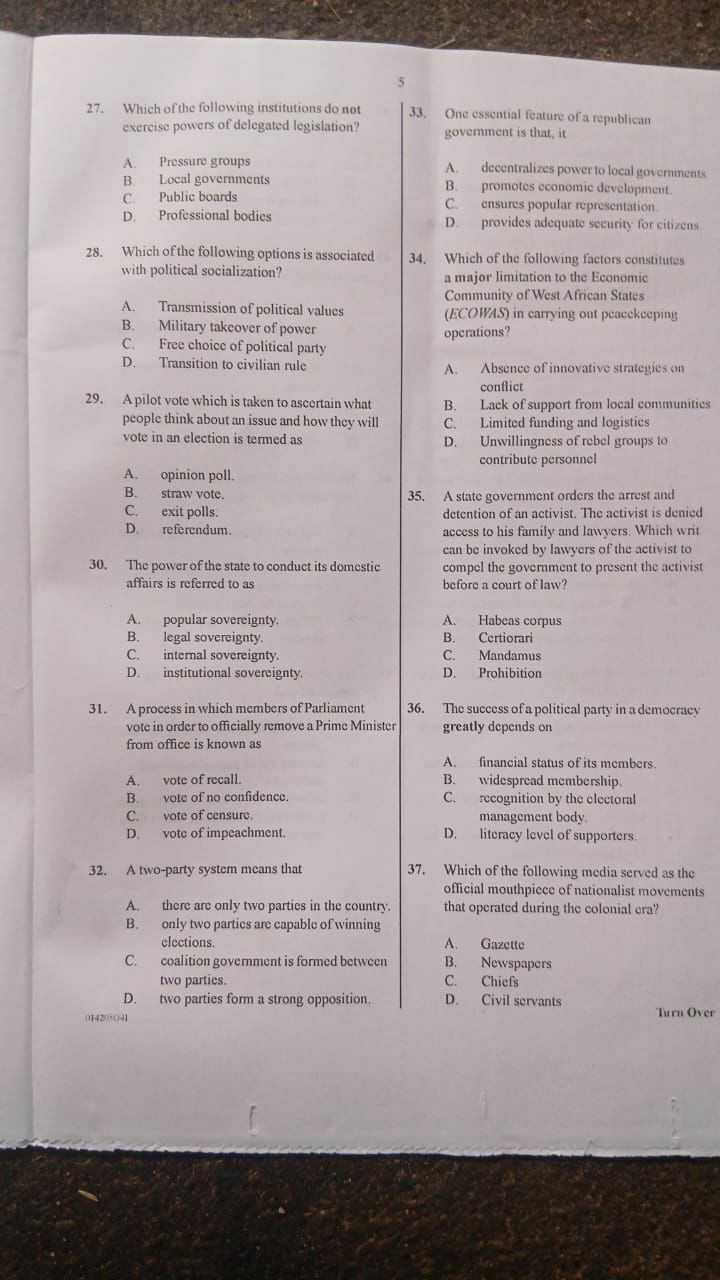
- 01-10: A C D B D A B B A B
- 11-20: D B A B D A B D A D
- 21-30: B B A A C B A A A C
- 31-40: B B C C A B B B C C
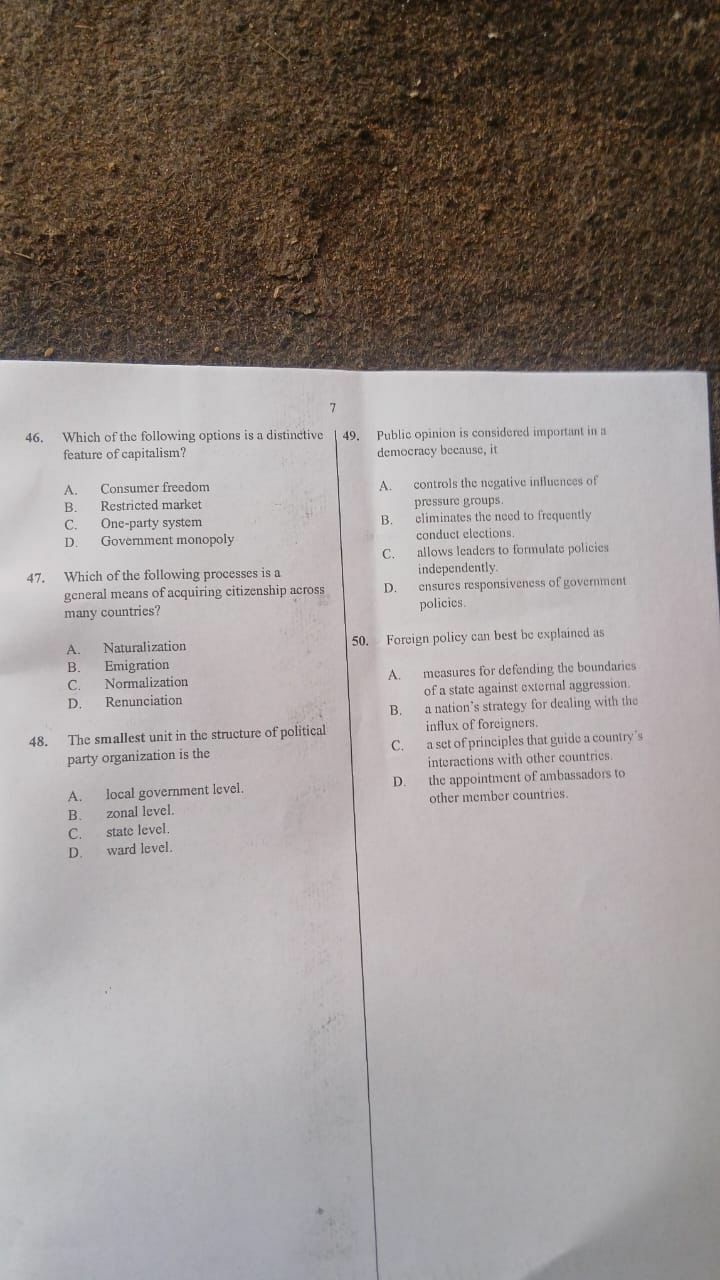
- 41-50: B D A B D A A D D C
WAEC 2026 Government Question Paper
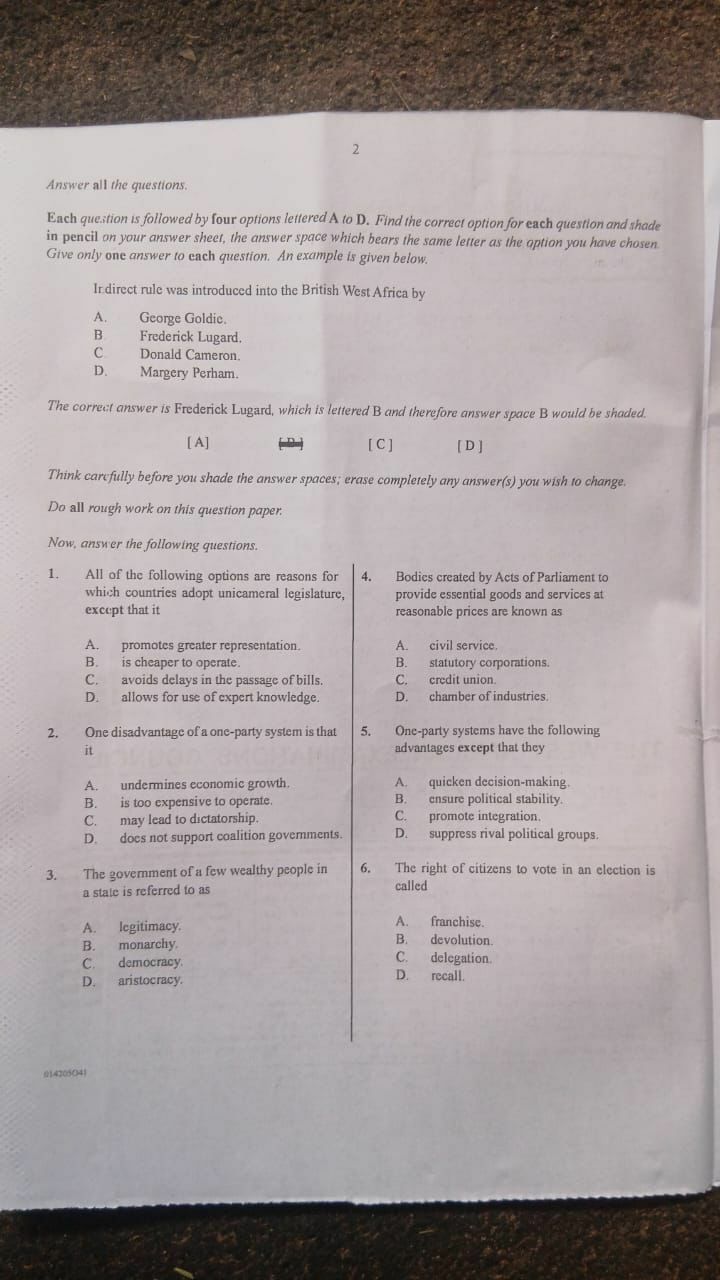
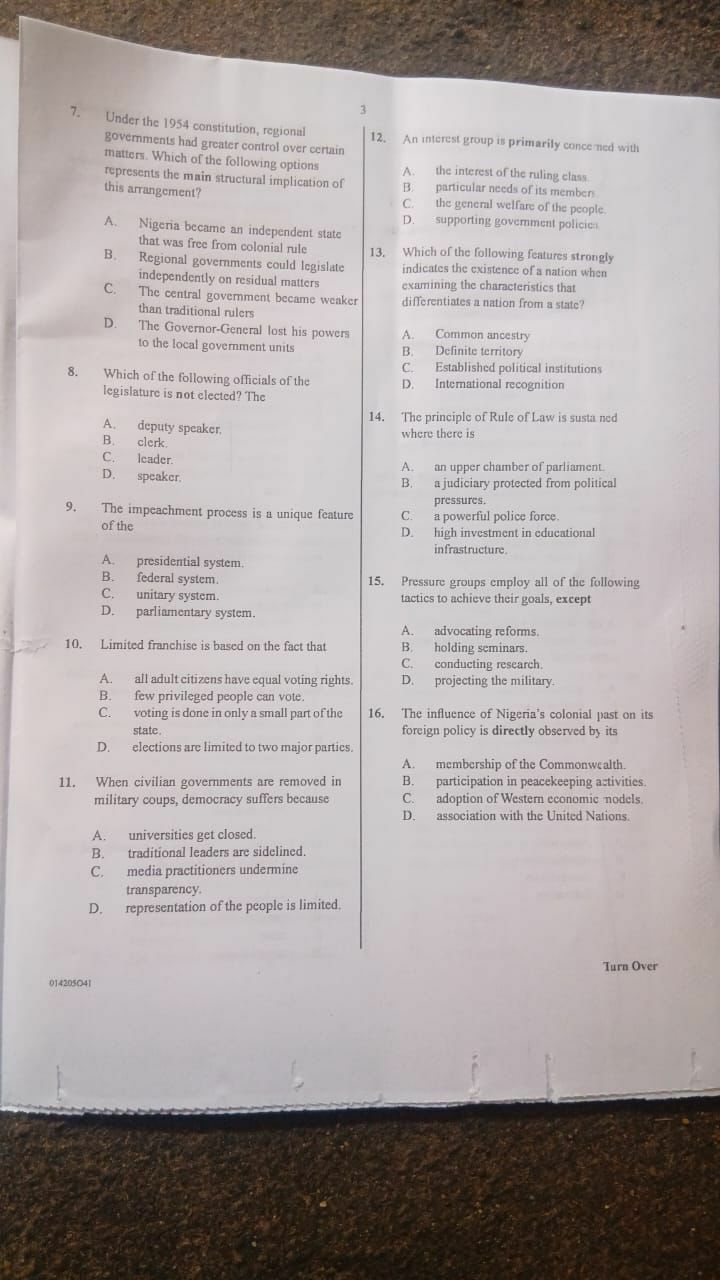
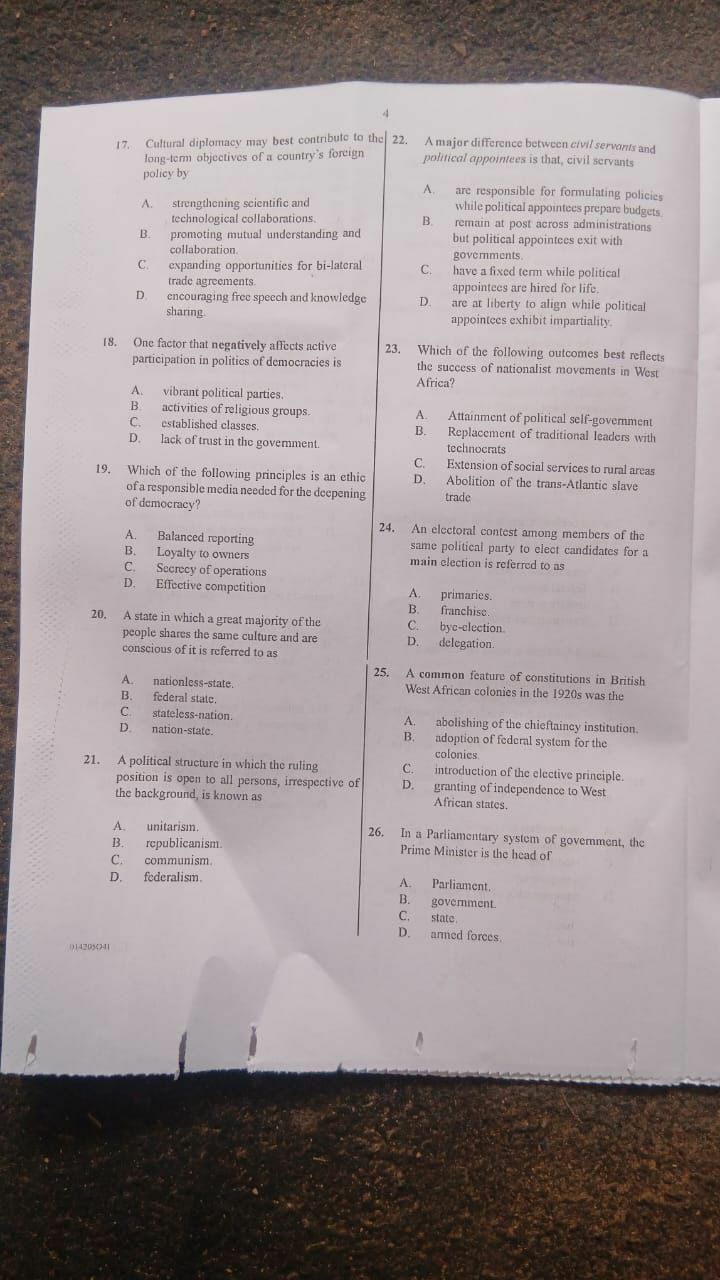
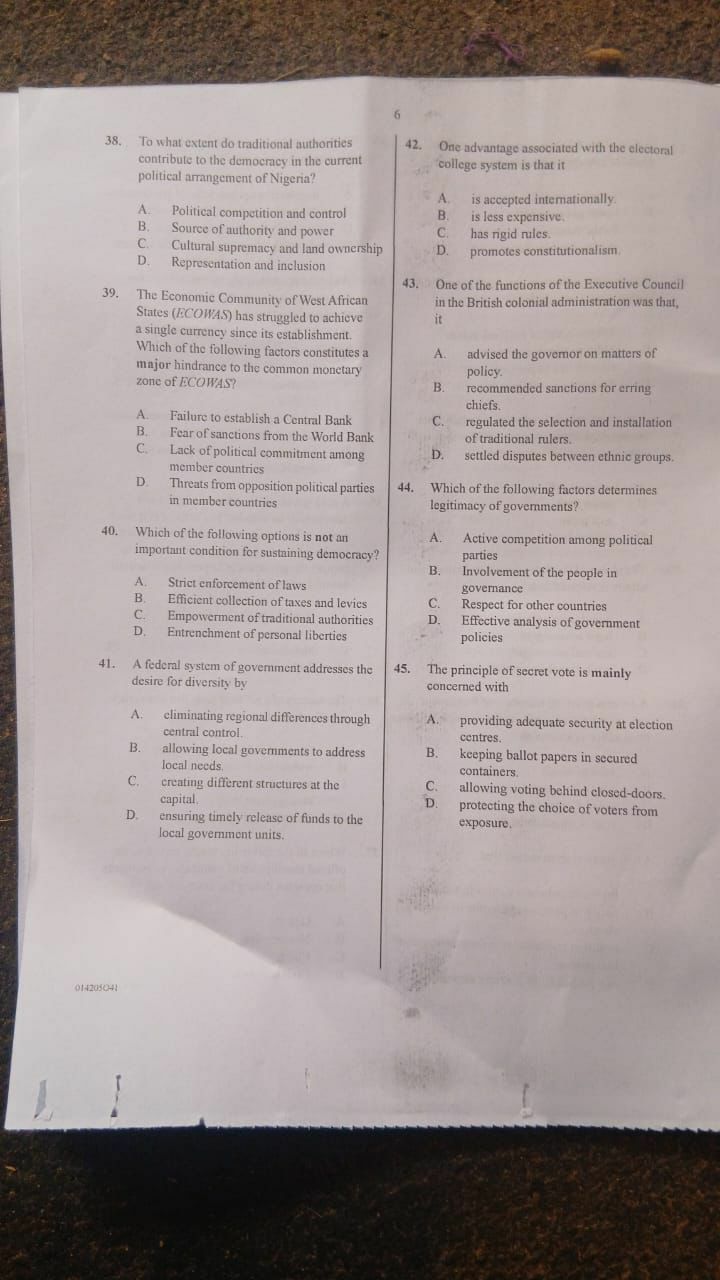
Essay / Theory Answers – 2026 WAEC Government
All structured, essay, and theory answers for 2026 WAEC Government will appear here once they are ready. Stay connected and keep refreshing.
NUMBER ONE
(1a) Problems Facing the Judiciary (Any Three)
- Corruption among some judicial officers.
- Inadequate funding of the judiciary.
- Delay in the dispensation of justice.
- Political interference in judicial matters.
- Shortage of qualified judges and legal personnel.
- Poor working facilities and infrastructure in courts.
(1b) Ways of Preventing Judicial Autocracy and Strengthening the Rule of Law (Any Four)
- Judicial accountability: Judicial officers should be accountable for their actions and decisions. Institutions such as the Judicial Service Commission and the National Judicial Council should investigate complaints against judges and impose sanctions where necessary. This helps to prevent abuse of judicial powers and promotes public confidence in the judiciary.
- Strict adherence to the Constitution: Judges must interpret and apply laws in accordance with the provisions of the Constitution. No judicial officer should act outside the powers granted by law. Respect for constitutional supremacy ensures that the judiciary remains within its lawful limits and protects the rights of citizens.
- Separation of powers: The principle of separation of powers should be maintained so that the judiciary, legislature, and executive operate independently. This prevents any arm of government, including the judiciary, from becoming too powerful and helps to preserve checks and balances in the political system.
- Provision for appeals and judicial review: The legal system should allow individuals to appeal against court decisions they consider unjust. Higher courts should be empowered to review and overturn erroneous judgments. This minimizes the possibility of arbitrary decisions by lower courts and promotes fairness in the administration of justice.
- Appointment of competent and ethical judges: Judges should be selected based on merit, professional competence, integrity, and experience rather than political considerations. Competent judges are more likely to deliver fair judgments and uphold the principles of justice and the Rule of Law.
- Regular training and professional development: Judicial officers should undergo continuous training to keep them updated on new laws, legal developments, and ethical standards. Such training enhances their efficiency, objectivity, and commitment to justice.
- Transparency in judicial proceedings: Court proceedings should be conducted openly and judgments should be made available to the public except in cases where confidentiality is required by law. Transparency discourages corruption, favoritism, and arbitrary use of judicial powers.
- Effective enforcement of judicial ethics and discipline: A strong code of conduct should guide the behavior of judicial officers. Any judge found guilty of corruption, misconduct, bias, or abuse of office should face appropriate disciplinary measures. This promotes integrity within the judiciary and prevents judicial autocracy while strengthening the Rule of Law.
NUMBER TWO
(2a) Distinction Between Pressure Group and Public Opinion
Pressure group: A pressure group is an organized body of people who share common interests and seek to influence government policies and decisions without contesting for political power or forming a government.
Public opinion: Public opinion refers to the collective views, beliefs, attitudes, and judgments of the majority of people on political, social, and economic issues affecting society.
(2b) Functions of Pressure Groups (Any Four)
- Influencing government policies: Pressure groups present the interests and demands of their members to the government. Through lobbying, petitions, and consultations, they influence policy formulation and implementation, thereby ensuring that government decisions reflect the needs of citizens.
- Promoting political awareness: Pressure groups educate citizens on their rights, responsibilities, and important national issues. Through seminars, workshops, rallies, and media campaigns, they encourage political participation and strengthen democratic culture.
- Protecting the interests of members: Pressure groups serve as defenders of the economic, social, and professional interests of their members. They negotiate with government authorities and other stakeholders to secure favorable conditions for those they represent.
- Acting as a link between the government and the people: Pressure groups provide channels through which citizens can communicate their grievances, opinions, and demands to the government. This enhances interaction between leaders and the governed and promotes responsive governance.
- Serving as watchdogs of government activities: Pressure groups monitor the actions and policies of government officials and institutions. They expose corruption, abuse of power, and mismanagement, thereby promoting transparency, accountability, and good governance.
- Promoting peaceful resolution of conflicts: Pressure groups often engage in dialogue, negotiation, and mediation to resolve disputes between citizens and the government. This helps to maintain political stability and strengthens democratic institutions in Nigeria.
NUMBER THREE
(3ai) Free Election
A free election is an election in which citizens are allowed to vote according to their own choice without intimidation, coercion, harassment, threats, or undue influence from any individual, political party, or government authority. Voters are free to express their political preferences and cast their votes willingly.
(3aii) Fair Election
A fair election is an election conducted impartially and in accordance with established electoral laws and regulations. All political parties and candidates are given equal opportunities to campaign and compete, while votes are counted honestly and accurately without manipulation or favoritism.
(3b) Ways INEC Can Improve the Electoral Process (Any Four)
- Ensuring an accurate and credible voters’ register: INEC should regularly update and verify the voters’ register to remove duplicate, deceased, and ineligible voters. This will reduce electoral fraud, prevent multiple registrations, and ensure that only qualified citizens participate in elections. A credible register also enhances public confidence in the electoral process.
- Conducting transparent and impartial elections: INEC must remain neutral and treat all political parties and candidates equally. Electoral rules and procedures should be applied without bias. Transparency in electoral activities increases public trust, promotes fairness, and ensures that election outcomes are widely accepted by citizens.
- Effective voter education and public enlightenment: INEC should educate citizens on voting procedures, electoral laws, and their civic responsibilities through the media, schools, and community programmes. This will reduce voter ignorance, discourage electoral malpractice, minimize invalid votes, and encourage greater participation in elections.
- Deployment of appropriate electoral technology: The use of technologies such as BVAS and electronic transmission of results can improve the accuracy, transparency, and credibility of elections. These technologies help to prevent multiple voting, reduce human errors, speed up the electoral process, and limit opportunities for manipulation and fraud.
- Proper training of electoral officials: INEC should provide regular training for electoral officers and ad hoc staff before elections. Well-trained officials are more likely to carry out their duties efficiently, follow electoral guidelines correctly, and reduce mistakes that may affect the credibility of elections.
- Strict enforcement of electoral laws: INEC should collaborate with security agencies and relevant authorities to ensure that electoral offenders are identified and punished. This will discourage vote-buying, ballot-box snatching, violence, intimidation, and other forms of electoral malpractice.
- Adequate distribution of electoral materials: INEC should ensure that electoral materials reach polling units on time and in sufficient quantities. This will prevent delays, confusion, and disruptions that may undermine the conduct of free, fair, and credible elections.
Get Faster Updates on WhatsApp
For instant alerts when each set of 2026 WAEC Government answers drops, join the official Examsmooth WhatsApp channel. You will also get updates for other WAEC subjects.
Note: This page is for educational help and quick checking of solutions. Always follow WAEC rules and your school guidelines.
 Examsmooth
Leave a comment