
Examsmooth | WAEC 2026 Live Update
2026 WAEC Christian Religious Studies (CRS) Questions and Answers
This page will drop the complete and verified 2026 WAEC CRS questions and answers for Objective (OBJ) and Essay/Theory once the exam starts. Bookmark this page now and keep refreshing as the answers are loading in real time.
Important: Answers are currently loading. Do not leave this page — refresh a few minutes before and during the exam for live updates.
2026 WAEC CRS OBJ Answers
Status: COMPLETED
01-10: A C A B A C B D B D
11-20: A B B D C D B D D C
21-30: A D B B C A D D D C
31-40: A C B C B C C B B A
41-50: A C D C B B A D D B
2026 WAEC CRS OBJ Question Paper
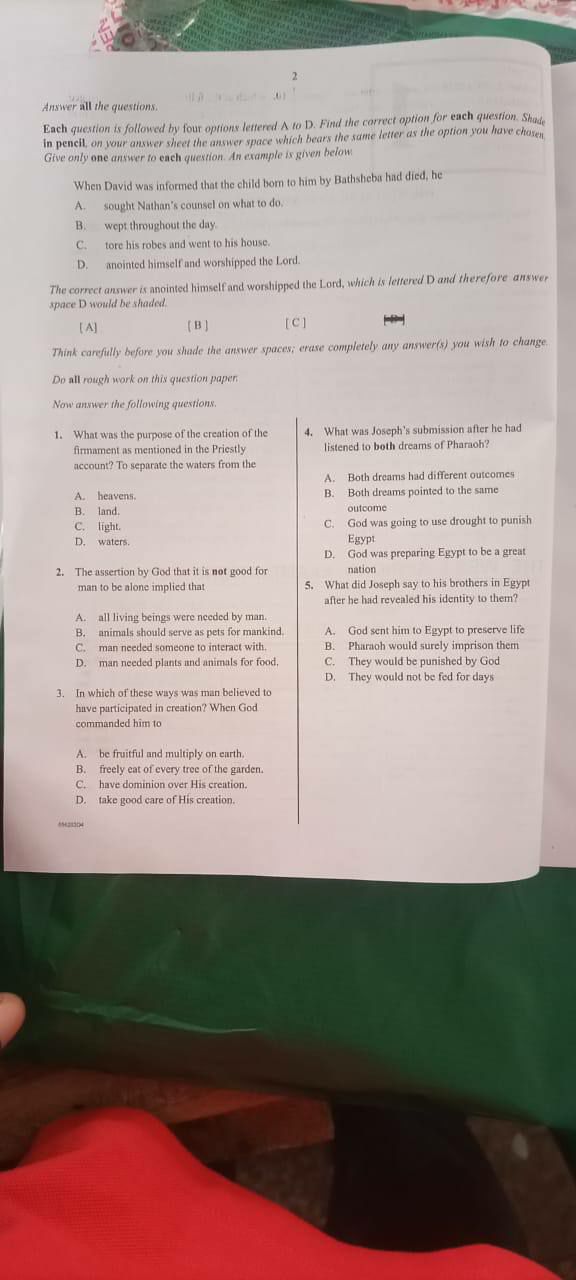
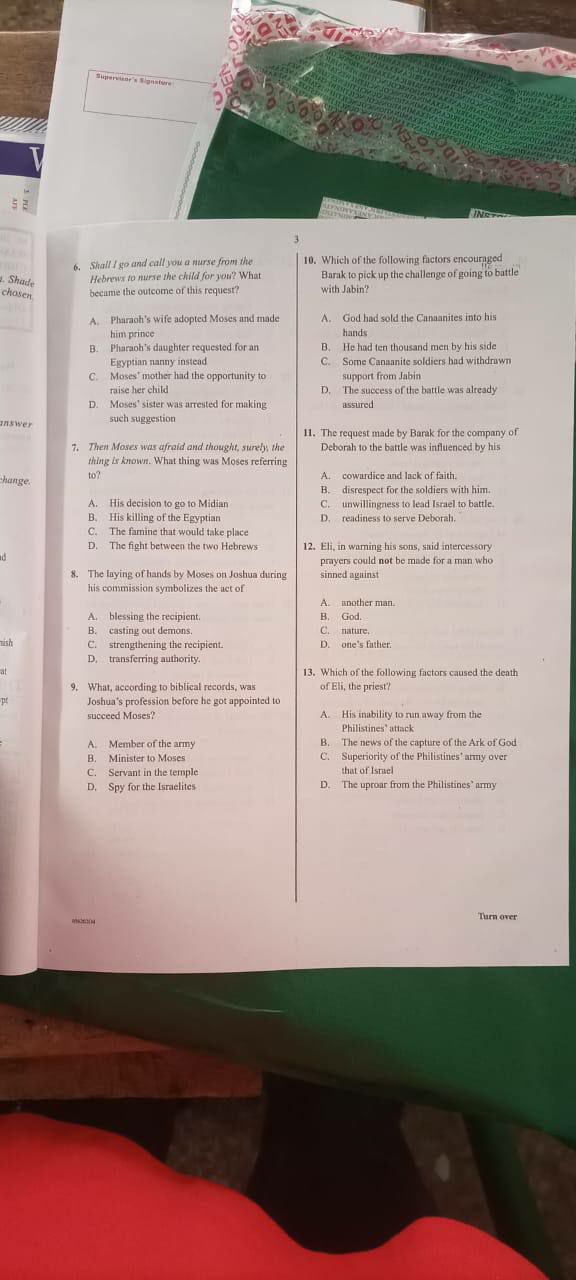
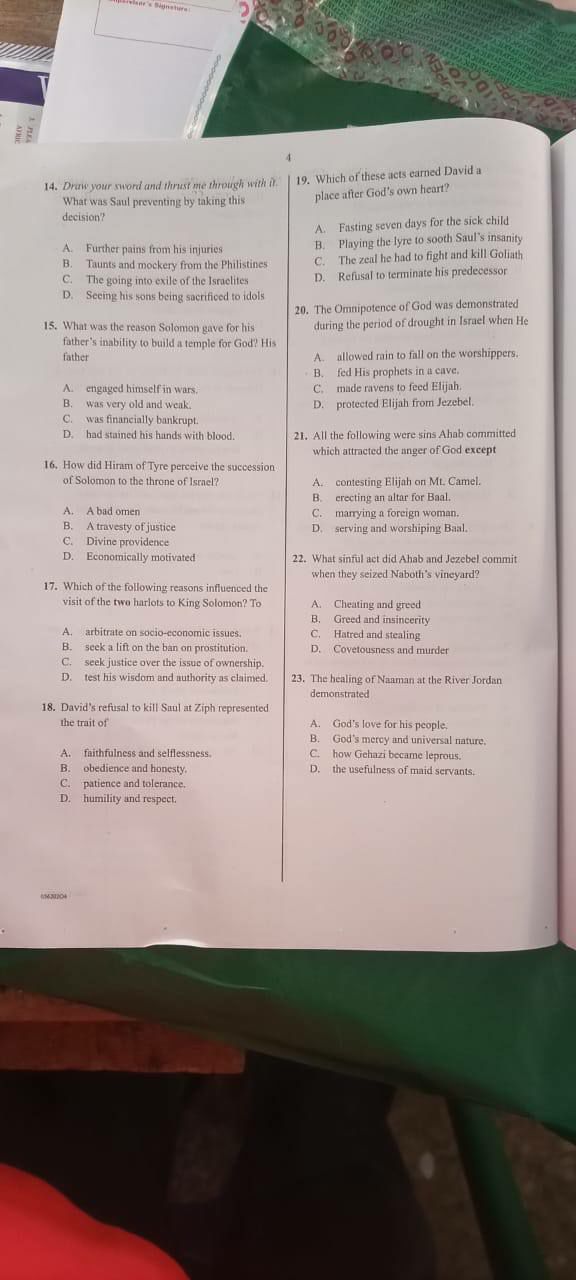
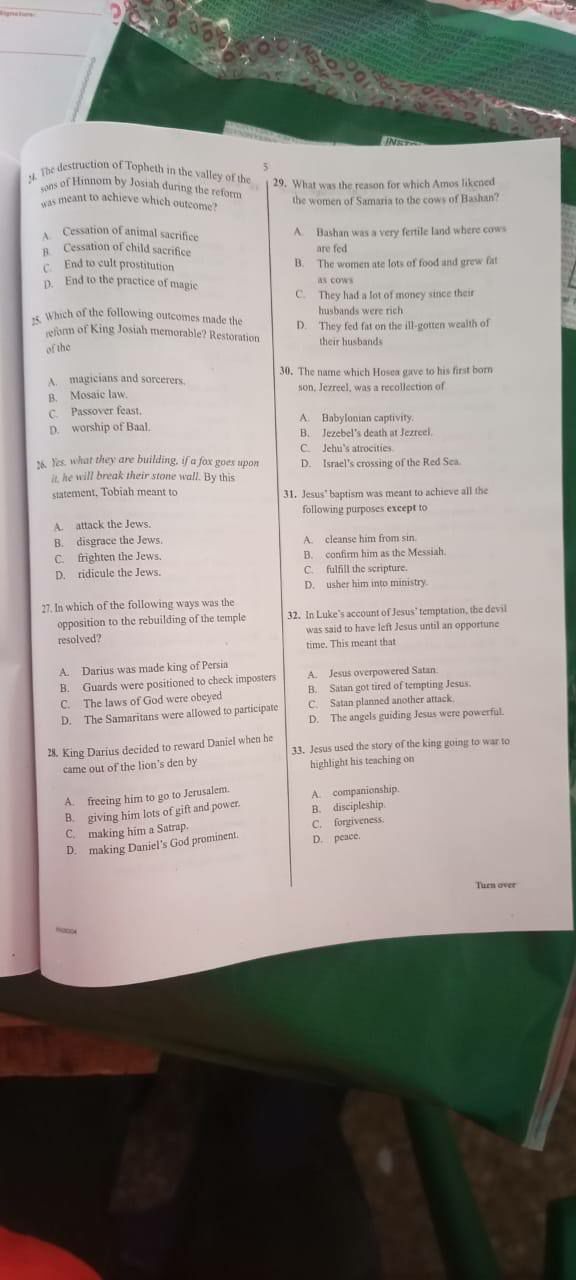
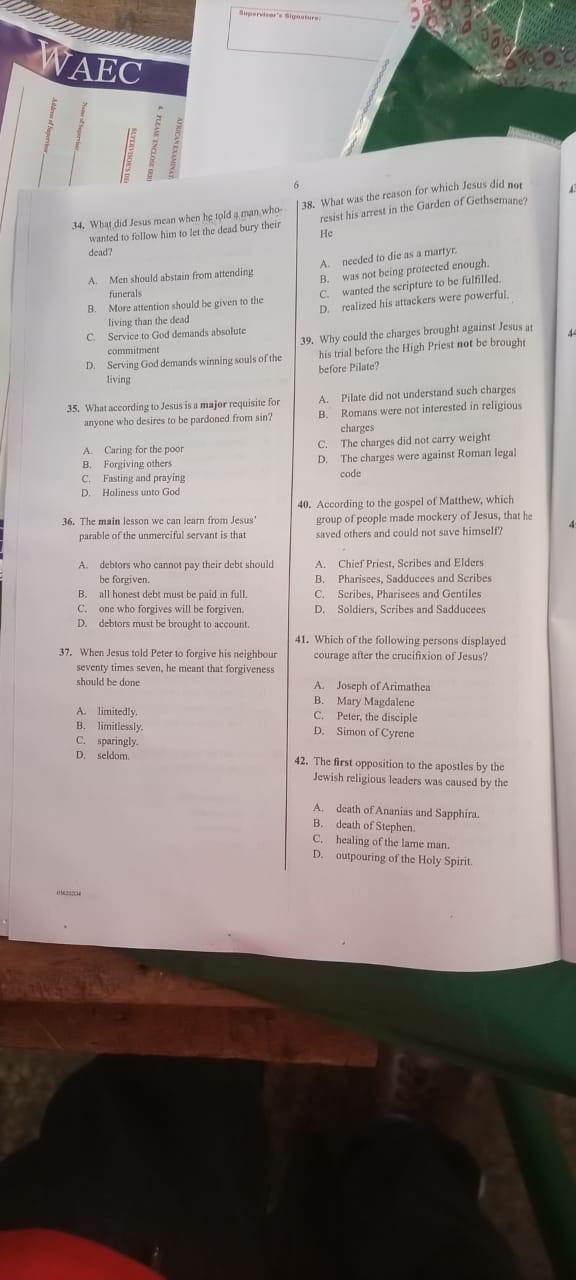
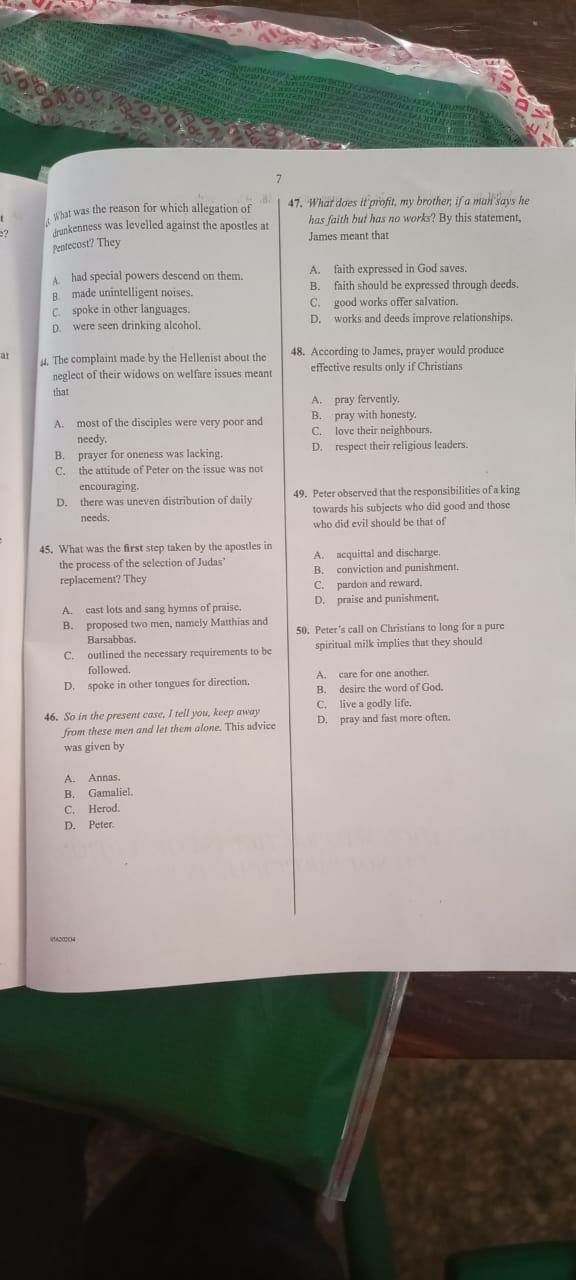
Scroll down for full Essay/Theory answers.
Question 5
(5a) Outline the events that took place from Peter’s denial to the death of Jesus.
- (i) Peter’s denial: After Jesus was arrested, Peter followed from a distance. In the courtyard, three different people identified him as one of Jesus’ disciples, but he denied knowing Jesus each time. After the third denial, the cock crowed, Jesus turned and looked at Peter, and Peter remembered His words and went out to weep bitterly.
- (ii) Jesus before Herod: Pilate sent Jesus to Herod because He was a Galilean. Herod was glad to see Jesus and hoped to see a miracle, but although he questioned Jesus at length, Jesus gave no answer. Herod and his soldiers mocked Him, treated Him with contempt, dressed Him in gorgeous apparel and sent Him back to Pilate.
- (iii) Encounter with the daughters of Jerusalem: As Jesus was led away to be crucified, Simon of Cyrene was compelled to carry His cross. A great multitude followed, including women who mourned and lamented. Jesus turned to them and said, “Daughters of Jerusalem, do not weep for me, but weep for yourselves and for your children,” warning them of coming judgment and tribulation.
- (iv) The crucifixion of Jesus: Jesus was crucified at a place called the Skull (Golgotha) with two criminals, one on His right and the other on His left. The soldiers cast lots for His garments. The people and rulers mocked Him, saying He saved others but could not save Himself. One criminal mocked Him, but the other rebuked his companion and asked Jesus to remember him. Jesus assured him, “Today you will be with me in Paradise.”
- (v) The death of Jesus: From about the sixth hour to the ninth hour, darkness came over the whole land. The curtain of the temple was torn in two. Jesus cried out, “Father, into your hands I commit my spirit!” and breathed His last. The centurion praised God, saying, “Certainly this man was innocent!”
(5b) Lessons Christians can learn from the above events:
- Christians should be prepared to face persecution and suffering for their faith, just as Christ suffered.
- True repentance brings forgiveness — Peter’s bitter tears show that no sin is too great for God’s forgiveness.
- Jesus showed compassion even in suffering, teaching Christians to care for others at all times.
- Death is not the end for believers — Jesus’ promise to the repentant criminal assures eternal life to those who trust in God.
Question 6
(6a) Describe the events that led to the condemnation of Jesus to death.
- (i) Plot against Jesus: The chief priests, scribes and elders planned secretly to arrest Jesus because His teachings challenged their authority and exposed their hypocrisy.
- (ii) Betrayal by Judas Iscariot: Judas, one of the twelve, agreed with the chief priests to hand Jesus over to them in exchange for thirty pieces of silver.
- (iii) Arrest in Gethsemane: Jesus was arrested in the Garden of Gethsemane when Judas led a crowd to Him and identified Him with a kiss.
- (iv) Trial before the Sanhedrin: Jesus was taken before the Jewish council where false witnesses testified against Him. When Jesus affirmed that He was the Son of God, they charged Him with blasphemy.
- (v) Jesus before Pontius Pilate: Because the Jewish leaders lacked the authority to execute Him under Roman rule, they handed Jesus over to Pilate, accusing Him of claiming to be a king and of opposing Caesar.
- (vi) Demand for crucifixion: Pilate wanted to release Jesus, but the crowd, stirred up by the chief priests, demanded that Jesus be crucified while Barabbas, a criminal, should be released.
- (vii) Pilate’s final judgment: Pilate ceremonially washed his hands before the crowd to show he was innocent of Jesus’ blood, then handed Jesus over to be scourged and crucified, thus condemning Him to death.
(6b) Reasons justice is important in nation building:
- It promotes peace and unity, as fair treatment of all reduces conflict, hatred and unrest in the nation.
- It discourages corruption and oppression by checking abuse of power, bribery and unfair treatment, thereby protecting citizens’ rights.
- It encourages development and national progress, because where justice exists, people trust the government and legal system, which promotes cooperation, productivity and growth.
Question 7
(7a) “And great fear came upon the whole church, and upon all who heard of these things.” — Recount the events that led to this experience.
This statement refers to the story of Ananias and Sapphira in Acts 5:1–11. In the early church, believers were united and shared their possessions. Some sold their lands and brought the proceeds to the apostles for distribution to those in need. Ananias and his wife Sapphira also sold a piece of land but agreed together to keep back part of the money for themselves while pretending to bring the full amount to the apostles.
When Ananias brought the money, Peter, through the Holy Spirit, knew what he had done. Peter accused him of lying to the Holy Spirit and of keeping back part of the proceeds dishonestly while pretending to give all. Immediately Ananias fell down and died, and young men carried out his body and buried him.
About three hours later, Sapphira came in without knowing what had happened to her husband. Peter asked her whether the amount brought was the full price of the land, and she confirmed the lie. Peter rebuked her for agreeing with her husband to test the Spirit of the Lord. Instantly she also fell down and died. The young men carried her out and buried her beside her husband. As a result, great fear came upon the whole church and upon all who heard these events.
(7b) Lessons Christians can learn from this incident:
- God hates hypocrisy and deceit — Christians should avoid lying, pretending and dishonesty in the church.
- Believers should be sincere in giving and service — offerings and acts of service to God should be done willingly and truthfully.
- The church must uphold holiness and discipline — members should live in obedience, reverence and fear of God because He sees every action and intention.
Question 8
(8a) Summarize James’ teaching against partiality in the church.
James advised Christians to put away every form of partiality in the church. He explained that partiality is shown when a well-dressed person and a poorly dressed person enter the assembly and the well-dressed person is given a good seat while the poor person is told to stand or sit at someone’s feet. This, according to James, is sinful discrimination. He reminded believers that God often honours those who are despised on earth but are rich in faith, whereas the earthly rich are often the oppressors who drag the poor to court.
James taught that Christians must observe the royal law: “You shall love your neighbour as yourself.” Showing partiality makes one a lawbreaker, because whoever keeps the whole law but fails in one point is guilty of all. Therefore, believers should speak and act as those who are to be judged under the law of liberty. Anyone who refuses to show mercy to the oppressed will face God’s condemnation, for judgment is without mercy to one who has shown no mercy.
(8b) Ways partiality is manifested in the church today:
- Appointments to church offices are often based on wealth, tribe or connections rather than spiritual maturity and merit.
- Allocation of seats during church programmes and special occasions is sometimes based on social status instead of character or morality.
- The monetary contributions of the poor are often looked down upon or ignored, while those of the rich receive special recognition and praise.
Question 9
(9a) Summarize Paul’s teaching on joy, contentment and right thinking in his letter to the Philippians.
Paul wrote to the Philippians from prison, yet he expressed deep joy and urged believers to rejoice in the Lord always. He encouraged them not to be anxious about anything, but in everything, by prayer and supplication with thanksgiving, to present their requests to God. He assured them that the peace of God, which surpasses all understanding, would guard their hearts and minds in Christ Jesus.
Paul further instructed them to think on whatever is true, honourable, just, pure, lovely and of good report. He shared from his own experience that he had learned to be content in all circumstances — whether in need or in plenty, abased or abounding. He concluded that he could do all things through Christ who strengthened him.
(9b) Lessons Christians can learn from Paul’s teaching:
- Christians should cultivate an attitude of joy and contentment regardless of their circumstances.
- Prayer and thanksgiving are God’s remedy for anxiety — believers should cast all their worries on Him.
- The mind must be guarded with godly thoughts, because what we continually think about shapes our character and actions.
- Christ is the source of strength for every believer in all situations, enabling them to endure trials and fulfil God’s will.
Join the Examsmooth WAEC CRS WhatsApp Channel
Get instant alerts when we drop the 2026 WAEC CRS OBJ and Essay answers, plus other WAEC updates. Join our official Examsmooth WhatsApp channel so you don’t miss anything.
 Examsmooth
Leave a comment