
2026 WAEC Livestock Farming Essay Questions and Answers
Answers are currently loading. Please bookmark this page and keep refreshing shortly before and during the exam for live updates.
Disclaimer: This page is for educational revision and quick checks. Always follow WAEC rules and your school's exam guidelines.
2026 WAEC Livestock Farming OBJ Answers
Use this section to quickly cross-check your objective answers during or after the exam. We recommend confirming with reliable sources and your teacher after the paper.
OBJ Question Paper
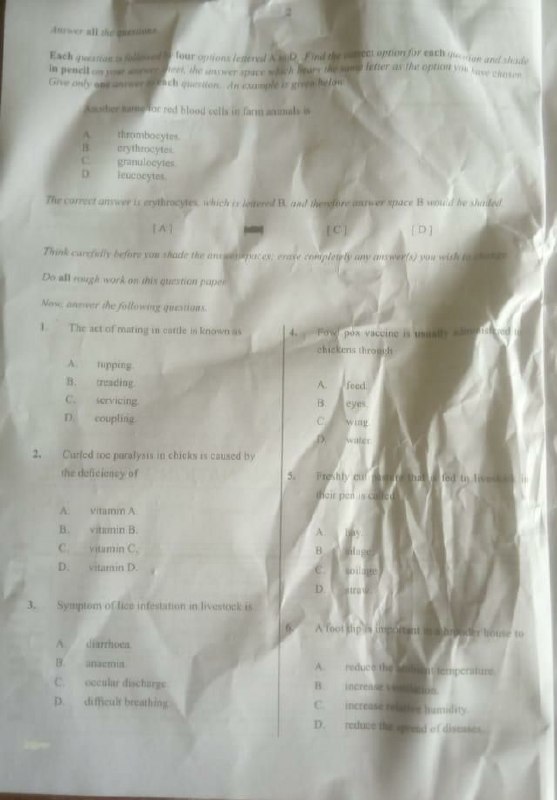
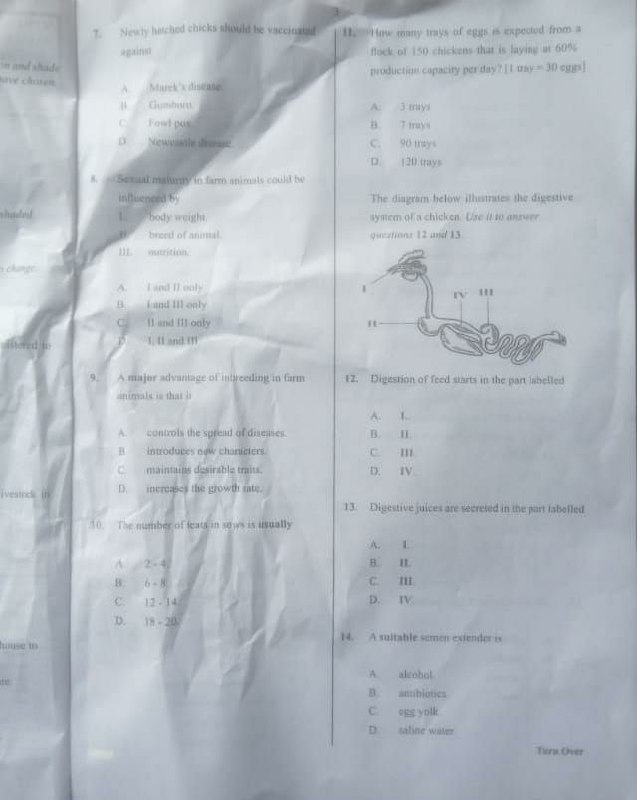
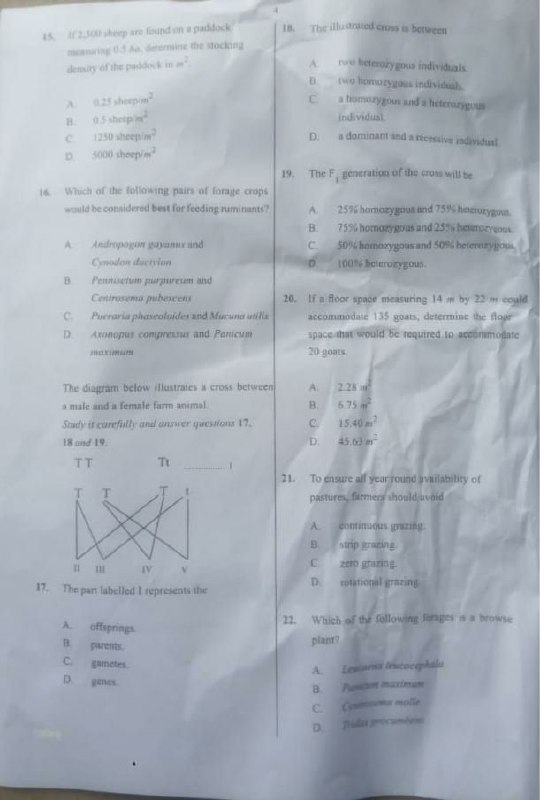
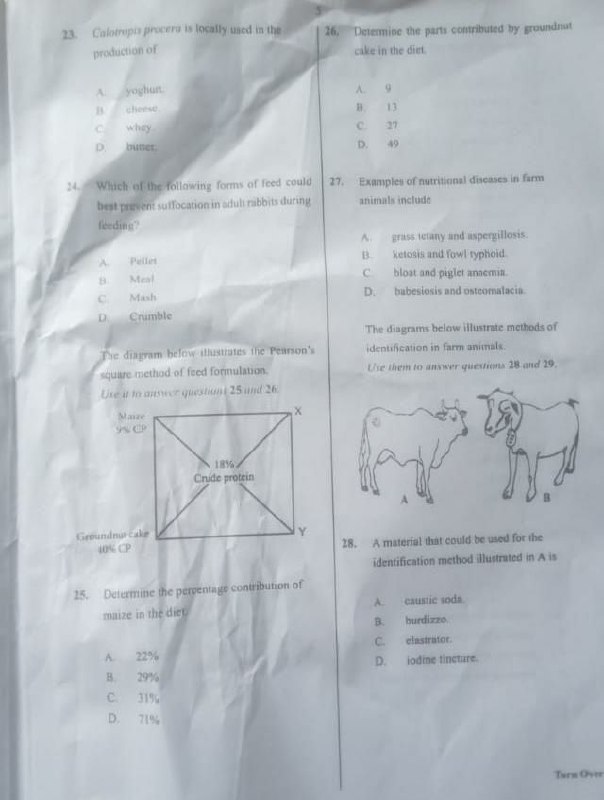
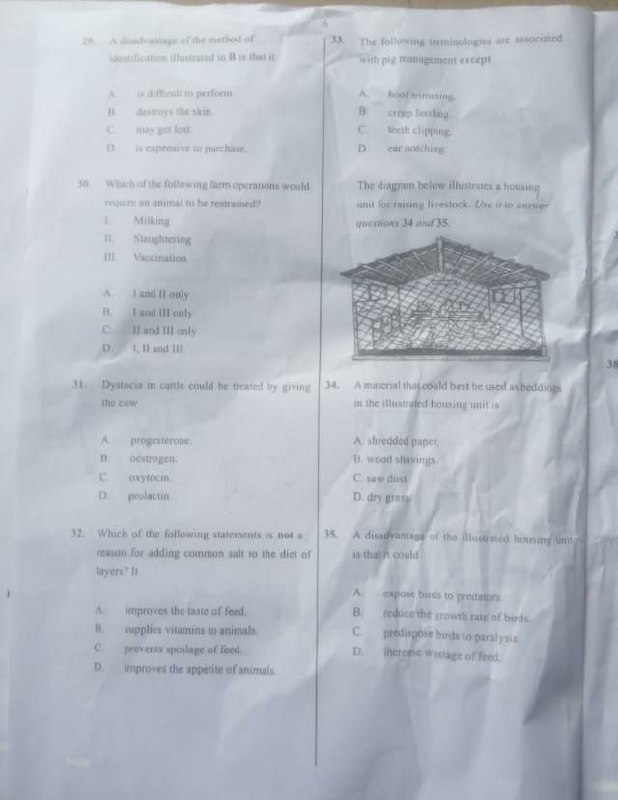
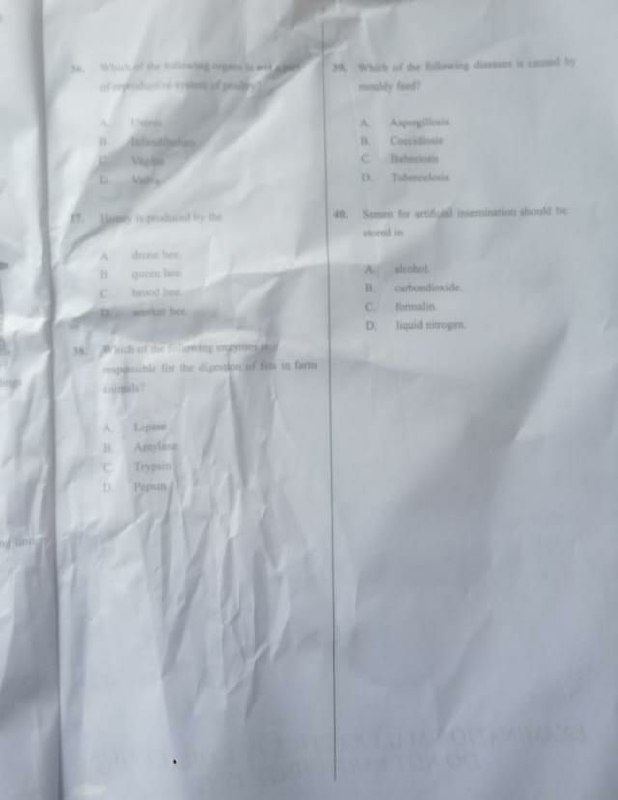
OBJ Answer Key (2026 WAEC Livestock Farming)
| No. | Answer | No. | Answer |
| 01 | B | 21 | A |
| 02 | B | 22 | A |
| 03 | B | 23 | B |
| 04 | C | 24 | A |
| 05 | C | 25 | D |
| 06 | D | 26 | B |
| 07 | B | 27 | C |
| 08 | C | 28 | A |
| 09 | C | 29 | C |
| 10 | C | 30 | D |
| 11 | B | 31 | C |
| 12 | A | 32 | B |
| 13 | C | 33 | A |
| 14 | C | 34 | B |
| 15 | B | 35 | A |
| 16 | C | 36 | B |
| 17 | C | 37 | D |
| 18 | C | 38 | A |
| 19 | D | 39 | B |
| 20 | A | 40 | D |
2026 WAEC Livestock Farming Essay / Theory Answers
This section will be updated with well-structured, exam-focused theory answers for the most likely questions. Always use them to revise and understand the concepts, not just to copy.
Question 1
(1a)(i) — Solutions to Poultry Problems
α) Cannibalism:
(i) Avoid overcrowding of birds in the pen.
(ii) Debeak the birds / provide adequate feed and water.
β) Shell-less eggs:
(i) Feed birds with calcium-rich feed.
(ii) Provide vitamin D supplements / balanced ration.
γ) Wet litter:
(i) Ensure proper ventilation in the poultry house.
(ii) Replace wet litter regularly and repair leaking drinkers.
(1a)(ii) — Two Reasons for Shell-less Eggs
(i) Deficiency of calcium in feed.
(ii) Lack of vitamin D / disease affecting egg formation.
(1a)(iii) — Housing System
Deep litter system.
(1b) — Farm Records
(i) Farm diary: A farm diary is a daily record book in which all farm activities and events are recorded for future reference.
(ii) Balance sheet: A balance sheet is a financial statement showing the assets and liabilities of the farm at a particular time.
(iii) Inventory record: An inventory record is a list showing the quantity and value of farm inputs, equipment and livestock on the farm.
(1c) — Characteristics of a Good Pasture Crop (Any Five)
(i) High yield of forage.
(ii) Fast growth rate.
(iii) Palatable to livestock.
(iv) Resistant to pests and diseases.
(v) Ability to withstand drought and grazing.
(vi) Easy to establish and maintain.
(vii) High nutritive value.
(viii) Ability to regrow quickly after cutting or grazing.
Question 2
(2a) — Factors Affecting Wool Production in Sheep (Pick Any Four)
(i) Nutrition and quality of feed.
(ii) Age of the sheep.
(iii) Health status / diseases and parasites.
(iv) Breed or heredity.
(v) Proper management practices.
(vi) Environmental conditions / climate.
(vii) Body weight and condition of the sheep.
(2b) — Viral Diseases of Pigs (Pick Any Two)
(i) Swine fever (hog cholera).
(ii) Foot and mouth disease.
(iii) African swine fever.
(iv) Swine influenza.
(v) Pseudorabies disease.
(2c) — Functions of Oxytocin in Farm Animals (Pick Any Two)
(i) Stimulates contraction of the uterus during birth.
(ii) Promotes milk production and milk let-down.
(iii) Relaxes the pelvic muscles and cervix for easy delivery.
(iv) Initiates and regulates parturition.
(v) Helps in expulsion of the placenta after birth.
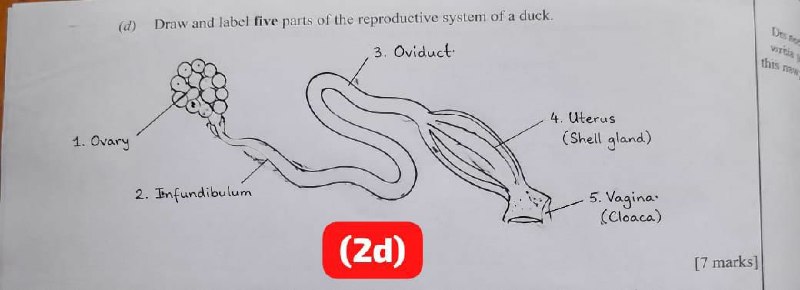
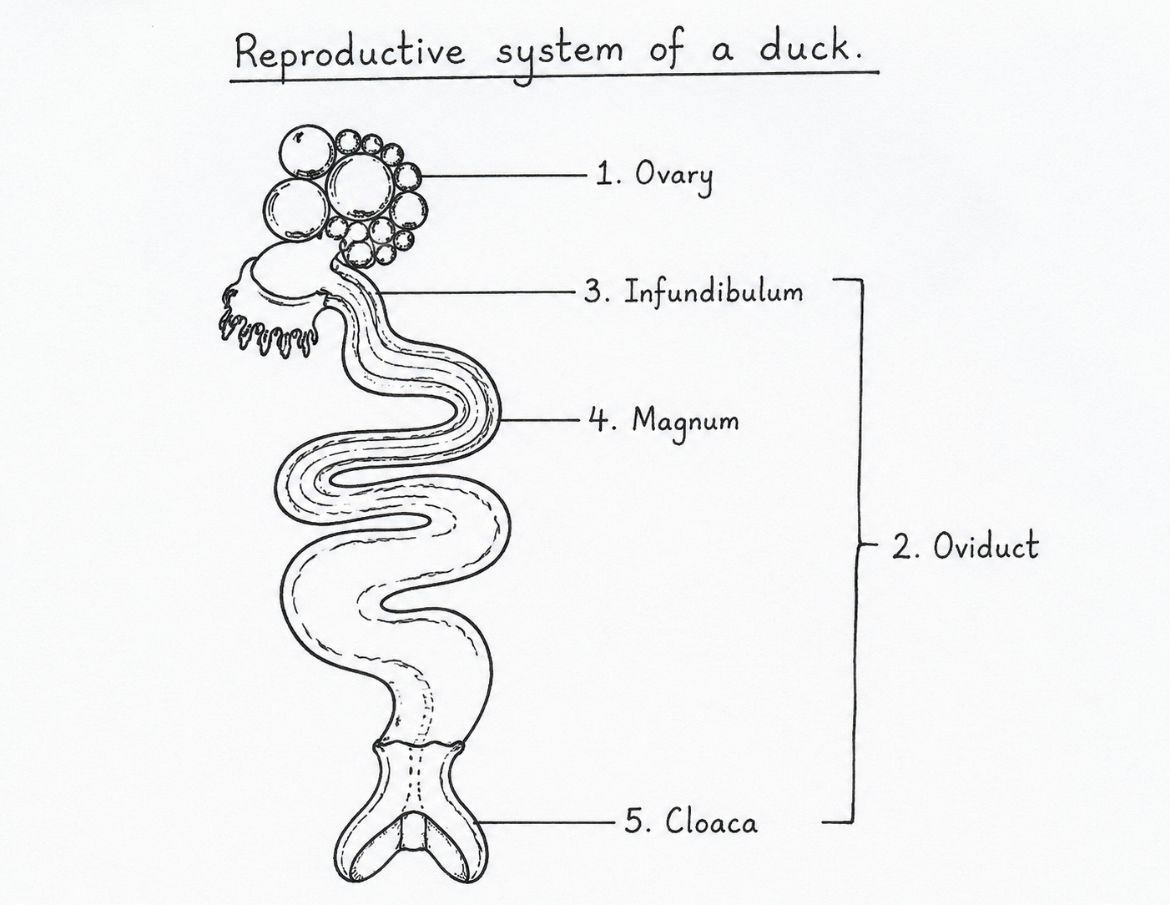
(2d) — Diagram
(2e) — Signs Shown by a Cow Before Parturition (Pick Any Five)
(i) Enlargement of the udder.
(ii) Swollen vulva with mucus discharge.
(iii) Restlessness and frequent lying down and standing up.
(iv) Relaxation of pelvic ligaments / sunken tail head.
(v) Loss of appetite.
(vi) Isolation from other animals.
(vii) Frequent urination and tail raising.
(viii) Enlargement and reddening of the vulva.
Question 3
(3a)
[LOADING ⏳ — Check back soon]
(3b) — Two Reasons for Isolation/Quarantine of Farm Animals
(i) Outbreak of a contagious or infectious disease — to prevent spreading to healthy stock.
(ii) Introduction of new animals to the farm — quarantine period to observe for diseases.
(3c) — Four Reasons Why an Animal May Need to Be Restrained
(i) Administration of medication or vaccination.
(ii) Castration, dehorning, or tail docking.
(iii) Artificial insemination or pregnancy diagnosis.
(iv) Milking or hoof trimming.
(3d) — Four Factors Affecting Milk Yield in Goats
(i) Breed or genetic makeup of the goat.
(ii) Quality and quantity of feed / nutrition provided.
(iii) Health status of the goat (presence of diseases or parasites like mastitis).
(iv) Age or parity (number of kiddings) of the doe.
(3e) — Four Products Obtained from Bees
(i) Honey.
(ii) Beeswax.
(iii) Propolis.
(iv) Royal jelly.
Question 4
(4a)(i) — Definition of Castration
Castration is the surgical removal, destruction, or inactivation of the testes of a male farm animal to prevent reproduction, reduce aggressive behaviour, and improve meat quality.
(4a)(ii) — Three Precautions When Performing Castration
(i) Ensure all surgical tools (such as scalpels or knives) are properly sterilised to prevent infection.
(ii) Apply an appropriate antiseptic or disinfectant to the wound before and after the operation.
(iii) Perform the operation in a clean, dry, and dust-free environment to avoid contamination of the open incision.
(4a)(iii) — Three Reasons for Castrating Male Farm Animals
(i) It prevents indiscriminate or unplanned breeding among the herd.
(ii) It makes male animals more docile, less aggressive, and easier to handle or restrain.
(iii) It improves the quality of meat (carcass quality) by increasing fat marbling and eliminating undesirable odours.
Question 5
(5a)(i) — Three Food/Edible Products from Livestock
(i) Meat.
(ii) Milk.
(iii) Eggs.
(5a)(ii) — Three Uses of Livestock as a Source of Power/Work
(i) Ploughing of land.
(ii) Transportation of farm produce.
(iii) Pulling farm implements and carts.
(5a)(iii) — Three Non-Food/Industrial Products from Livestock
(i) Hides and skins for leather.
(ii) Wool and hair for textiles.
(iii) Bones and horns for craft works.
(5b) — Five Products Obtained from Poultry
(i) Eggs.
(ii) Meat.
(iii) Feathers.
(iv) Manure.
(v) Blood meal.
(5c) — Definition of Incubation
Incubation is the process of keeping fertile eggs under suitable temperature, humidity and ventilation conditions until they hatch into chicks.
(5d)(i) — Number of Eggs Expected in 20 Days
75% of 250 chickens = 75/100 × 250 = 187.5 ≈ 188 eggs per day.
Number of eggs expected in 20 days = 188 × 20 = 3,760 eggs.
(5d)(ii) — Number of Egg Trays Needed
If 1 egg tray contains 30 eggs:
Number of trays needed = 3,760 ÷ 30 = 125.3.
Therefore, 126 egg trays will be needed.
Stay Updated via WhatsApp
Join the official Examsmooth WhatsApp channel to get instant alerts when we drop verified WAEC Livestock Farming answers, exam tips, and past questions.
 Examsmooth
Leave a comment