
NECO 2026 Biology Answers (Paper II & III)
This page contains the verified NECO 2026 Biology answers for Paper II (Theory) and Paper III (OBJ). Scroll down carefully to find your section and read the explanations.
NECO 2026 Biology Question Paper

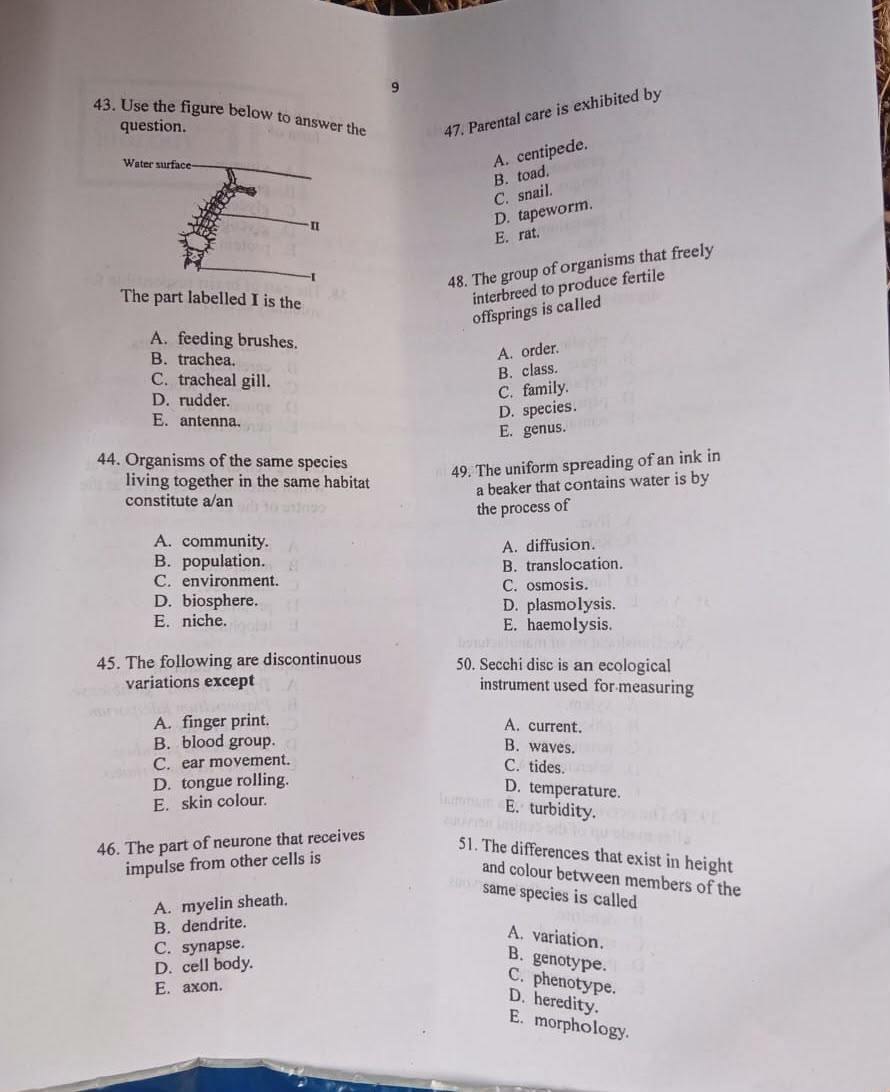
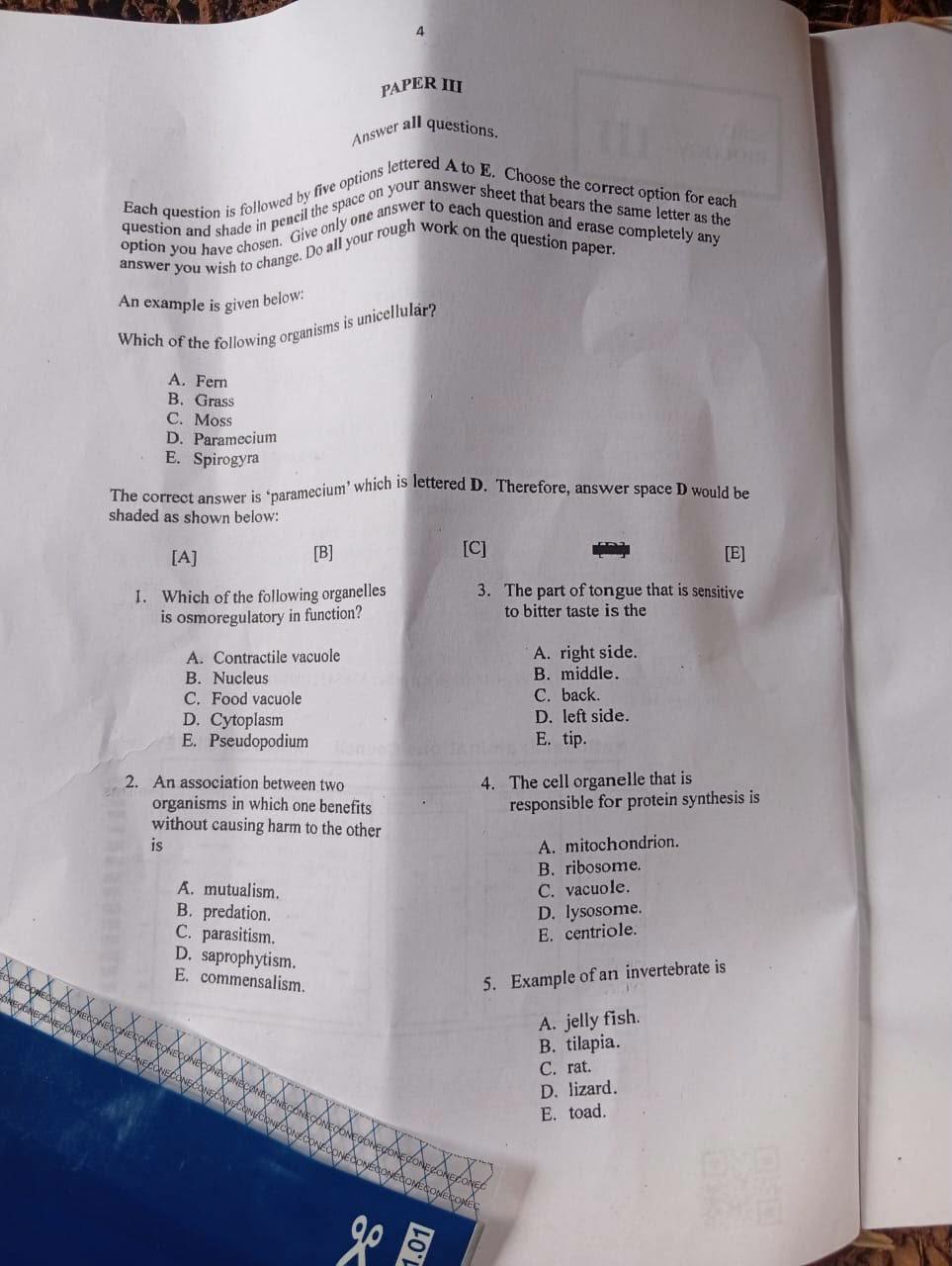
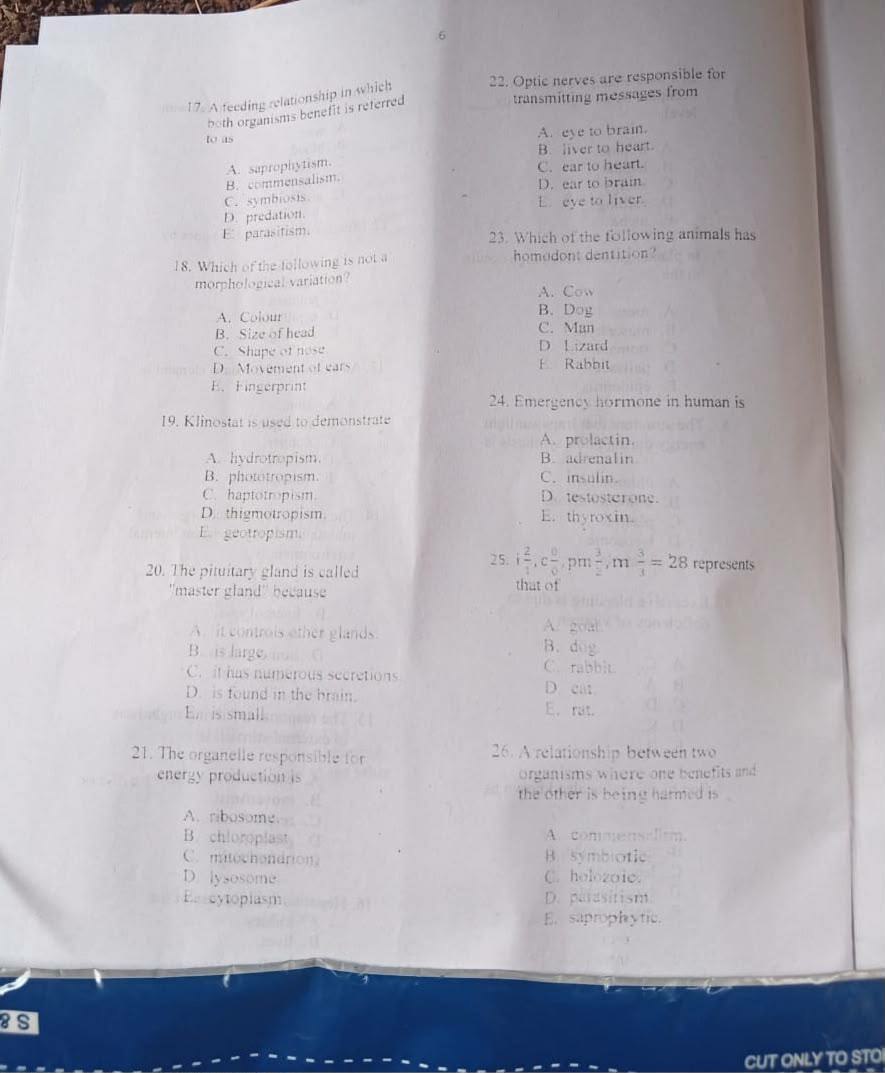

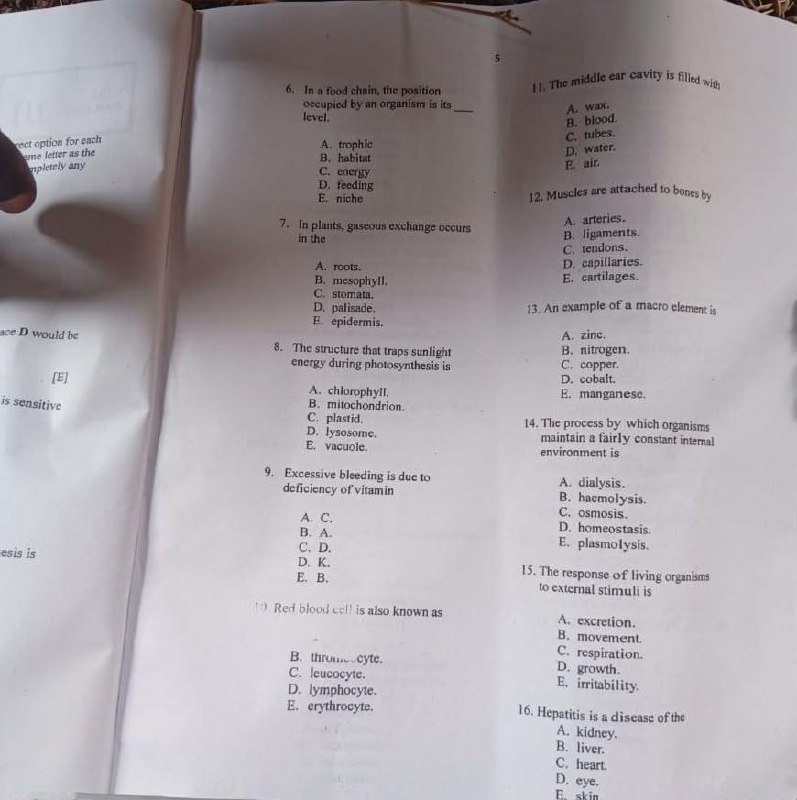
Paper III: Objective (OBJ) Answers
Instructions: Cross-check your shading carefully. Each number below represents the correct option (A–E) for that question.
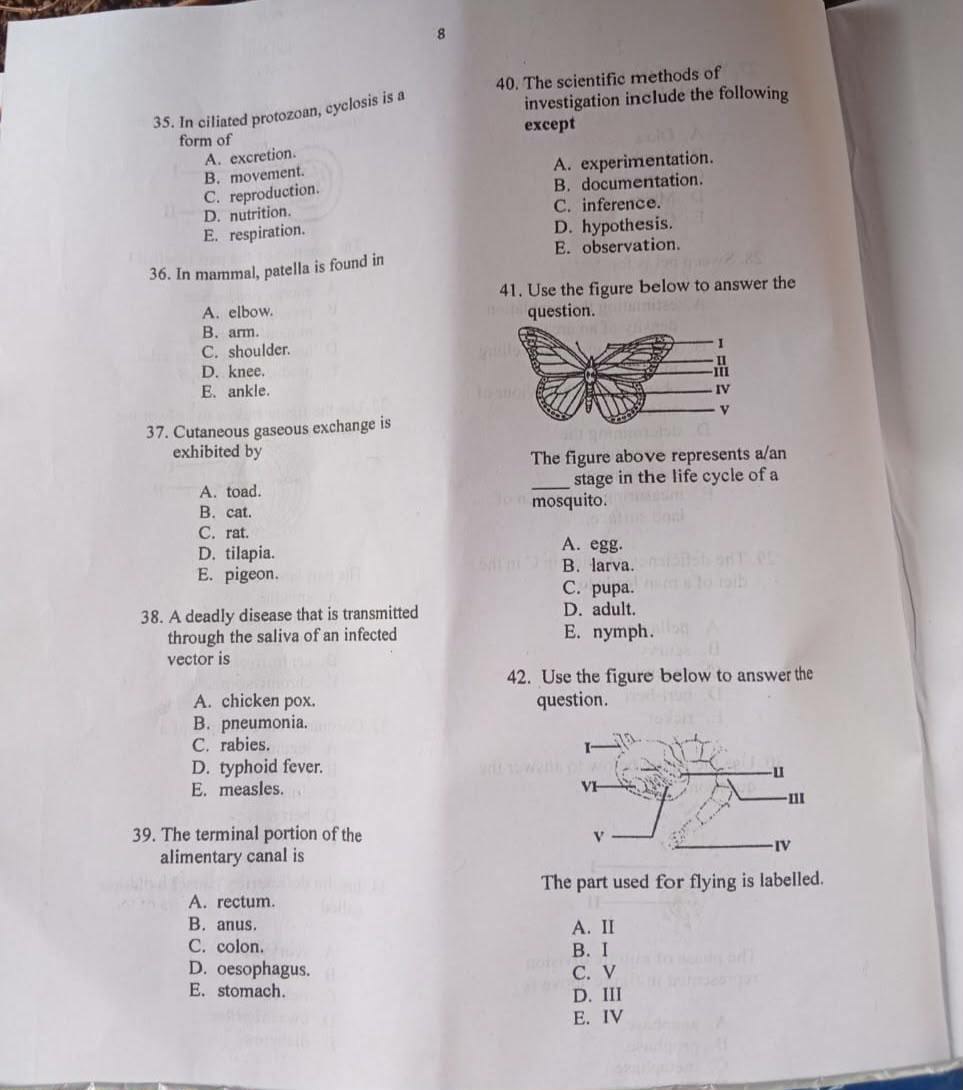
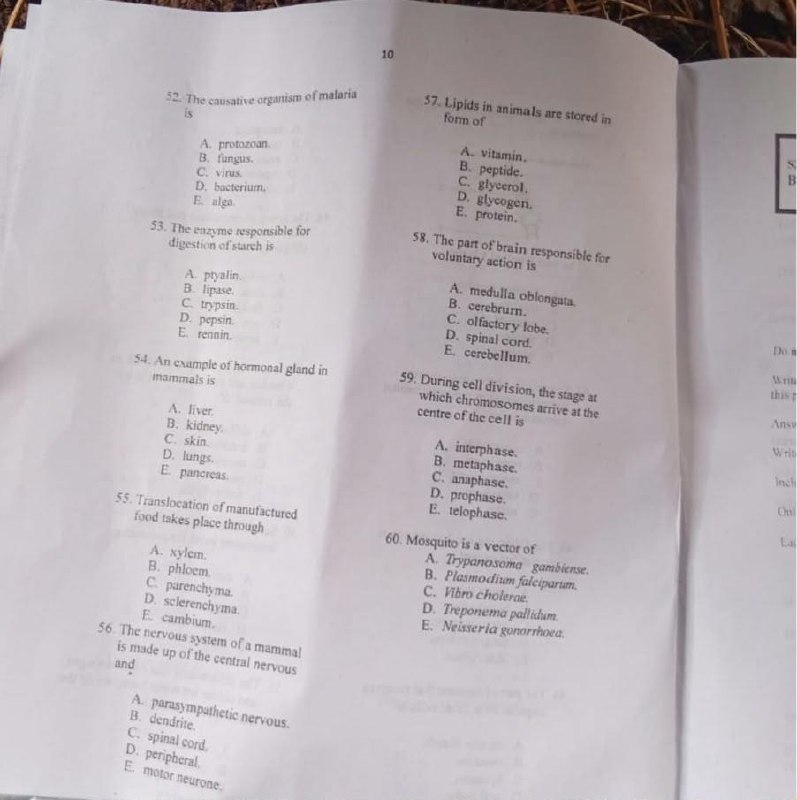
01. A — Contractile vacuole
02. E — Commensalism
03. C — Back of the tongue
04. B — Ribosome
05. A — Jellyfish
06. A — Trophic level
07. C — Stomata
08. A — Chlorophyll
09. D — Vitamin D
10. E — Erythrocyte
11. E — Air
12. C — Tendons
13. B — Nitrogen
14. D — Homeostasis
15. E — Irritability
16. B — Liver
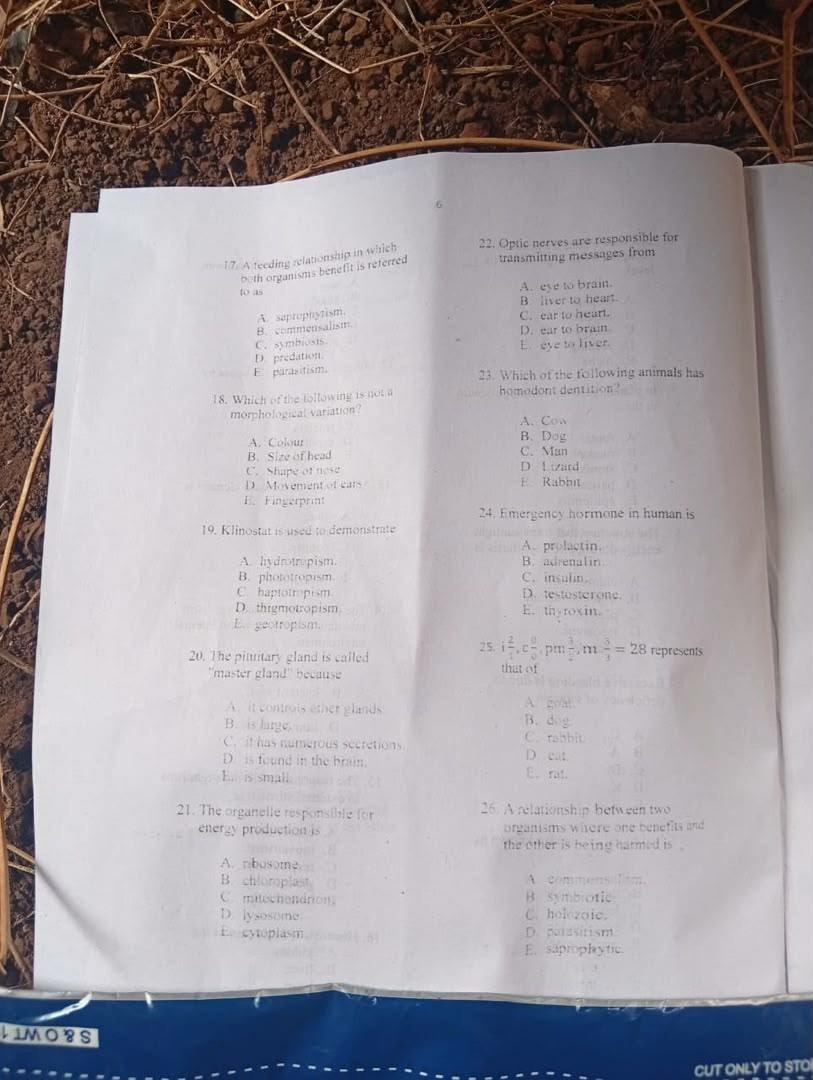
17. C — Symbiosis
18. D — Movement of ears
19. E — Geotropism
20. A — It controls other glands
21. C — Mitochondrion
22. A — Eye to brain
23. D — Lizard
24. B — Adrenalin
25. C — Rabbit
26. D — Parasitism
27. E — Cowpea
28. B — Capturing ground dwelling insects
29. B — Scurvy
30. D — Transpiration
31. D — Spirogyra
32. A — Photosynthesis
33. C — Kidney
34. E — Malaria
35. D — Diastole
36. D — Osmosis
37. A — Xylem
38. C — Mutation
39. B — Seminal vesicle
40. B — Ovulation
41. D — Plasmolysis
42. B — Earthworm
43. A — Commensalism
44. B — Nucleus
45. E — Saprophyte
46. B — Chloroplast
47. E — Anaerobic respiration
48. D — Hormone
49. A — Dicotyledon
50. E — Pollen grain
51. A — Bile
52. A — Cerebrum
53. A — Auxin
54. E — Ozone layer
55. B — Deforestation
56. D — Photosynthesis
57. C — Symbiosis
58. B — Testes
59. B — Chlorophyll
60. B — Osmosis
Tip: If any of your chosen options is different from the key above, review that question in your booklet and understand why the correct option is preferred.
Paper II: Theory Answers
The answers below are arranged by question number. Use them to check your work and to revise important Biology concepts for NECO and other exams like WAEC and JAMB.
Question 1
(1ai) Tolerance: Tolerance is the ability of an organism to survive, grow and reproduce within a range of environmental conditions such as temperature, pH, salinity and light intensity. Outside this range, the organism cannot survive.
(1aii) Substances transported by the blood in mammals:
- Oxygen — from the lungs to body tissues.
- Carbon dioxide — from tissues to the lungs for removal.
- Nutrients — e.g. glucose, amino acids from the small intestine to cells.
- Waste products — e.g. urea to the kidneys for excretion.
- Other substances (examples): hormones, antibodies, heat and water.
(1b) Stages of mitosis:
- Prophase — Chromosomes condense, spindle fibres form and the nuclear membrane breaks down.
- Metaphase — Chromosomes align at the equator/equatorial plate of the cell.
- Anaphase — Sister chromatids separate and move to opposite poles of the cell.
- Telophase — Nuclear membranes re-form, chromosomes uncoil and cytokinesis follows.
(1c) Social behaviour of termites:
- Caste system / Social organisation — Division of labour into workers, soldiers, queen and king for feeding, defence, reproduction and colony maintenance.
- Mound building — Construction of large ventilated termitaria/mounds that regulate temperature and humidity for the colony.
- Fungus farming — Worker termites cultivate fungus gardens in the nest which serve as food, especially during dry seasons.
- Trophallaxis — Sharing of digested food mouth-to-mouth among colony members and transfer of cellulose-digesting protozoa.
- Swarming / Reproductive flight — Winged reproductives leave the nest at specific times to mate and start new colonies, avoiding overcrowding and inbreeding.
Question 2
(2ai) Excretory organs and their organisms:
- Kidney — Mammals, e.g. human.
- Nephridium — Annelids, e.g. earthworm.
- Malpighian tubule — Insects, e.g. cockroach.
- Contractile vacuole — Unicellular organisms, e.g. Amoeba, Paramecium.
- Flame cell — Platyhelminthes, e.g. Planaria or liver fluke.
(2bi) Similarities between nephridium (earthworm) and kidney (mammal):
- Both are paired excretory organs that remove nitrogenous waste from the blood.
- Both consist of tubules and are involved in osmoregulation.
(2bii) Differences between nephridium and kidney:
| Feature | Earthworm (Nephridium) | Mammal (Kidney) |
|---|---|---|
| Structure | Simple tubular structure, one pair per segment. | Complex bean-shaped organ with millions of nephrons. |
| Opening | Opens to the exterior by a nephridiopore. | Opens via the ureter to the urinary bladder. |
| Excretion | Excretes mainly ammonia. | Excretes mainly urea. |
(2c) Opening and closing of stomata: Stomata open and close due to changes in the turgor pressure of guard cells. During the day, light stimulates accumulation of K+ ions and sugars in guard cells, water enters by osmosis, the guard cells become turgid and bow outward, creating a pore. At night or under water stress, K+ ions and water leave the guard cells, they become flaccid and collapse inward, closing the pore. The hormone abscisic acid (ABA) also promotes closure.
Question 3
(3ai) Elements in proteins and carbohydrates:
- Protein: Carbon, hydrogen, nitrogen, oxygen and sometimes sulphur.
- Carbohydrate: Carbon, hydrogen and oxygen.
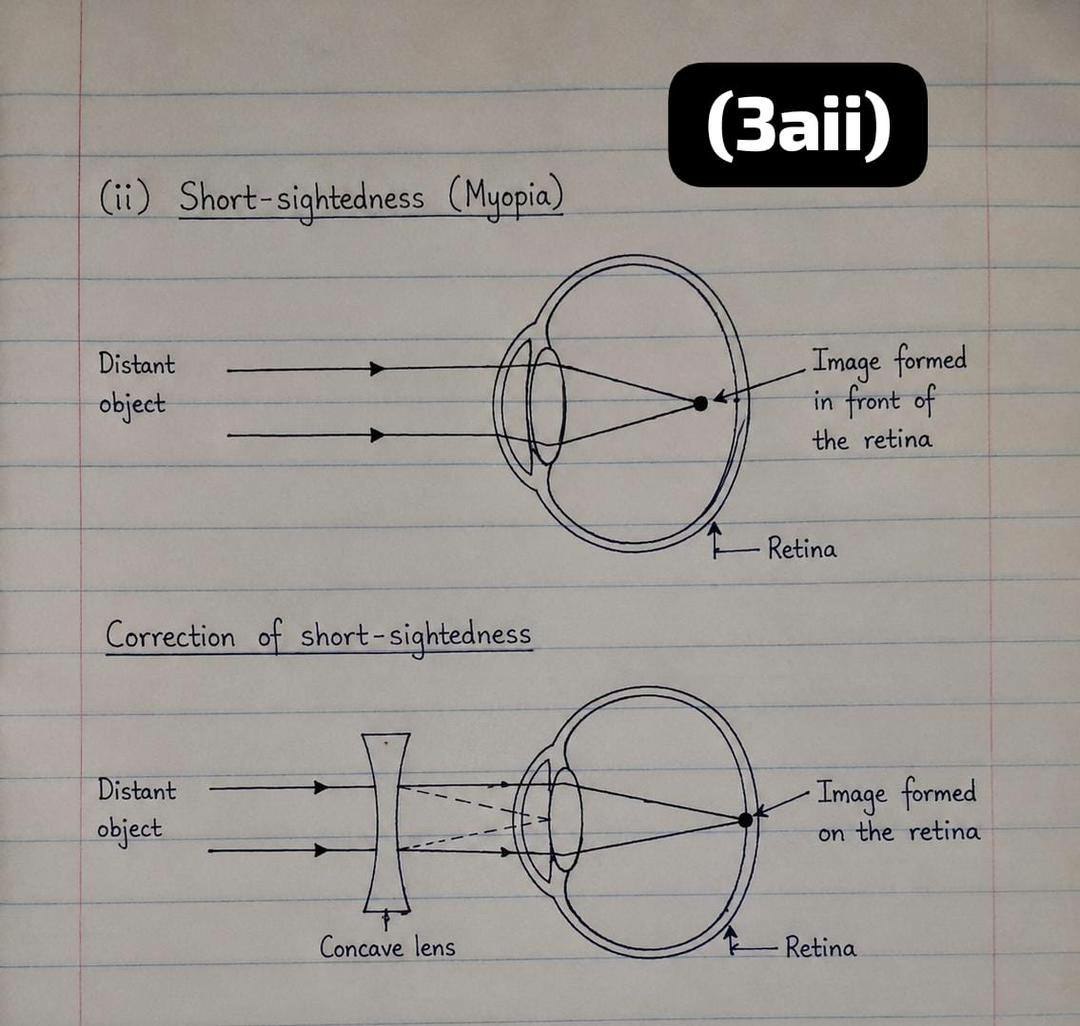
(3aii) Diagram — Short-sightedness (myopia) and correction with concave lens:
(3aiii) Factors that determine population size:
- Birth rate (natality)
- Death rate (mortality)
(3b) Definitions:
- Swarming: A sudden large-scale movement of organisms, especially insects like bees, locusts or termites, often for reproduction, migration or search for food.
- Epidemic: A sudden outbreak of a disease that spreads rapidly and affects a large number of people in a community or region at the same time.
(3ci) Parthenocarpy: The development of fruit without fertilization, resulting in seedless fruits, e.g. banana and pineapple.
(3cii) Methods of birth control:
- Barrier method — e.g. condom, diaphragm.
- Hormonal method — e.g. birth control pills, implants.
Question 4
(4ai) Properties of enzymes:
- They are protein in nature and are highly specific in their action.
- They are reusable and remain unchanged after a reaction.
- They are temperature and pH sensitive.
(4aii) Parts of the eye and their functions:
- Pupil: Controls the amount of light entering the eye by dilating or constricting.
- Conjunctiva: Protects the eye by providing lubrication and helping to prevent microbes from entering.
- Cornea: Acts as the outermost lens to refract (focus) light as it enters the eye.
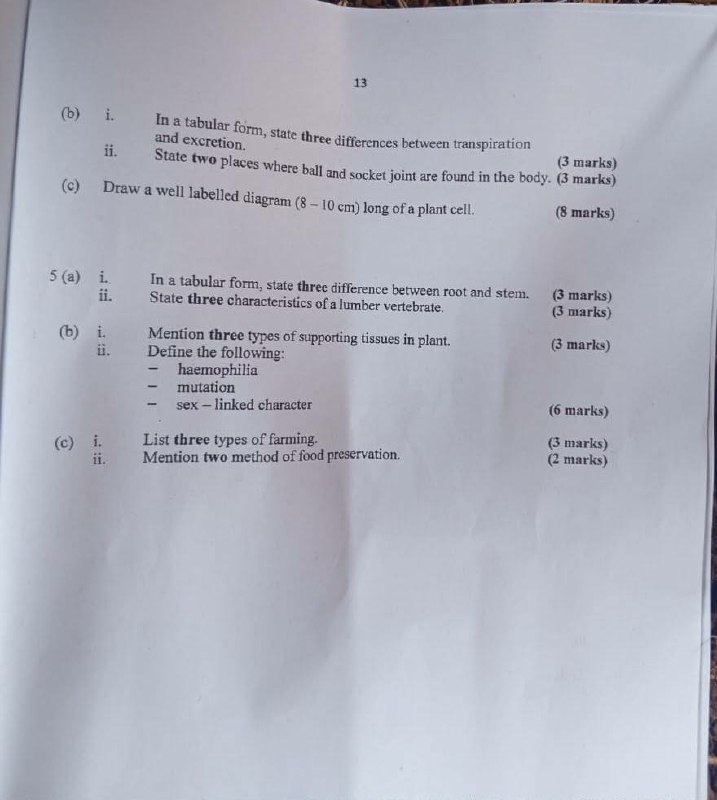
(4bi) Differences between transpiration and excretion:
| Feature | Transpiration | Excretion |
|---|---|---|
| Definition | Loss of excess water in the form of water vapour from the aerial parts of plants. | Removal of metabolic waste products from the body of organisms. |
| Site | Occurs mainly through stomata, lenticels and cuticle of plants. | Occurs through specialised organs like kidneys, skin, lungs and gills. |
| Nature of substance | The water lost is not a metabolic waste product. | Involves removal of toxic or used-up substances like urea, carbon dioxide and excess salts. |
(4bii) Types of ball-and-socket joints:
- Shoulder joint — between the head of the humerus and the glenoid cavity of the scapula.
- Hip joint — between the head of the femur and the acetabulum of the pelvic girdle.
(4c) Diagram — Labelled plant cell:

Question 5
(5ai) Differences between root and stem:
| Feature | Root | Stem |
|---|---|---|
| Growth direction | Grows downwards into the soil (positively geotropic). | Grows upwards or horizontally (negatively geotropic, positively phototropic). |
| Structures borne | Bears no leaves, flowers, buds or nodes. | Bears leaves, flowers, buds and nodes. |
| Surface features | Has root hairs for absorption of water and mineral salts. | Has no root hairs; has buds in the axils of leaves. |
(5aii) Features of lumbar vertebra:
- Large and strong body/centrum — to support body weight.
- No facets for ribs — unlike thoracic vertebrae.
- Short, broad, flat spinous process — projects horizontally backward for muscle attachment.
(5bi) Types of supporting tissues in plants:
- Collenchyma: Living cells with unevenly thickened walls that provide flexible support.
- Sclerenchyma: Dead cells with lignified thick walls that provide rigid support.
- Xylem: Conducts water and mineral salts and gives mechanical support.
(5bii) Definitions:
- Haemophilia: An inherited sex-linked recessive disorder in which blood fails to clot normally due to deficiency of clotting factors.
- Mutation: A sudden, random and heritable change in the DNA sequence or chromosome structure of an organism.
- Sex-linked character: A trait whose gene is located on a sex chromosome, usually the X-chromosome, e.g. colour blindness and haemophilia.
(5ci) Types of farming:
- Arable farming.
- Pastoral farming.
- Mixed farming.
(5cii) Methods of food preservation:
- Drying / dehydration.
- Refrigeration / freezing.
✅ NECO 2026 Biology — Completed. All the best in your exams!
 Examsmooth
Leave a comment