
2026 WAEC Civic Education Questions and Answers
Live exam update for Examsmooth candidates. Our team is currently sourcing and verifying the 2026 WAEC Civic Education OBJ and Essay answers. Please bookmark this page now and keep refreshing — once the answers are ready, this page will update immediately.
Status: Answers are still loading. This page will be updated as soon as verified solutions are available.
2026 WAEC Civic Education Answers Overview
This page is dedicated to the official 2026 WAEC Civic Education questions and answers for all candidates using Examsmooth. As soon as the exam starts and questions are confirmed, we will begin updating the OBJ and Essay/Theory sections below in real time.
Important: Use these answers for cross-checking and revision support only. Always read your questions carefully in the hall and follow WAEC rules and regulations.
OBJ Answers – Civic Education (2026 WAEC)
The objective (OBJ) answers for 2026 WAEC Civic Education will be posted here once all questions have been confirmed from multiple centres and carefully solved. Check back a few minutes before your exam time and keep refreshing this page for the latest update.
2026 WAEC Civic Education OBJ Answers — COMPLETED ✅
Answer Key (1–50)
01–10: C B C B D A B B C C
11–20: A A C D D B D A A C
21–30: A A B A C A C D B C
31–40: A D B B A A A B C D
41–50: B C C D C C C B C C
Once available, we will publish the OBJ answers in an easy-to-follow number format (1–50) so you can quickly cross-check after your exam.
Essay / Theory Answers – Civic Education (2026 WAEC)
The Essay/Theory answers will contain well-structured explanations that follow WAEC marking scheme standards. We will provide clear introductions, well-developed points, and proper conclusions to guide you during your revision.
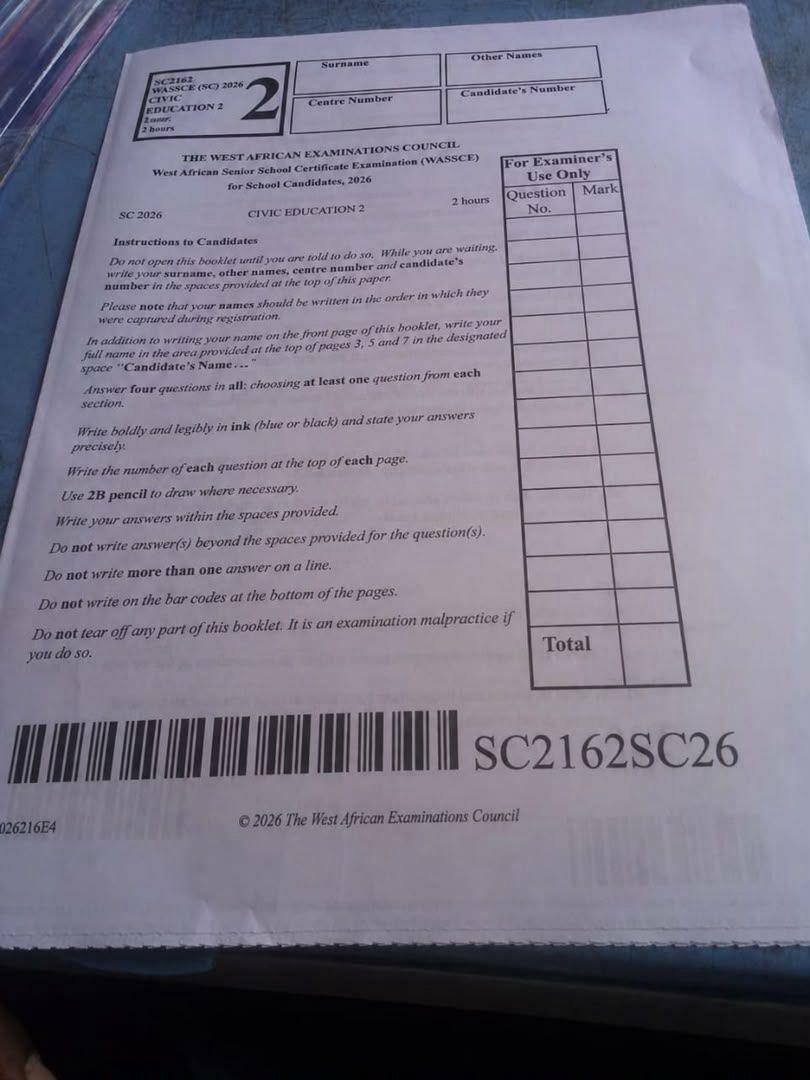
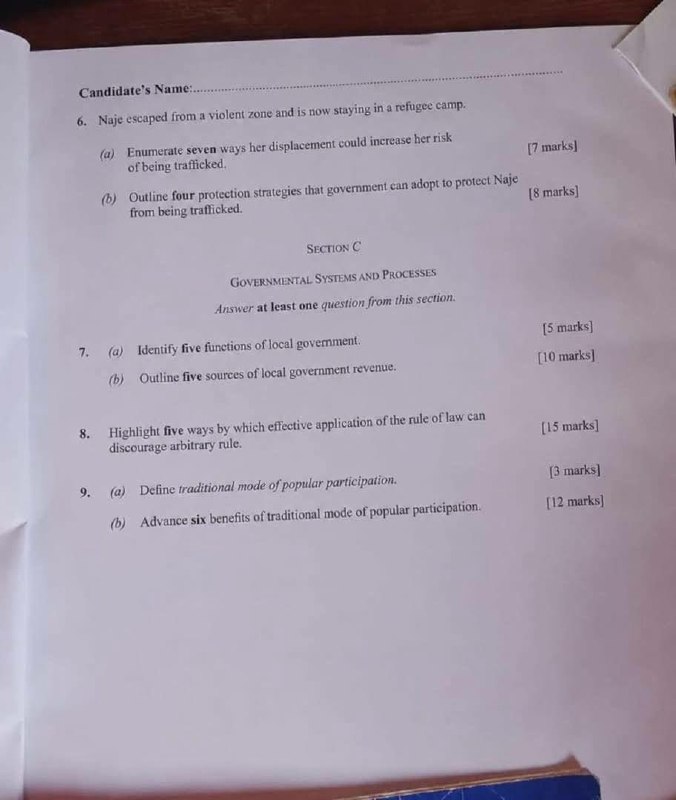
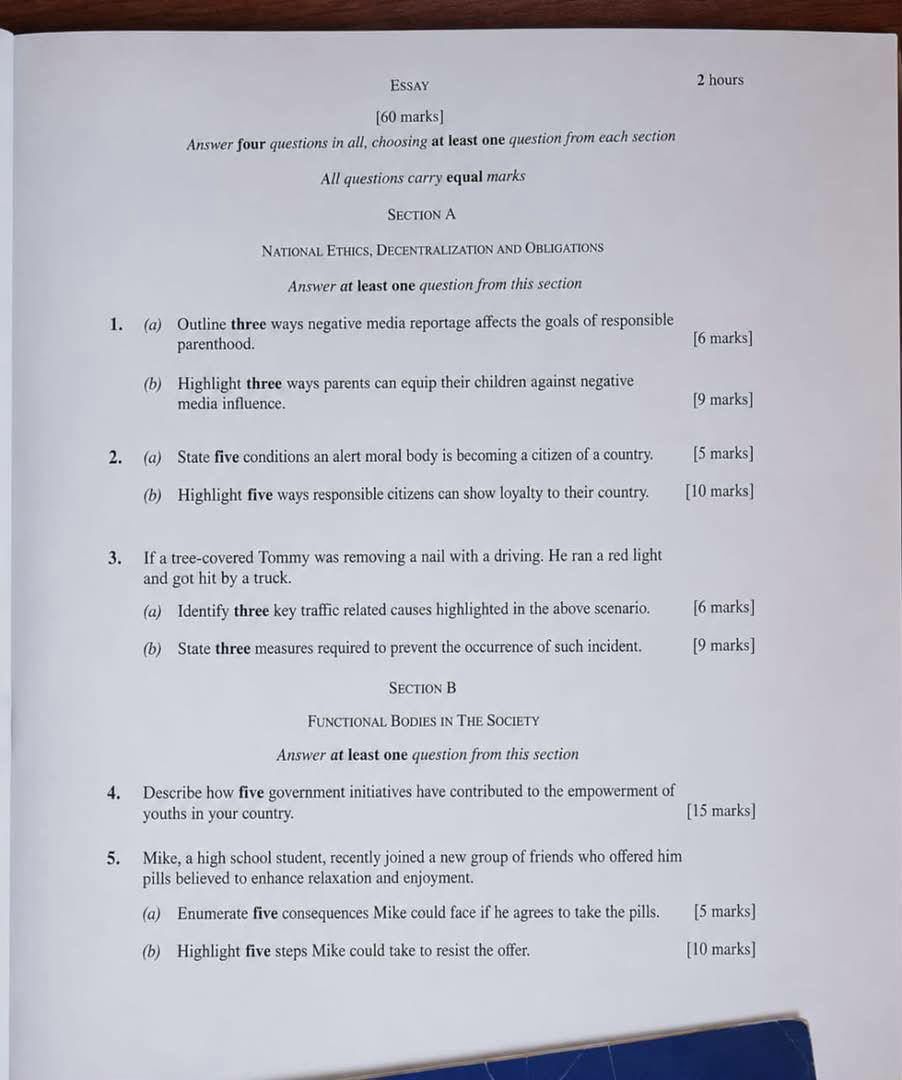
2026 WAEC Civic Education Essay Answers
Question 1(a)
Honesty is the quality of being truthful, sincere, and trustworthy in one’s words, actions, and dealings with others. It involves telling the truth, keeping promises, avoiding deceit, and acting with integrity at all times.
Question 1(b) — Consequences of Dishonesty (Pick Six)
- Loss of Trust: When a person is dishonest, people gradually lose confidence in him or her. Once trust is broken, it becomes very difficult to regain it, and others may become reluctant to depend on the individual.
- Damage to Reputation: Dishonesty can tarnish a person’s good name and image in society. Friends, family members, colleagues, and community members may develop a negative opinion of the individual.
- Broken Relationships: Dishonest behaviour often creates conflicts and misunderstandings among friends, family members, and associates. This may lead to separation, resentment, and loss of valuable relationships.
- Loss of Opportunities: Employers, teachers, and business partners prefer trustworthy individuals. A dishonest person may lose educational, employment, leadership, or business opportunities because of a lack of credibility.
- Legal Consequences: Certain dishonest acts such as fraud, forgery, theft, and false testimony may result in arrest, prosecution, fines, or imprisonment under the law.
- Feelings of Guilt and Shame: Dishonesty often causes inner discomfort and emotional distress. The individual may experience guilt, regret, anxiety, and shame for engaging in wrongful actions.
- Poor Moral Character: Repeated dishonest behaviour weakens a person’s moral values and integrity. Over time, the individual may find it easier to engage in more serious unethical activities.
- Loss of Self-Respect: A dishonest person may begin to feel disappointed in himself or herself. This can reduce self-esteem and make the individual feel unworthy of respect and admiration.
- Lack of Peace of Mind: Maintaining lies and deceptive actions often creates fear of being exposed. This constant worry can result in stress, tension, and emotional instability.
- Reduced Social Acceptance: Society generally values honesty and integrity. Individuals known for dishonesty may be avoided, rejected, or excluded from important social activities and positions of responsibility.
Question 5 — Why Trafficking Victims Do Not Seek Help (Pick Five)
- Fear of traffickers: Victims are often threatened with violence, torture, or death if they try to escape or report their traffickers. Because of these threats, many victims remain silent and avoid seeking help from authorities.
- Fear of deportation or arrest: Some victims are moved across borders illegally and may not have valid travel documents. They fear that if they approach the police, they may be arrested, imprisoned, or deported instead of being protected.
- Lack of awareness of their rights: Many victims do not know that they have legal rights and that organizations exist to help them. As a result, they may not know where or how to seek assistance.
- Shame and embarrassment: Victims often feel humiliated about what has happened to them, especially those who have been forced into prostitution or other degrading activities. This shame may prevent them from speaking out.
- Distrust of authorities: Some victims come from places where law enforcement officers are corrupt or abusive. Because of previous negative experiences, they may not trust the police or government agencies enough to seek help.
- Language barriers: Victims who are taken to foreign countries may not understand the local language. This makes it difficult for them to communicate their problems or ask for assistance.
- Emotional and psychological control: Traffickers often manipulate victims through fear, deception, intimidation, and emotional abuse. Over time, victims may become psychologically dependent on their traffickers and feel unable to leave.
- Isolation from family and friends: Traffickers usually separate victims from their loved ones and support networks. Without anyone to encourage or assist them, victims may feel alone and helpless.
- Financial dependence: Victims may rely completely on traffickers for food, shelter, clothing, and other basic needs. They may believe they cannot survive on their own if they escape.
- Fear of social stigma and discrimination: Victims may worry that their families, friends, or communities will reject, blame, or judge them because of their experiences. This fear of being stigmatized discourages them from seeking help.
Question 8(a) — Why Nigeria Practises Representative Democracy (Pick Five)
- Large Population: Nigeria’s massive population makes it impossible for every citizen to participate directly in law-making (Direct Democracy).
- Large Geographical Size: The vast landmass makes it difficult to gather all citizens in one location for decision-making.
- Expertise and Competence: It allows citizens to elect individuals with the necessary skills, education, and experience to manage complex state affairs.
- Promotion of National Unity: Representative democracy allows various ethnic and interest groups across the country to have a voice in the central government.
- Efficiency in Governance: It is more practical and time-efficient for a smaller group of elected officials to debate and pass laws than for the entire citizenry to do so.
Question 8(b) — Challenges of Democracy in Nigeria (Pick Five)
- Corruption: The misappropriation of public funds and bribery often undermine democratic institutions and erode public trust.
- Electoral Malpractice: Issues like vote-buying, ballot box snatching, and result manipulation prevent the true will of the people from being reflected.
- Poverty and Illiteracy: High levels of poverty make voters vulnerable to manipulation, while illiteracy hinders the understanding of democratic rights and processes.
- Insecurity: Insurgency, banditry, and communal clashes disrupt elections and create an atmosphere of fear that limits political participation.
- Ethnic and Religious Sentiments: Political choices are often made based on tribal or religious affiliations rather than the merit or competence of candidates.
Question 9(a) — Problems Between the Government and the Governed
- Poor Communication
- Lack of Accountability
- Poor Communication
Question 9(b) — How Government Can Address Problems with the Governed (Pick Five)
- Providing Basic Infrastructure: Ensuring access to quality roads, electricity, and clean water to improve living standards.
- Ensuring Security: Protecting the lives and property of citizens from internal and external threats.
- Promoting Economic Opportunities: Implementing policies that create jobs, support small businesses, and reduce poverty.
- Upholding the Rule of Law: Ensuring that justice is administered fairly and that the rights of all citizens are protected.
- Investing in Education and Healthcare: Providing affordable and quality social services to empower the population.
- Regular Engagement: Maintaining an open channel of communication to listen to grievances and involve followers in the decision-making process.
Immediately the theory questions are confirmed in the exam hall, this section will be updated with likely solutions, key points, and model answers for each question number.
Stay Ahead – Join the Examsmooth WAEC Civic WhatsApp Channel
Get instant alerts when the 2026 WAEC Civic Education OBJ and Essay answers drop, plus updates for other WAEC subjects. Limited spots are available to avoid spam and keep the channel fast.
Note: This page is for educational support only. WAEC and Examsmooth do not encourage examination malpractice.
 Examsmooth
Leave a comment