
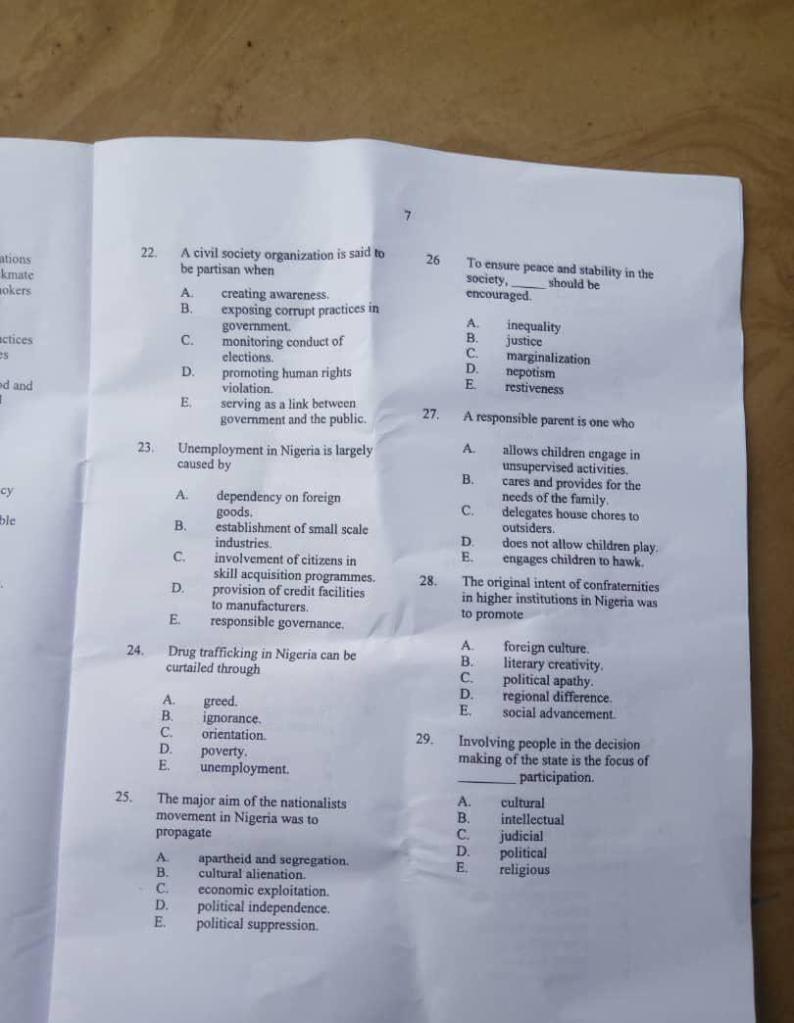
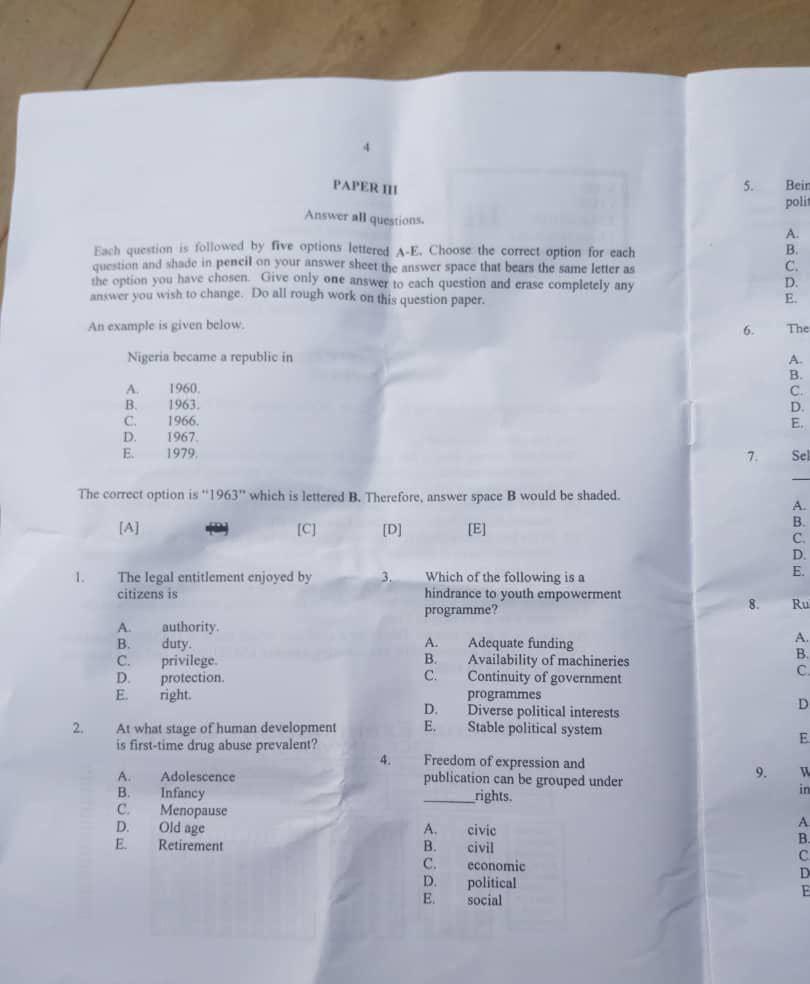
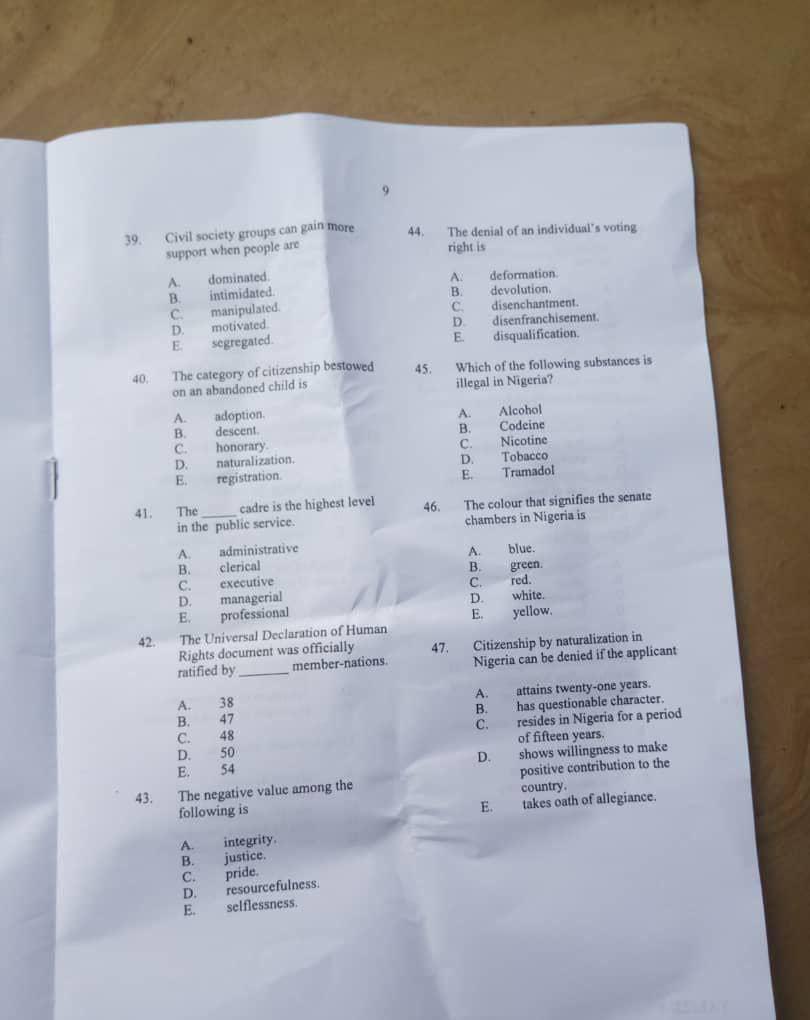

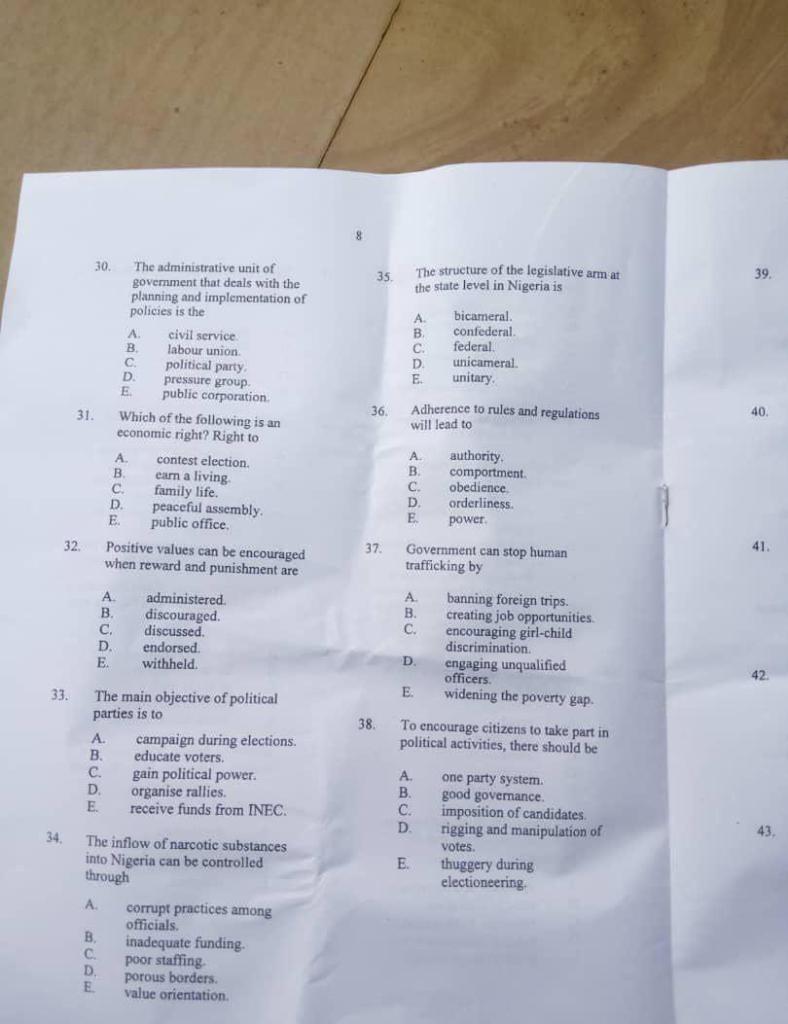
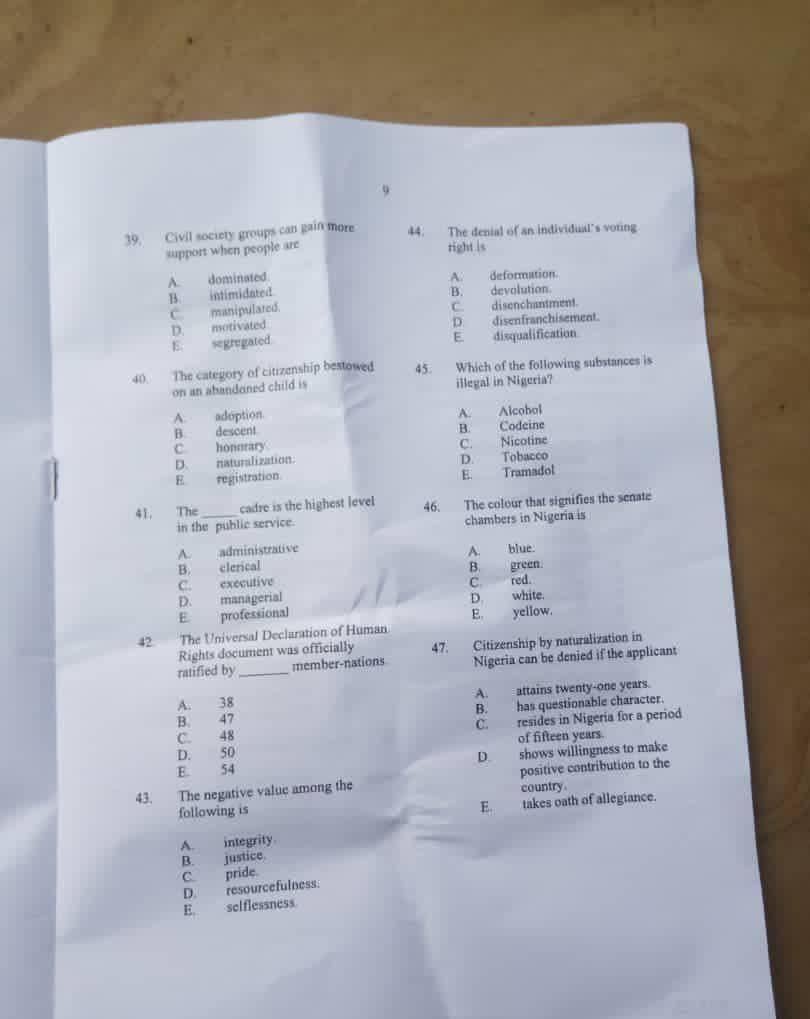
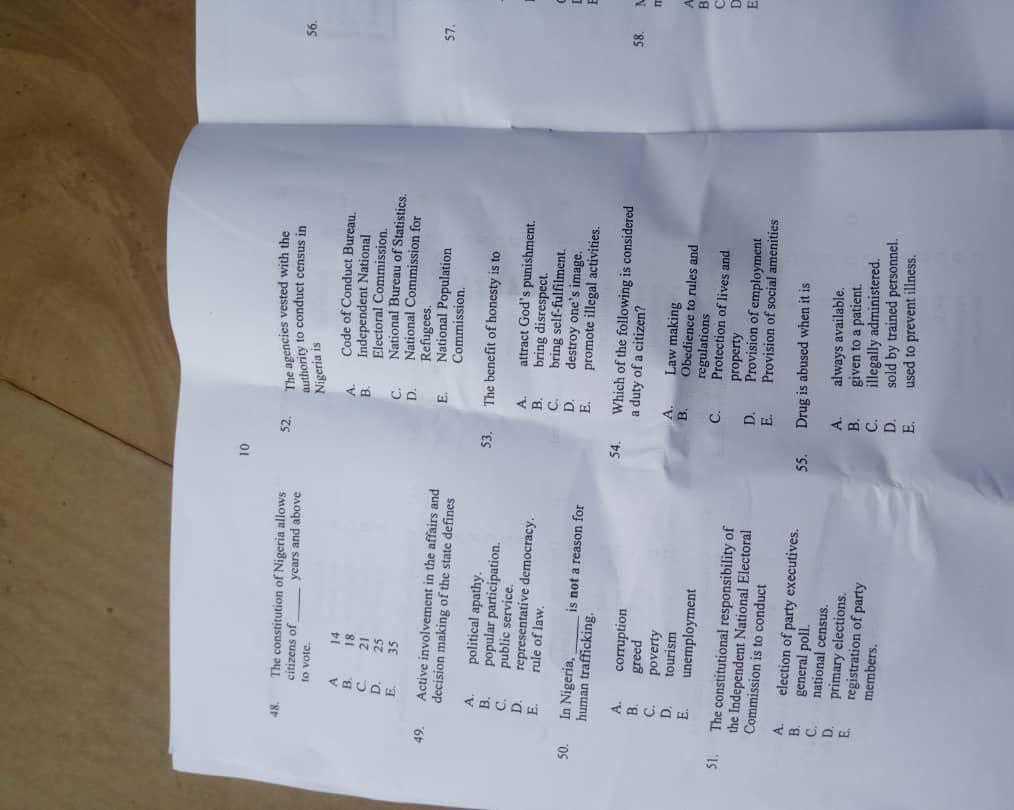
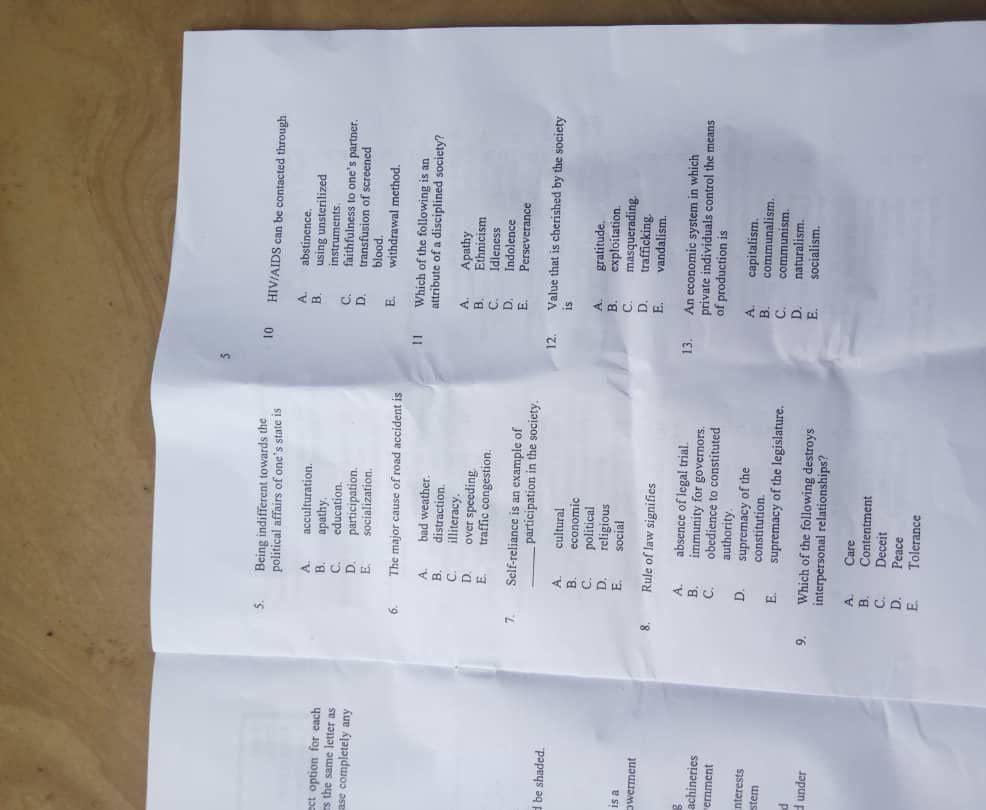
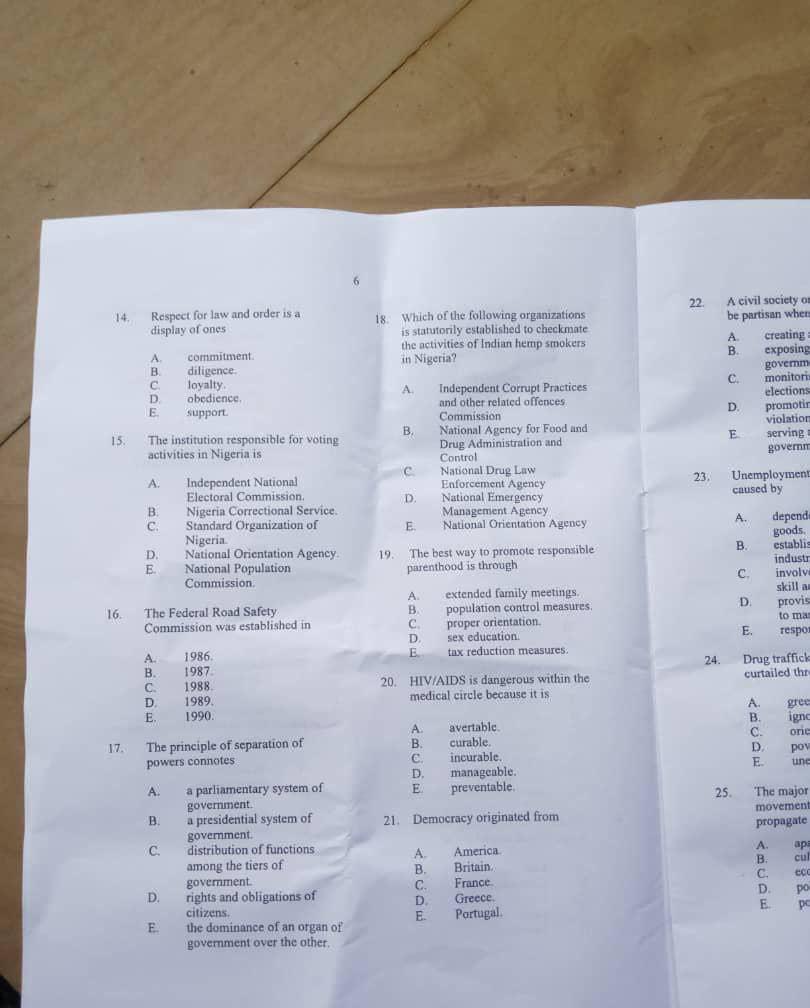
*NECO CIVIC EDUCATION SOLUTION*
1(a)
Values are the accepted principles, standards, or qualities that guide the behavior and actions of individuals and groups in a society. They serve as moral compasses, helping people determine what is right, desirable, and acceptable. Values shape our decisions, influence our relationships, and promote unity and peace within the community.
1(b) PICK ANY FOUR
i. Moral Values:
These are principles that distinguish right from wrong. They help individuals behave in an ethically acceptable manner. Examples include honesty, integrity, kindness, and humility.
ii. Social Values:
Social values promote peaceful and respectful interaction among members of a community. They include respect for others, tolerance, hospitality, cooperation, and loyalty.
iii. Cultural Values:
These are traditional beliefs, customs, and practices passed from one generation to another. They reflect the identity of a group or society. Examples are respect for elders, language, dress codes, and marriage customs.
iv. Religious Values:
These are values taught by religious doctrines that guide the behavior of followers. They include faith, love, forgiveness, obedience to God, and compassion for others.
v. Economic Values:
These values guide people’s attitudes towards wealth, work, and resources. They include hard work, honesty in business, savings, accountability, and productivity.
v. Political Values:
Political values are the standards that govern political behavior and institutions. They include patriotism, fairness, justice, rule of law, political participation, and loyalty to the nation.
vii. Educational Values:
These values emphasize the importance of knowledge, learning, and academic excellence. Examples include discipline, punctuality, respect for teachers, and the desire to acquire skills.
*NECO CIVIC EDUCATION SOLUTION*
4(a)
Democracy is a system of government in which the power belongs to the people. It allows citizens to freely choose their leaders through regular, free, and fair elections. In a democratic society, the rule of law is respected, and citizens enjoy fundamental human rights such as freedom of speech, religion, and association.
4(b) PICK ANY FOUR
i. The Rule of Law:
This means that everyone, including government officials, must obey the law. No one is above the law. It ensures fairness, justice, and order in the society.
ii. Free and Fair Elections:
Democracy thrives when citizens are allowed to vote for their leaders without intimidation, bribery, or rigging. Elections must be transparent and reflect the will of the people.
iii. Separation of Powers:
Power is shared among the three arms of government: the Executive, Legislature, and Judiciary. Each arm operates independently to prevent abuse of power and promote accountability.
iv. Fundamental Human Rights:
Citizens enjoy rights such as freedom of speech, press, religion, movement, and association. These rights empower people to participate actively in governance.
v. Political Tolerance:
In a democratic society, people are free to hold different opinions and belong to any political party or group. Political opponents are respected and not treated as enemies.
vi. Accountability and Transparency:
Leaders are expected to explain their actions and decisions to the people. Government spending and actions must be open and available for public scrutiny.
vii. Majority Rule and Minority Rights:
While decisions are made based on the majority’s choice, the views and rights of the minority must be respected and protected to maintain fairness and unity.
viii. Active Participation of Citizens:
Democracy depends on citizens being involved in political processes like *NECO CIVIC EDUCATION SOLUTION*
5(a)
A citizen is a legally recognized member of a country who enjoys full rights, privileges, and responsibilities under the constitution of that country. A citizen owes loyalty to the state and is entitled to protection by the government.
5(b) PICK ANY FOUR
i. Citizenship by Birth:
Anyone born in Nigeria before or after independence whose parents or grandparents are Nigerians is automatically a citizen of Nigeria.
ii. Citizenship by Descent:
A person born outside Nigeria is a Nigerian citizen if either of his or her parents or grandparents is a Nigerian by birth.
iii. Citizenship by Registration:
This applies to foreign women married to Nigerian men and people of African descent who apply to be registered as Nigerians. They must satisfy certain legal conditions.
iv. Citizenship by Naturalization:
A foreigner who has lived in Nigeria for at least 15 years and has shown good character and loyalty to Nigeria can apply for citizenship through naturalization.
v. Dual Citizenship:
A Nigerian citizen by birth can acquire another country’s citizenship and still retain Nigerian citizenship, as long as it does not contradict Nigerian laws.
vi. Citizenship by Honorary Naturalization:
This is granted to foreigners who have rendered outstanding services to Nigeria. It is usually given by the President as a special honor.
viii. Citizenship through Adoption:
A child adopted by Nigerian citizens can become a citizen if the proper legal procedures are followed and approved by the court.
viii. Citizenship through Marriage:
A foreign man or woman who marries a Nigerian can apply for citizenship by registration after fulfilling all legal requirements.
5(c) PICK ANY TWO
i. A citizen is a legal and permanent member of a country. They are recognized under the nation’s laws and constitution.
*WHILE*
An alien is a person from another country who is legally allowed to reside in the host country.
ii. Citizen has full political rights, including the right to vote, be voted for, and hold public office. C
*WHILE*
Alien cannot vote, be voted for, or hold political office because they are not part of the political community.
iii. Citizen can work freely in all sectors, including government jobs, without restrictions.
*WHILE*
Alien needs work permits and may be restricted from working in certain sensitive or public sectors.
iv. Citizen cannot be deported from their own country under normal legal circumstances.
*WHILE*
Alien can be deported at any time if they violate immigration laws or pose a threat to national security.
v. Citizen owes full and permanent loyalty to their country and is entitled to its protection at all times.
*WHILE*
Alien owes loyalty to their country of origin, not the host country, and is under limited legal protection.
 Examsmooth
Leave a comment